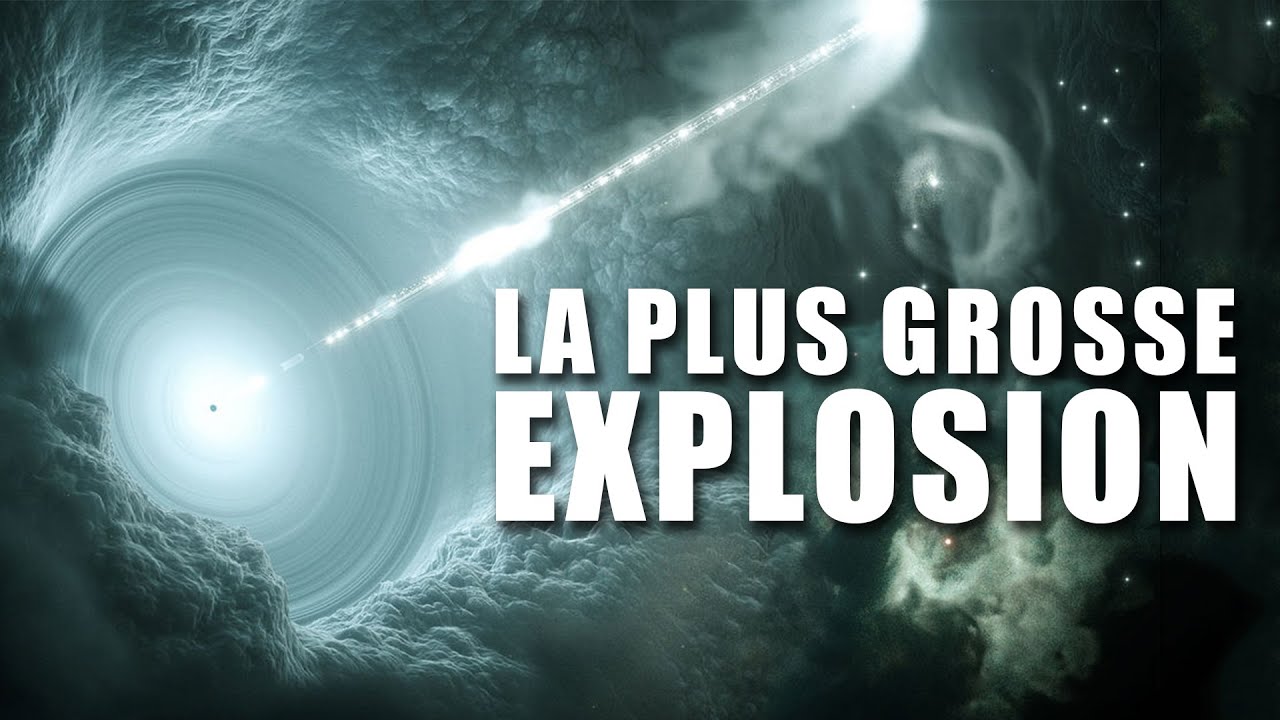
La plus grosse EXPLOSION de L'UNIVERS ! DNDE #144
Keywords
Summary
161 words
Critical Evaluation
Value of the Information & Strength of the Argument
The video provides valuable information by synthesizing recent scientific announcements and placing them in context. The argumentation is solid, as it relies on official sources and explains the significance of each discovery. For instance, the black hole explosion is contextualized by comparing it to other energetic phenomena, and the potential impact of megaconstellations is quantified with specific percentages. The presentation is balanced, acknowledging uncertainties and ongoing debates.
Scientific Rigor, Source Quality, Title Accuracy
The video demonstrates scientific rigor by citing primary sources, such as the Chandra press release and the ESO study. The sources are credible and directly related to the topics discussed. The title accurately reflects the main content, focusing on the record-breaking explosion. The video also includes a clear disclaimer about the sources in the description, enhancing transparency.
139 words
Title / Content Match
The title accurately reflects the main topic of the video, which focuses on the largest known explosion in the universe, while also covering other space news.
Quality & Reliability
8/10
The video is a well-structured news review covering recent astronomical discoveries and space program updates. It cites multiple primary sources (Chandra press release, ESO study, NASA/JPL announcements) and presents information with appropriate caveats. The content is consistent with established scientific knowledge, though some details are simplified for a general audience.
Key Moments
Markers derived by PSI from the transcript: the creator did not define chapters.
- Introduction to the episode and the topic of the most powerful explosion in the universe.
- Explanation of black hole jets and the discovery of a giant cavity in the Ophiuchus cluster.
- Confirmation of the explosion's origin and comparison with other cosmic events.
- NASA updates: Artemis 1 delay, WFIRST progress, and Mars 2020 rover naming.
- Discussion of the impact of megaconstellations on ground-based astronomy, citing ESO study.
- Details on the Vera C. Rubin Observatory's vulnerability and potential mitigation strategies.
- Conclusion and call for viewer engagement.
Cited Sources
- Chandra Press Release: A Giant Black Hole in a Rage — Source for the discovery of the giant cavity in the Ophiuchus cluster.
- ESO News: ESO and the Megaconstellations — Source for the study on the impact of satellite constellations on astronomy.
- SpaceNews: First SLS launch now expected in second half of 2021 — Source for the Artemis 1 delay.
- NASA JPL: Mars 2020 Rover Named Perseverance — Source for the naming of the Mars 2020 rover.
- ADS Abstract: A powerful AGN outburst in the Ophiuchus cluster — Scientific paper on the initial observation of the cavity.
Concurring Sources
- Chandra Press Release — Confirms the discovery of the giant cavity.
- ESO News — Provides the study on megaconstellation impact.
External References
Contribution & Novelties
The video brings together recent space news in an accessible format, highlighting a record-breaking astronomical discovery and its implications. It also raises awareness about the emerging issue of satellite megaconstellations, providing quantitative data from an ESO study. The synthesis of these topics offers viewers a comprehensive update on current space exploration and astronomy.
Pour aller plus loin :
- Relativistic jet — Background on the phenomenon of jets from black holes.
- Ophiuchus Supercluster — Context on the galaxy cluster where the explosion occurred.
- Vera C. Rubin Observatory — Details on the observatory most affected by megaconstellations.
- Starlink — Information on the satellite constellation causing concern.
104 words
Radar Profile
The radar profile shows high scores in information quantity, quality, and reliability, with a slightly lower technical level, indicating content that is well-researched and trustworthy but accessible to a general audience.
💬 Très positif. Sur les 30 commentaires analysés, les spectateurs expriment une grande appréciation pour la qualité et la régularité des vidéos, avec des remerciements et des encouragements, ainsi que des questions pertinentes pour de futurs épisodes.