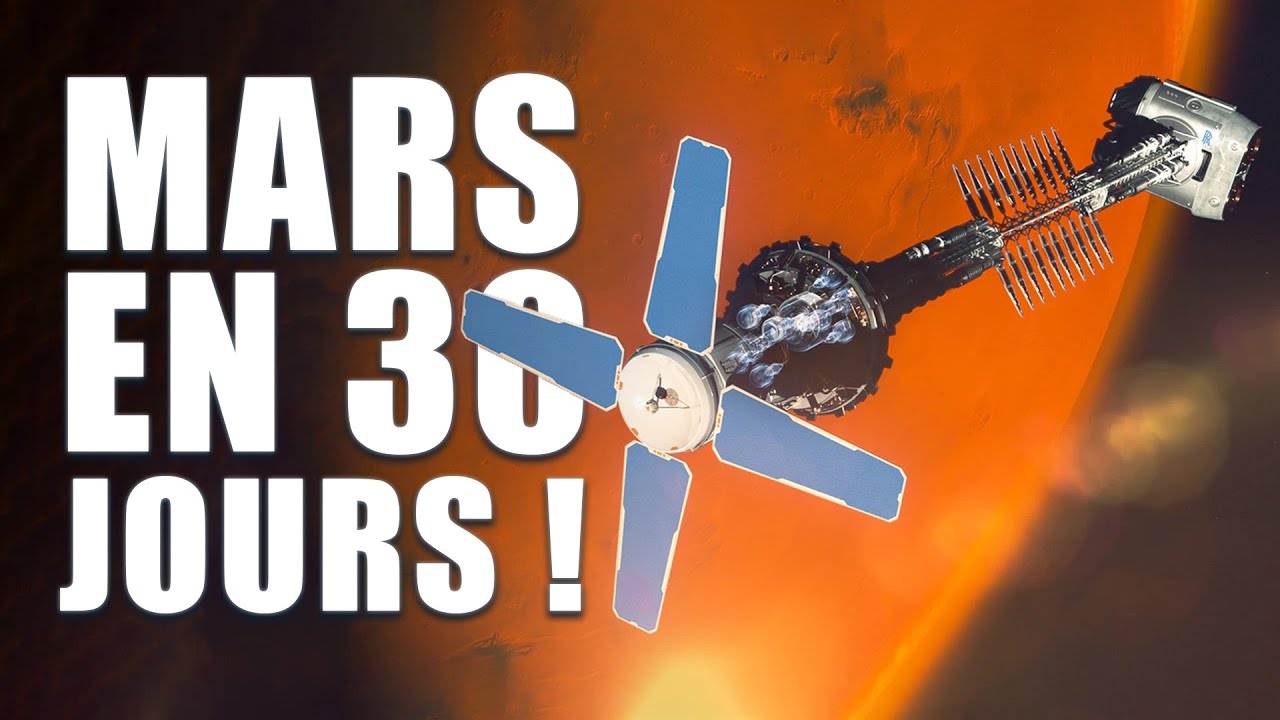
Les TECHNOLOGIES de la NASA qui pourraient tout changer ! (Mars en 30 jours ?)
Keywords
Summary
188 words
Critical Evaluation
Value of the Information & Strength of the Argument
The video provides a clear and engaging overview of the six NIAC Phase II projects, explaining their principles, potential applications, and current development status. The argumentation is solid, based on the NASA announcement, and the creator appropriately notes the challenges and uncertainties of each concept. The presentation is balanced, highlighting both the promise and the technical hurdles. The video adds value by contextualizing each project within NASA’s broader goals, such as lunar infrastructure and deep space exploration.
Scientific Rigor, Source Quality, Title Accuracy
The video is based on a single primary source: the NASA press release about the NIAC Phase II selections. The creator also mentions the Northrop Grumman lunar railway contract, but no additional sources are cited. The description includes links to the NASA source and various social media, but no peer-reviewed papers or independent analyses. The title is somewhat sensationalist but the content is accurate and well-structured. The video does not include any critical examination of the feasibility or potential risks of the projects, but it does note the early stage of development. Overall, the scientific rigor is acceptable for a popular science video, but it relies heavily on the official NASA narrative.
204 words
Title / Content Match
The title is somewhat sensationalist ('tout changer', 'Mars en 30 jours ?') but the content does cover the six NIAC Phase II projects, including a pulsed plasma rocket that could shorten Mars travel. The title is acceptable but slightly overpromises.
Quality & Reliability
8/10
The video is based on a NASA press release and presents the six Phase II NIAC concepts with technical details. The creator clearly distinguishes between concepts and current capabilities, and provides sources in the description. However, the content is a popularized summary and does not include critical analysis or external expert opinions.
Key Moments
Markers derived by PSI from the transcript: the creator did not define chapters.
- Introduction to NIAC Phase II and the six selected projects.
- FLOAT: lunar magnetic levitation transport system.
- Thermoradiative cell for more efficient RTGs.
- Pulsed plasma rocket for fast interplanetary travel.
- Solar sail as a spectrometer using quantum dots.
- Liquid mirror telescope concept.
- Low-frequency radio interferometer with thousands of smallsats.
Cited Sources
- NASA Doubles Down, Advances Six Innovative Tech Concepts to New Phase — Official NASA press release announcing the Phase II NIAC selections, the primary source for the video.
Concurring Sources
- NASA NIAC Phase II Selections — The official NASA NIAC page confirms the selection of the six projects and provides additional details.
Dissenting Sources
- No discordant sources found — The video is based on a single official source, and no conflicting information was found in the provided materials.
External References
Contribution & Novelties
The video provides a concise and accessible summary of the six NIAC Phase II projects, which are often not widely covered in mainstream media. It explains the technical principles in a simplified manner, making them understandable to a general audience. The video also connects the projects to NASA’s broader exploration goals, such as the Artemis program and future deep space missions.
Pour aller plus loin :
- NIAC program — Official NASA page for the NIAC program, providing details on all phases and selected projects.
- Diamagnetic levitation — Wikipedia article explaining the physical principle behind FLOAT.
- Thermoradiative cell — Wikipedia article on thermoradiative cells, a key technology for the RTG improvement.
- Pulsed plasma rocket — Wikipedia article on pulsed plasma propulsion, related to the Howe Industries concept.
- Solar sail — Wikipedia article on solar sails, relevant to the fourth project.
- Liquid mirror telescope — Wikipedia article on liquid mirror telescopes, relevant to the fifth project.
- Low-frequency radio interferometry — Wikipedia article on interferometry, relevant to the sixth project.
167 words
Radar Profile
The radar profile shows a balanced performance across all dimensions, with slightly higher scores in information quantity and quality, reflecting the video's comprehensive coverage of the six projects. The technical level is appropriate for a general audience, and the reliability is high due to the reliance on official NASA sources.
💬 Très positif. Sur les 30 commentaires analysés, la grande majorité exprime de l'enthousiasme et de la gratitude pour la qualité du contenu, avec quelques commentaires techniques et des questions sur les concepts présentés.