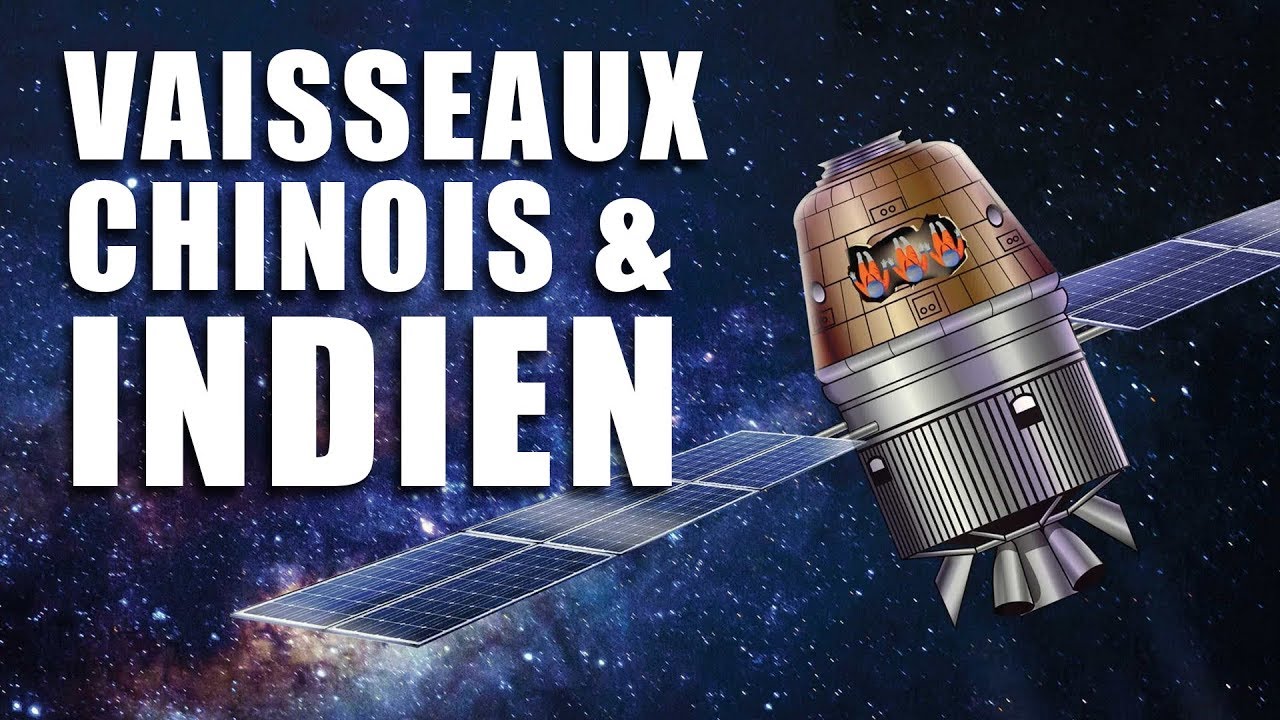
Chine/Inde - Les NOUVEAUX vaisseaux habités – LDDE
Keywords
Summary
175 words
Critical Evaluation
Value of the Information & Strength of the Argument
The video offers substantial value by consolidating information on two major space programs that are often underrepresented in Western media. It provides technical details (masses, volumes, mission profiles) and contextualizes them within each country’s broader space ambitions. The argumentation is solid, presenting facts and plans without excessive speculation, and clearly distinguishes confirmed information from projections. The presenter’s tone is neutral and informative, avoiding sensationalism. The video also draws comparisons with US and Russian programs, which helps the audience understand the significance of these developments.
Scientific Rigor, Source Quality, Title Accuracy
The video demonstrates good scientific rigor by citing multiple sources, including official space agency announcements, specialized space news outlets, and a technical report on China’s spaceplane program. The sources are relevant and credible. The title accurately reflects the content, which focuses on the new crewed spacecraft from China and India. The video does not overstate claims and clearly labels future plans as such. The description also includes links to the sources, enhancing transparency. The only minor weakness is the lack of critical analysis of potential challenges or risks in these programs.
190 words
Title / Content Match
The title accurately reflects the content, which focuses on the new crewed spacecraft from China and India.
Quality & Reliability
8/10
The video provides a detailed and well-structured overview of the Chinese and Indian crewed spacecraft programs, relying on multiple credible sources (space agencies, specialized press, official documents). The information is accurate and up-to-date as of early 2020, with clear explanations of technical aspects. Minor limitations include a lack of in-depth critical analysis and some speculative elements about future plans.
Key Moments
Markers derived by PSI from the transcript: the creator did not define chapters.
- Introduction to the video and reminder about the live stream.
- Historical context: human spaceflight as a domain of the US and USSR, Europe's Hermes project.
- China's Shenzhou spacecraft: description and comparison with Soyuz.
- China's next-generation spacecraft: design, capabilities, and missions.
- China's lunar ambitions: lander concepts and Long March 9.
- China's spaceplane projects and recent concepts.
- India's Gaganyaan spacecraft: development, test flights, and capabilities.
- India's future plans: space station and potential lunar missions.
- Conclusion: future of human spaceflight with multiple actors and potential European collaboration.
Cited Sources
- China's Space Plane Program — Technical report on China's spaceplane concepts, cited for the historical background.
- Prototype for new Chinese human-rated spacecraft lands in desert — News article about the 2016 test flight of China's next-generation spacecraft prototype.
- China's new spacecraft for crewed moon missions — Article detailing China's new crewed spacecraft and its lunar mission capabilities.
- China reveals next-generation crew spacecraft — Article providing details on China's next-generation crew spacecraft.
- ISRO's 2020 target: Sun mission, Gaganyaan test flight, mini PSLV test and 10 satellite launches — News article about ISRO's plans for 2020, including Gaganyaan test flight.
- India space station — Article about India's plans for its own space station.
Concurring Sources
- China's new spacecraft for crewed moon missions — Corroborates details about China's next-generation spacecraft and its lunar mission capabilities.
- India space station — Corroborates India's plans for its own space station.
External References
Contribution & Novelties
The video provides a valuable synthesis of the Chinese and Indian crewed spaceflight programs, which are often covered separately or superficially. It highlights the technical details and strategic ambitions of both nations, offering a comparative perspective. The video also touches on lesser-known concepts like China’s spaceplane projects and India’s potential lunar ambitions, which are not widely discussed in mainstream media.
Pour aller plus loin :
- Gaganyaan — Wikipedia article on India’s crewed spacecraft mission.
- Long March 9 — Wikipedia article on China’s super-heavy launch vehicle.
- Chinese space station — Wikipedia article on China’s planned modular space station.
97 words
Radar Profile
The radar profile shows high scores in information quantity, quality, and reliability, with a slightly lower technical level. This indicates a well-researched and informative video that is accessible to a general audience while still providing substantial technical depth.
💬 Très positif. Sur les 30 commentaires analysés, les spectateurs expriment une forte appréciation pour la qualité et la rigueur des informations, saluant le travail de vulgarisation et la bienveillance du ton.