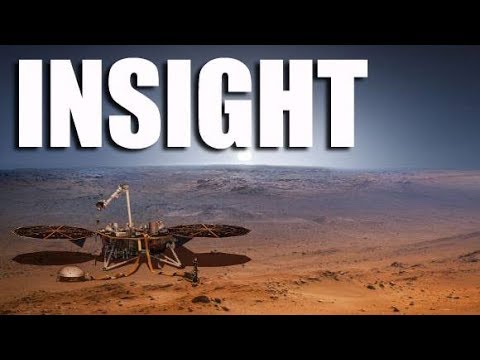
InSight : Scruter les profondeurs de Mars - LDDE
Keywords
Summary
136 words
Critical Evaluation
Value of the Information & Strength of the Argument
The video provides a solid overview of the InSight mission, highlighting its scientific value and the technological challenges. The argumentation is clear and logical, explaining why Mars is a good target for studying planetary interiors and how the instruments will achieve the mission’s goals. The explanations are accessible without being overly simplistic, and the use of animations helps visualize complex concepts. The video also places the mission in a broader context, comparing it to previous missions and future exploration plans.
Scientific Rigor, Source Quality, Title Accuracy
The video cites official sources (NASA, CNES, Space.com) in the description, which adds to its credibility. The scientific content is accurate, though some details are simplified for a general audience. The title accurately reflects the content, focusing on the mission’s objective to study Mars’ depths. The video does not contain any obvious misinformation, and the presentation is well-researched.
153 words
Title / Content Match
The title accurately reflects the content, which focuses on the InSight mission and its goal to study the interior of Mars.
Quality & Reliability
7/10
The video provides a clear and accurate overview of the InSight mission, based on official sources (NASA, CNES, Space.com). The scientific explanations are simplified but correct, with a few minor approximations (e.g., the exact depth of HP3, the duration of the mission). The presentation is well-structured and the sources are listed in the description.
Key Moments
Markers derived by PSI from the transcript: the creator did not define chapters.
- Introduction to Mars exploration and the InSight mission
- Why study Mars' interior? The formation of terrestrial planets
- InSight mission overview and launch window
- Entry, descent, and landing sequence
- Comparison with Phoenix lander and mission design
- SEIS seismometer: measuring marsquakes and meteorite impacts
- HP3 heat flow probe: drilling up to 5 meters deep
- How heat flow measurements reveal Mars' thermal history
- MarCO CubeSats: first interplanetary CubeSat mission
- Timeline and future Mars missions in 2020
Cited Sources
- InSight Mission Overview - NASA — Official mission overview and details
- InSight Mars Lander: NASA's CubeSat Hitchhikers - Space.com — Article about the MarCO CubeSats accompanying InSight
- SEIS - CNES — French space agency page on the SEIS instrument
Concurring Sources
- InSight Mission Overview - NASA — Official mission details align with the video's content.
- SEIS - CNES — CNES page on SEIS confirms the instrument's specifications.
External References
Contribution & Novelties
The video offers a clear and concise synthesis of the InSight mission, emphasizing its scientific objectives and technological innovations. It explains complex concepts like planetary differentiation and heat flow in an accessible manner. The inclusion of the MarCO CubeSats highlights the growing trend of small satellites in deep space exploration.
Pour aller plus loin :
- InSight Mission - NASA — Official mission page with detailed updates.
- Seismometer - Wikipedia — Background on seismometers and their use in planetary science.
- Planetary differentiation - Wikipedia — Explanation of the process mentioned in the video.
92 words
Radar Profile
The radar profile shows a balanced performance with high scores in information quality and reliability, while quantity and technical level are slightly lower. This indicates a well-researched and accurate video that is accessible to a general audience, though it may not delve deeply into technical details.
💬 Très positif. Sur les 29 commentaires analysés, les spectateurs expriment une admiration unanime pour la qualité de la vidéo, la clarté des explications et le travail de recherche, avec des éloges récurrents sur le montage et la voix du présentateur.