Ces ÉTATS de la MATIÈRE bouleversent notre compréhension !
Keywords
Summary
134 words
Critical Evaluation
Value of the Information & Strength of the Argument
The video provides a high-value overview of exotic states of matter, effectively bridging everyday experience with cutting-edge physics. The argumentation is solid, building from well-established concepts like plasma and liquid crystals to more speculative ones like strange matter and photonic molecules. The presenter clearly distinguishes between confirmed phenomena and theoretical possibilities, using analogies (e.g., comparing strange matter to the protomolecule from ‘The Expanse’) to aid understanding. The narrative is engaging and logically structured, making complex topics accessible without oversimplifying the underlying physics.
Scientific Rigor, Source Quality, Title Accuracy
The video demonstrates strong scientific rigor by citing reputable sources in the description, including Physics World, Live Science, ScienceDirect, and an arXiv paper. These sources support the key claims about superfluidity, Bose-Einstein condensates, degenerate matter, and nuclear pasta. The title accurately reflects the content, which indeed challenges conventional understanding of matter. The presentation is well-researched and avoids overstating speculative topics, clearly labeling them as such. Overall, the video maintains a high standard of scientific accuracy and source transparency.
175 words
Title / Content Match
The title accurately reflects the content, which explores various unusual states of matter that challenge conventional understanding.
Quality & Reliability
8/10
The video presents a well-structured overview of exotic states of matter, grounding each concept in established physics (e.g., Bose-Einstein condensates, superfluidity, degenerate matter) and referencing credible sources such as Physics World, Live Science, ScienceDirect, and arXiv. The speculative nature of strange matter and photonic matter is clearly flagged, maintaining scientific honesty.
Key Moments
Markers derived by PSI from the transcript: the creator did not define chapters.
- Introduction to the three familiar states of matter and the promise of exploring exotic ones.
- Discussion of plasma as the fourth state of matter, dominant in the universe.
- Discovery of liquid crystals in 1888 and their role in LCD technology.
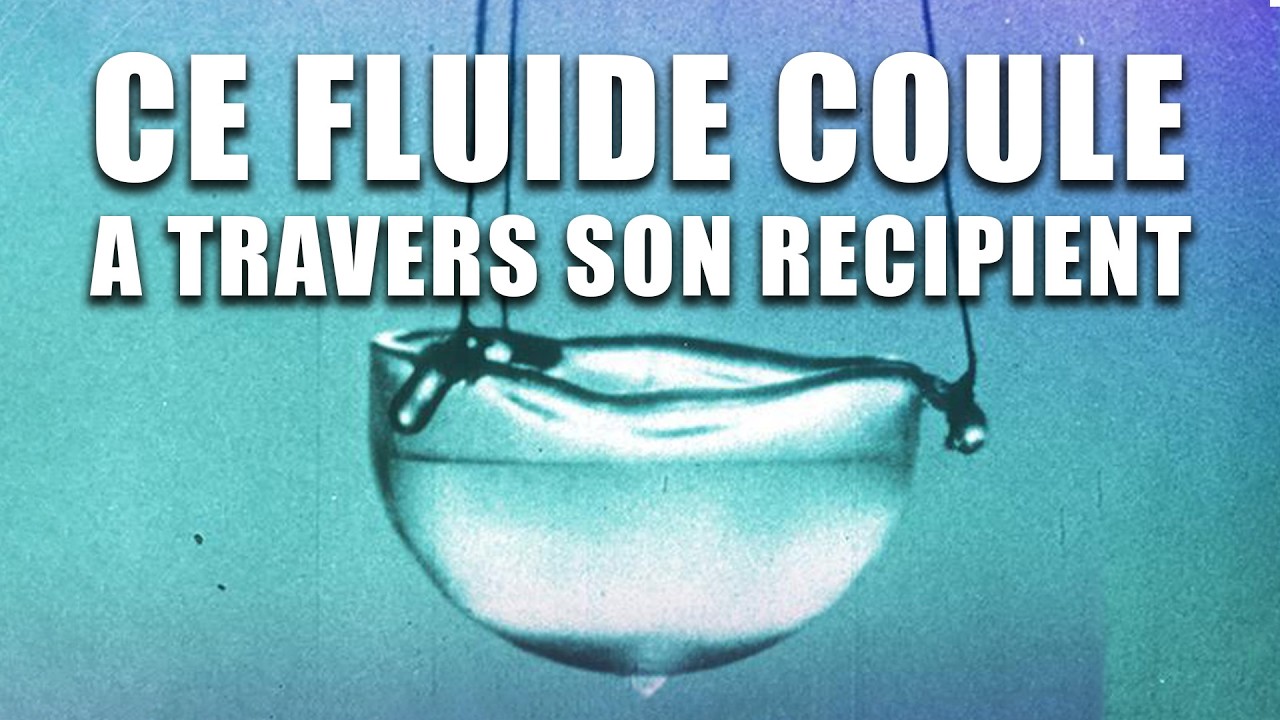
- Explanation of superfluidity, including the ability to climb walls and flow without friction.
- Introduction to Bose-Einstein condensates, predicted in 1924 and created in 1995.
- Effects of extreme pressure: degenerate matter in white dwarfs and neutron stars, including nuclear pasta.
- Speculative strange matter and its potential properties, including conversion of normal matter.
- Photonic matter: photons interacting and forming molecules, with implications for quantum computing.
Cited Sources
- Superfluidity: the mysterious quantum effect that became a backbone of experimental physics — Referenced for the section on superfluidity.
- Bose-Einstein Condensate: What Is It? — Referenced for the section on Bose-Einstein condensates.
- Degenerate Matter - an overview — Referenced for the section on degenerate matter in white dwarfs and neutron stars.
- The Nuclear Equation of State and Neutron Star Masses — Referenced for the section on neutron stars and nuclear pasta.
Concurring Sources
- Superfluidity: the mysterious quantum effect that became a backbone of experimental physics — Supports the description of superfluidity and its properties.
- Bose-Einstein Condensate: What Is It? — Supports the explanation of Bose-Einstein condensates and their creation.
- Degenerate Matter - an overview — Supports the discussion of degenerate matter in white dwarfs and neutron stars.
- The Nuclear Equation of State and Neutron Star Masses — Supports the discussion of neutron star interiors and nuclear pasta.
External References
Contribution & Novelties
The video synthesizes a broad range of exotic states of matter into a coherent narrative, highlighting recent developments such as photonic molecules and polariton condensates. It effectively communicates the frontier of physics research, making it accessible to a general audience while maintaining scientific accuracy. The inclusion of speculative topics like strange matter, clearly labeled as such, encourages curiosity and further exploration.
Pour aller plus loin :
- Bose-Einstein condensate — Provides a detailed overview of the theory and experimental realization.
- Superfluidity — Explains the phenomenon and its historical discovery.
- Neutron star — Covers the properties and internal structure of neutron stars, including nuclear pasta.
- Polariton — Discusses quasiparticles that hybridize light and matter, relevant to the photonic matter section.
118 words
Radar Profile
The radar profile shows high scores across all dimensions, indicating a well-rounded and reliable video. The strongest aspects are the quantity and quality of information, with slightly lower but still solid technical depth and reliability, reflecting the speculative nature of some topics.
💬 Très positif. Sur les 30 commentaires analysés, les spectateurs expriment un enthousiasme marqué pour la qualité de la vulgarisation et la clarté des explications, avec plusieurs demandes d'approfondissement sur des sujets spécifiques.