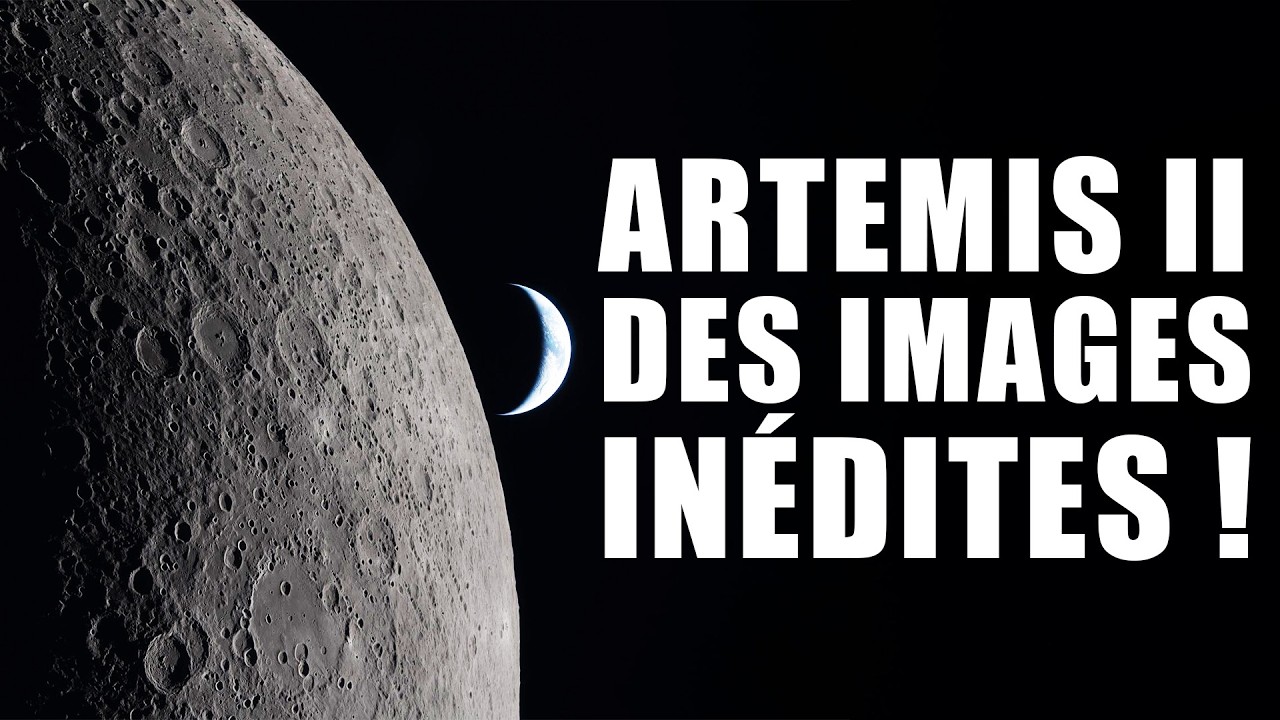
La NASA dévoile 12000 photos d'Artemis II et on en PREND PLEIN LA VUE !
Keywords
Summary
172 words
Critical Evaluation
Value of the Information & Strength of the Argument
The video’s value lies in its ability to translate a massive, technical dataset (12,000 photos) into a compelling and accessible narrative. The argumentation is solid, as it uses the photos as primary evidence to support its points about the Earth’s uniqueness, the Moon’s geological history, and the human experience of spaceflight. The host’s commentary is insightful, connecting the visuals to broader scientific concepts like the habitable zone and the Earth-Moon system as a double planet. The selection of photos is purposeful, and the explanations are clear and logical, building a coherent story from the images.
Scientific Rigor, Source Quality, Title Accuracy
The scientific rigor is high, as the video relies on official NASA imagery and the host’s explanations are factually accurate. The primary source is the NASA image database, which is a reliable and authoritative source. The title accurately reflects the content, which is a visual review of the released photos. The video does not present any unverified claims or speculative information. The host’s personal interpretations are clearly presented as such, and the scientific context provided is correct.
187 words
Title / Content Match
The title accurately reflects the content, which is a visual review of NASA's released Artemis II photos.
Quality & Reliability
7/10
The video is a well-structured documentary that presents a curated selection of NASA's official Artemis II photos. The commentary is scientifically accurate, explaining phenomena like the terminator, the habitable zone, and the Earth-Moon system. The primary source is the NASA image database, which is reliable. However, the video is a subjective review and does not provide a comprehensive analysis of all 12,000 images.
Key Moments
Markers derived by PSI from the transcript: the creator did not define chapters.
- Introduction to the video and the release of 12,000 photos by NASA.
- Discussion of the first theme: photos of the Earth from a distance.
- Transition to the main subject: the Moon, its craters, and its surface.
- Showcase of photos of the solar eclipse as seen from Orion.
- Analysis of photos showing the Earth and Moon together, discussing the concept of a double planet.
- Exploration of the human aspect of the mission, including photos of the crew and their reactions.
Cited Sources
- NASA Johnson Space Center - Artemis 2 Photos — The primary source for the 12,000 photos reviewed in the video.
- Hugo Lisoir Podcast on Spotify — Link to the podcast version of the show.
- Hugo Lisoir Podcast on iTunes — Link to the podcast version of the show.
- Hugo Lisoir Podcast on Deezer — Link to the podcast version of the show.
- Hugo Lisoir Podcast RSS Feed — RSS feed for the podcast.
- Star Citizen Soundtrack by Pedro Macedo Camacho — Source of the background music used in the video.
Concurring Sources
- NASA Artemis II Mission Page — Official NASA page confirming the mission's details and objectives.
External References
Contribution & Novelties
The video’s original contribution is its curated, thematic presentation of a large set of official NASA photos, making them accessible and meaningful to a general audience. It goes beyond simply showing the images by providing scientific context and emotional interpretation, thus bridging the gap between raw data and public engagement.
Pour aller plus loin :
- Artemis II - NASA — Official mission page with details and updates.
- Earthrise - Wikipedia — Historical context of iconic Earth photos from space.
- Habitable zone - Wikipedia — The concept discussed in the video, explaining its limitations.
- Lunar terminator - Wikipedia — The boundary between day and night on the Moon, a key photographic subject.
111 words
Radar Profile
The radar profile shows a balanced video with high scores in information quality and reliability, reflecting its solid scientific basis. The lower score in technical level indicates it is accessible to a general audience, while the moderate quantity of information is due to the selective nature of the photo review.
💬 Très positif. Sur les 30 commentaires analysés, tous expriment une admiration et une émotion fortes face aux images, avec des remerciements pour le partage et la qualité de la présentation.