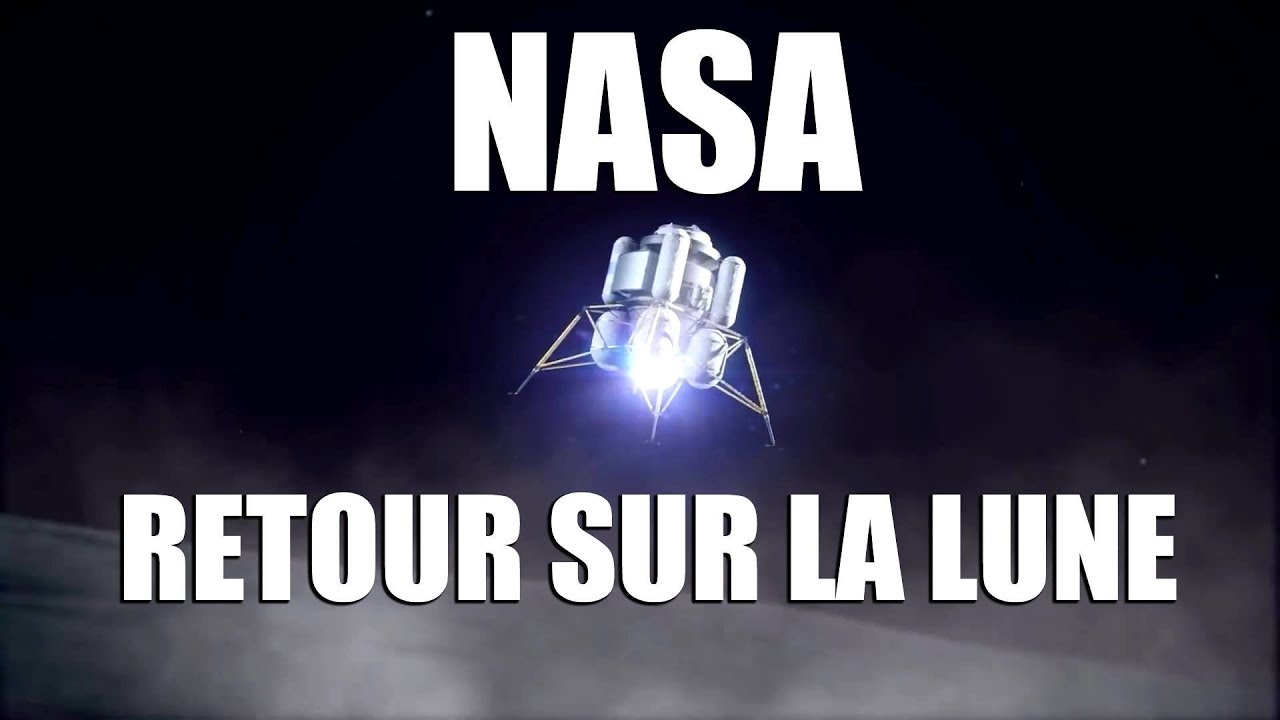
La NASA détaille son plan de RETOUR SUR LA LUNE - DNDE #77
Keywords
Summary
170 words
Critical Evaluation
Value of the Information & Strength of the Argument
The video provides a comprehensive and well-structured overview of recent space news, with a strong focus on NASA’s lunar plans. The argumentation is clear and logical, presenting timelines and milestones in a coherent manner. The presenter effectively contextualizes the information, such as comparing NASA’s timeline with China’s ambitions and noting potential geopolitical implications. The inclusion of specific details, like the number of Chinese orbital launches and the names of private companies, adds depth. The discussion of the Gaia study is presented accurately, explaining the significance of the findings without overstating them. The overall value is high for a general audience interested in space exploration, offering both factual information and insightful analysis.
Scientific Rigor, Source Quality, Title Accuracy
The video demonstrates strong scientific rigor by citing primary sources: the NASA roadmap document, a Nature article, and a space news website. These sources are reputable and directly relevant to the topics discussed. The presenter clearly distinguishes between confirmed plans and speculative elements, such as the 2029 landing date being an agency target. The title accurately reflects the main content, focusing on NASA’s lunar return plan. The video’s structure is logical, moving from the main topic to related news and then to a scientific study. The use of visuals and graphics enhances understanding without compromising accuracy. Overall, the sourcing and presentation meet high journalistic standards.
231 words
Title / Content Match
The title accurately reflects the main focus on NASA's lunar return plan, with additional space news segments.
Quality & Reliability
8/10
The video is based on official NASA documents and peer-reviewed research (Nature), with clear sourcing in the description. The presenter provides a balanced overview of space news, distinguishing between confirmed plans and speculative elements. Minor caveats: some dates are estimates and the video is from 2018, so some information is outdated.
Key Moments
Markers derived by PSI from the transcript: the creator did not define chapters.
- Introduction to the weekly space news show.
- NASA's lunar return plan: overview and timeline.
- Details on the Lunar Orbital Platform-Gateway (LOP-G) and its assembly.
- Plans for lunar surface missions and commercial partnerships.
- China's space program: Chang'e 4, Long March rockets, and private companies.
- Challenges in China's space sector, including Long March 5 delays.
- Gaia data reveals past interaction between Milky Way and Sagittarius dwarf galaxy.
- Conclusion and call for viewer questions.
Cited Sources
- NASA's National Space Exploration Campaign — Primary source for NASA's lunar return plan and timeline.
- China rocket update: sea launch slips, new Long Marches, researcher resignation outrage and more — Source for the China space program segment.
- Nature article on the Milky Way and Sagittarius dwarf galaxy interaction — Source for the Gaia study on galactic interaction.
Concurring Sources
- NASA's National Space Exploration Campaign — The video's summary of NASA's plan aligns with the official document.
- Nature article on the Milky Way and Sagittarius dwarf galaxy interaction — The video's description of the Gaia study matches the findings published in Nature.
External References
Contribution & Novelties
The video synthesizes recent space news into an accessible format, providing a clear overview of NASA’s lunar plans and China’s growing space capabilities. It adds value by contextualizing these developments within the broader geopolitical landscape. The segment on the Gaia study highlights a significant scientific finding in an understandable way.
Pour aller plus loin :
- NASA Artemis program — Official NASA page for the Artemis program, which evolved from the plans discussed in the video.
- Lunar Orbital Platform-Gateway — Wikipedia article on the LOP-G, now known as the Lunar Gateway.
- Gaia mission — ESA’s Gaia mission page, providing details on the mission and its data.
- Sagittarius Dwarf Spheroidal Galaxy — Wikipedia article on the Sagittarius dwarf galaxy, relevant to the galactic interaction discussion.
123 words
Radar Profile
The radar profile shows high scores across all dimensions, indicating a well-rounded and reliable video. The strongest aspects are information quantity and quality, with slightly lower technical depth, making it accessible to a broad audience.
💬 Très positif. Sur les 30 commentaires analysés, les spectateurs expriment un enthousiasme marqué pour la qualité et la régularité du contenu, avec des remerciements répétés et des encouragements pour la chaîne.