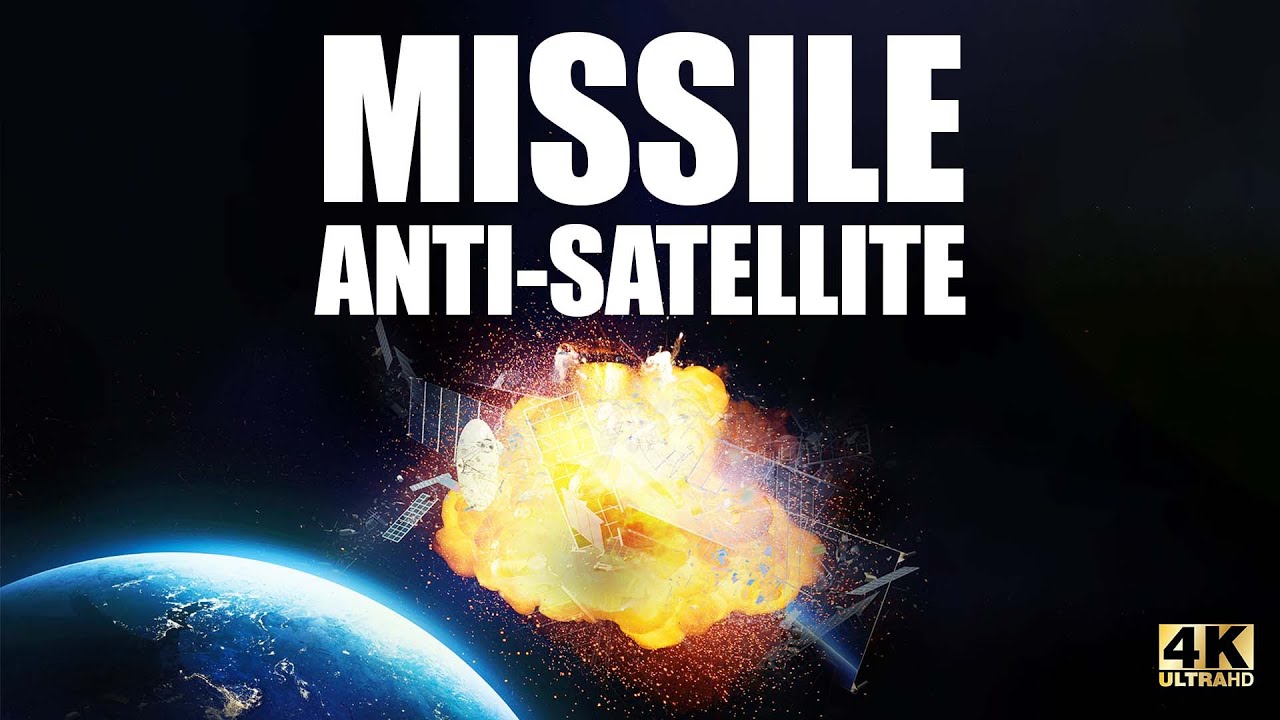
La RUSSIE a mené un TIR ANTI-SATELLITE DANGEREUX pour l'ISS ! DNDE #224 - 4K
Keywords
Summary
166 words
Critical Evaluation
Value of the Information & Strength of the Argument
The video provides a valuable and timely summary of significant space events, particularly the Russian ASAT test, which is a major geopolitical and safety issue. The argumentation is generally solid, presenting facts and citing sources. The host explains the implications of each event clearly, such as the risks of space debris and the reasons for the Artemis delay. However, the analysis is not deeply critical; it presents the information in a straightforward manner without extensive debate or alternative viewpoints. The value lies in its role as a concise news digest for space enthusiasts.
Scientific Rigor, Source Quality, Title Accuracy
The video demonstrates a good level of scientific rigor by citing official sources in the description, including NASA, Nature, and Space.com. The information is presented accurately, and the host distinguishes between confirmed facts and speculation (e.g., the origin of Kamoʻoalewa). The title accurately reflects the main content, focusing on the ASAT test. The video does not delve into deep technical details but provides enough context for a general audience. The use of multiple sources for different segments enhances credibility, though the reliance on secondary sources like Space.com for some news is noted.
200 words
Title / Content Match
The title accurately reflects the main topic of the video, which focuses on the Russian anti-satellite test and its dangers to the ISS.
Quality & Reliability
7/10
The video is a weekly space news roundup. It covers a major event (Russian ASAT test) and other space news, citing official sources (NASA, Nature, Space.com) in the description. The information is generally accurate and up-to-date as of the publication date, but the format is a summary rather than in-depth analysis. Some technical details are simplified for a general audience.
Key Moments
Markers derived by PSI from the transcript: the creator did not define chapters.
- Introduction and main topic: Russian ASAT test on Cosmos 1408, debris threat to ISS.
- Details of the ASAT test: satellite mass, orbit, debris count, ISS crew safety measures.
- Discussion on Artemis program delay: new timeline, reasons (pandemic, Blue Origin lawsuit), and mission updates.
- Starship SN20 static fire test: six Raptor engines, tile loss, and future plans.
- SpinLaunch first test: centrifuge catapult launch, potential and challenges.
- Kamoʻoalewa quasi-satellite: possible lunar fragment, spectral analysis, and Chinese mission plans.
- Conclusion and wrap-up, mention of other SpaceX activities.
Cited Sources
- NASA Administrator Statement on Russian ASAT Test — Official NASA statement on the Russian ASAT test and its implications.
- NASA changes Artemis moon landing goal to 2025 — Space.com article reporting the Artemis program delay.
- SpaceX static fire test tweet — SpaceX's official tweet about the Starship static fire test.
- SpinLaunch test video — Video of SpinLaunch's first test launch.
- Kamoʻoalewa: a possible lunar fragment — Nature article on the asteroid Kamoʻoalewa and its possible lunar origin.
Concurring Sources
- NASA Administrator Statement on Russian ASAT Test — Confirms the Russian ASAT test and its dangers.
- Kamoʻoalewa: a possible lunar fragment — Supports the claim about the asteroid's lunar origin.
External References
Contribution & Novelties
The video provides a timely and accessible synthesis of recent space news, with a focus on the Russian ASAT test and its implications for space safety. It adds value by contextualizing the event within the broader space debris problem and international relations. The segment on Kamoʻoalewa offers an interesting scientific update on a potential lunar fragment, and the mention of the Chinese mission adds a forward-looking perspective.
Pour aller plus loin :
- Anti-satellite weapon — Overview of ASAT weapons and their history.
- Space debris — Comprehensive article on space debris and mitigation efforts.
- Artemis program — Detailed information on NASA’s Artemis program.
- SpinLaunch — Information on the company and its kinetic launch system.
- Kamoʻoalewa — Details on the quasi-satellite and its possible lunar origin.
124 words
Radar Profile
The radar profile shows high scores in quantity of information and technical level, indicating a content-rich video with moderate technical depth. The quality and reliability scores are slightly lower, reflecting the news summary format and reliance on secondary sources. Overall, the video is well-rounded but not deeply analytical.
💬 Positif. Sur les 30 commentaires analysés, la majorité exprime un intérêt pour le contenu et pose des questions, avec quelques critiques mineures sur le titre et l'utilisation d'anglicismes.