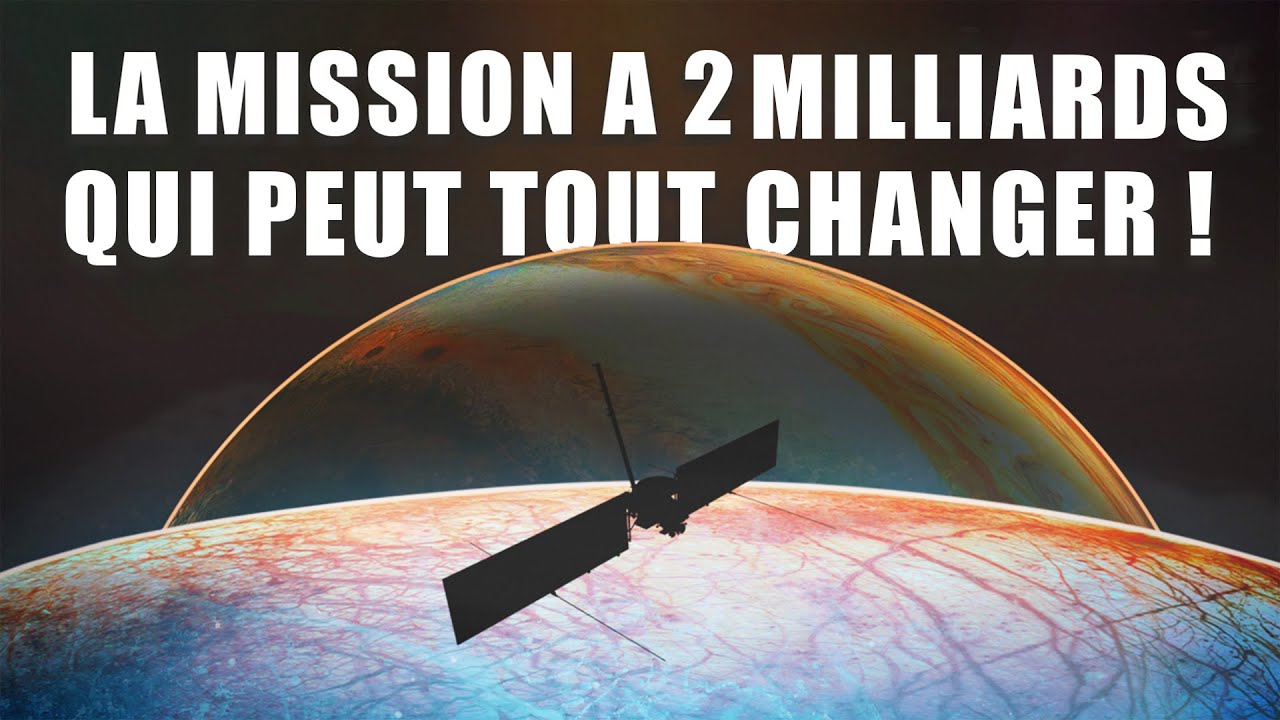
La MISSION de la NASA A 2 MILLIARDS pour DÉCOUVRIR la VIE EXTRATERRESTRE ! Europa CLIPPER
Keywords
Summary
150 words
Critical Evaluation
Value of the Information & Strength of the Argument
The video provides substantial value by synthesizing a large amount of technical information about the Europa Clipper mission into an accessible format. It clearly explains the scientific rationale, the technological challenges, and the expected outcomes. The argumentation is solid, based on established scientific knowledge and official mission details. The presenter’s enthusiasm is balanced with a realistic assessment of the mission’s risks and uncertainties.
Scientific Rigor, Source Quality, Title Accuracy
The video demonstrates strong scientific rigor, relying on official NASA sources and presenting information accurately. The sources cited in the description are relevant and authoritative. The title is appropriate and not misleading, accurately reflecting the mission’s significance and cost. The content aligns well with the title, providing a detailed and engaging presentation of the mission.
133 words
Title / Content Match
The title accurately reflects the content, focusing on the mission's cost and its goal of searching for extraterrestrial life.
Quality & Reliability
8/10
The video provides a detailed and accurate overview of the Europa Clipper mission, based on official NASA sources. The information is current and well-presented, with clear explanations of the mission's objectives, instruments, and trajectory. Minor simplifications are present but do not compromise the overall reliability.
Key Moments
Markers derived by PSI from the transcript: the creator did not define chapters.
- Introduction to ocean moons in the outer solar system, highlighting Europa and Enceladus.
- Discovery of Europa's ocean by the Galileo mission through magnetic field anomalies.
- Overview of the Europa Clipper mission: cost, mass, and launch details.
- Trajectory and gravity assists around Mars and Earth, arrival in 2030.
- Orbital strategy around Jupiter with 45 flybys of Europa, avoiding radiation.
- Description of the scientific instruments: cameras, spectrometers, magnetometer, radar.
- Potential for detecting biosignatures and future in-situ exploration concepts.
Cited Sources
- Evidence for an Ocean — NASA's official page presenting evidence for Europa's subsurface ocean.
- Europa Clipper Instruments — NASA's official page detailing the spacecraft's scientific instruments.
Concurring Sources
- NASA Europa Clipper Mission Overview — Official NASA mission page providing comprehensive information about Europa Clipper.
External References
Contribution & Novelties
The video provides a clear and engaging synthesis of the Europa Clipper mission, making complex scientific and engineering details accessible to a broad audience. It effectively communicates the mission’s significance in the search for life beyond Earth.
Pour aller plus loin :
- Europa (moon) — Overview of Europa’s characteristics and scientific interest.
- Europa Clipper — Detailed article on the mission’s design and objectives.
- Subsurface ocean — General concept of subsurface oceans on icy moons.
74 words
Radar Profile
The radar profile shows high scores in information quantity, quality, and technical level, with a slightly lower but still strong reliability score. This indicates a well-researched and informative video that is technically detailed and reliable, making it a valuable resource for understanding the Europa Clipper mission.
💬 Très positif. Sur les 30 commentaires analysés, l'enthousiasme est unanime, avec des expressions d'excitation et d'impatience pour la mission, et des remerciements pour la qualité de la vidéo.