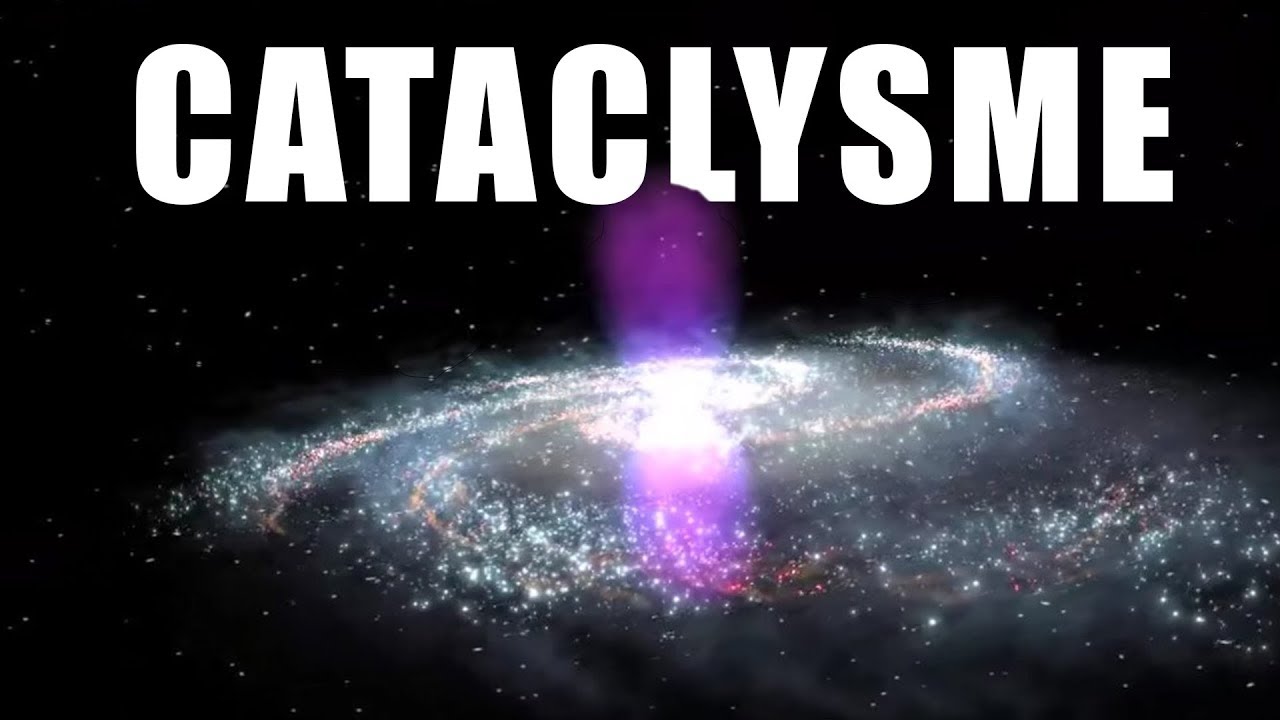
Notre GALAXIE a-t-elle EXPLOSÉ il y a 3,5 millions d'années ? DNDE #125
Keywords
Summary
127 words
Critical Evaluation
Value of the Information & Strength of the Argument
The video provides valuable information by summarizing recent scientific papers and industry news. The argumentation is solid, presenting evidence from peer-reviewed sources and explaining the significance of each finding. The host clearly distinguishes between established facts and hypotheses, such as the proposed explanation for the Fermi bubbles. The coverage of space debris solutions is balanced, discussing both technological approaches and economic challenges. The Mars segment effectively uses Curiosity’s data to illustrate the planet’s hydrological history, with appropriate caveats about interpretations.
Scientific Rigor, Source Quality, Title Accuracy
The video demonstrates scientific rigor by citing specific sources, including arXiv preprints and a Nature article, and by providing links in the description. The information is presented accurately, with appropriate context and limitations. The title is somewhat sensational but accurately reflects the main topic. The content matches the title, though the video also covers other news items. The sources are credible and directly relevant to the topics discussed.
163 words
Title / Content Match
The title is engaging and accurately reflects the main topic, though it focuses on one of three segments.
Quality & Reliability
8/10
The video presents recent scientific findings from peer-reviewed sources (arXiv, Nature) and reports on space industry developments. The information is accurate and well-contextualized, though some simplifications are made for a general audience.
Key Moments
Markers derived by PSI from the transcript: the creator did not define chapters.
- Introduction to the Milky Way's central black hole and the Fermi bubbles.
- Discussion of the study on the Magellanic Stream and the proposed galactic explosion.
- Segment on orbital debris and the launch of MEV-1 satellite.
- Overview of debris removal initiatives by Astroscale and ClearSpace.
- Mars segment: Curiosity's findings on water in Gale crater.
- Conclusion and upcoming content.
Cited Sources
- arXiv:1910.02225 — Study on the Fermi bubbles and the galactic outburst.
- arXiv:1103.0055 — Reference for the Fermi bubbles discovery.
- Universe Today: MEV-1 satellite — News about the MEV-1 satellite launch.
- SpaceNews: Astroscale & ClearSpace — Article on debris removal companies.
- Nature: Water in Gale crater — Study on the history of water in Gale crater.
- JPL News: Curiosity findings — NASA news release about Curiosity's findings.
Concurring Sources
- arXiv:1910.02225 — Supports the claim of a recent galactic outburst.
- Nature: Water in Gale crater — Supports the findings on Mars water history.
External References
Contribution & Novelties
The video synthesizes recent findings and industry news, providing a clear overview of the latest developments in space science. It highlights the significance of the proposed galactic explosion and its implications for our understanding of the Milky Way’s history. The segment on orbital debris offers a timely discussion of emerging solutions. The Mars segment updates viewers on Curiosity’s ongoing exploration.
Pour aller plus loin :
- Fermi bubbles — Overview of the Fermi bubbles and their discovery.
- Sagittarius A* — Information on the supermassive black hole at the center of the Milky Way.
- Orbital debris — General information on space debris and mitigation efforts.
- Curiosity rover — Details on the Mars rover mission.
112 words
Radar Profile
The radar profile shows high scores in information quantity, quality, and reliability, with a moderate technical level. This indicates a well-researched and informative video that remains accessible to a general audience.
💬 Très positif. Sur les 30 commentaires analysés, les spectateurs expriment une admiration constante pour la qualité et la régularité des vidéos, avec des remerciements et des encouragements.