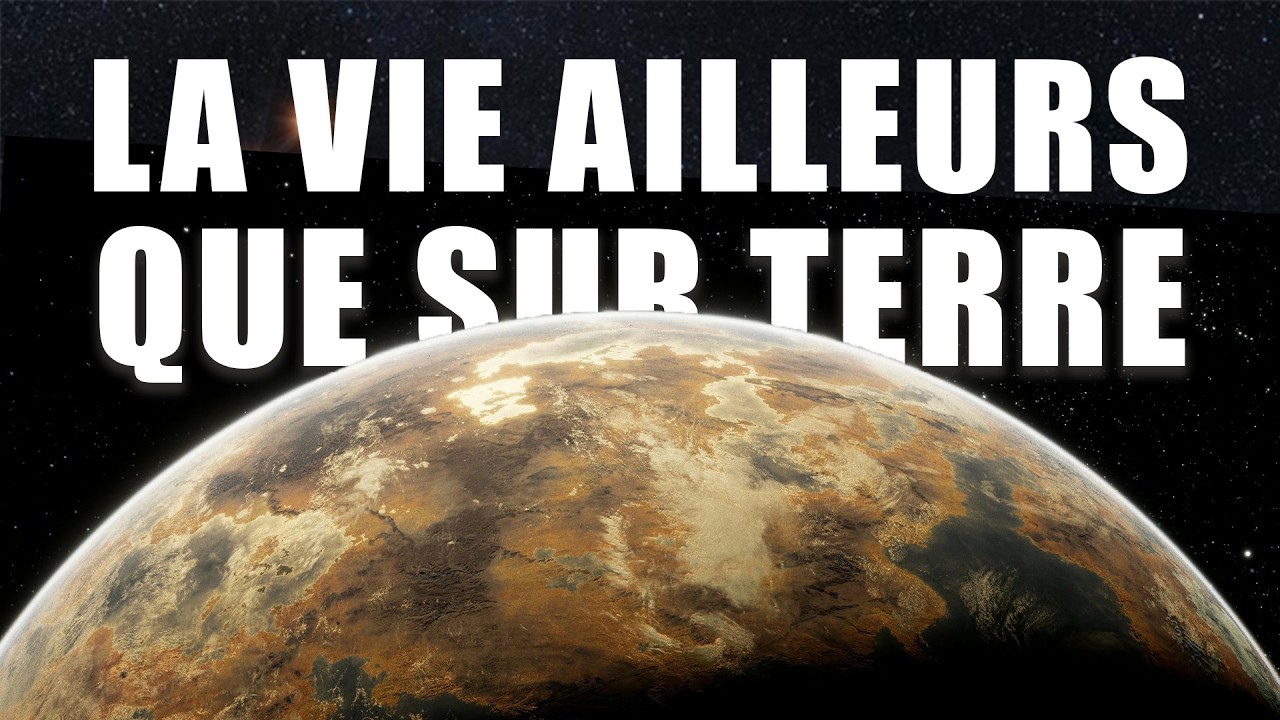
Cette Méthode permet de chercher la vie dans le cosmos, sans savoir ce qu'on cherche
Keywords
Summary
120 words
Critical Evaluation
Value of the Information & Strength of the Argument
The video provides valuable information by introducing a novel approach to the search for extraterrestrial life, which broadens the scope beyond traditional biosignatures. The argumentation is solid, as it logically builds from the concepts of panspermia and terraforming to the idea of multi-planet signatures. The presenter effectively explains the advantages of this method, such as its ability to detect life forms that might be missed by other techniques. However, the video could have delved deeper into the potential false positives and the statistical challenges of identifying such correlations. Overall, the value is high for a general audience interested in astrobiology, and the argumentation is coherent and well-structured.
Scientific Rigor, Source Quality, Title Accuracy
The video cites a specific scientific paper from the Astrophysical Journal, which adds to its credibility. The explanation of the method is generally accurate, though simplified for a general audience. The title accurately reflects the content, and the video does not overpromise. The presentation is rigorous in that it acknowledges the limitations of the method, such as the difficulty of detecting life on Earth-like planets without such correlations. The sources are clearly referenced in the description, and the video does not appear to contain misleading information. The adequacy between title and content is good, with no significant discrepancies.
220 words
Title / Content Match
The title accurately reflects the content, which focuses on a method to search for life without relying on Earth-centric assumptions.
Quality & Reliability
7/10
The video presents a novel scientific concept (multi-planet biosignatures) based on a peer-reviewed paper, but the explanation is simplified and lacks critical discussion of potential false positives or observational limitations.
Key Moments
Markers derived by PSI from the transcript: the creator did not define chapters.
- Introduction to the search for extraterrestrial life and the hope for a discovery.
- Explanation of biosignatures and technosignatures with examples.
- Introduction of the new method: looking for correlated atmospheric signatures across multiple planets.
- Discussion of panspermia as a mechanism for spreading life between planets.
- Discussion of terraforming as a potential technosignature.
- Limitations of the method and future prospects with missions like Ariel.
Cited Sources
- Astrophysical Journal article on multi-planet biosignatures — The paper proposing the method of searching for life via correlated atmospheric signatures across multiple planets.
Concurring Sources
- Astrophysical Journal article — The paper directly supports the method described in the video.
External References
Contribution & Novelties
The video presents a novel approach to the search for extraterrestrial life by proposing to look for correlations in atmospheric compositions across multiple planets in a system, which could indicate panspermia or terraforming. This method is innovative as it does not rely on specific biosignatures but on patterns, potentially detecting life forms that are fundamentally different from Earth’s. The video also highlights the importance of considering planetary systems as a whole rather than individual planets.
Pour aller plus loin :
- Panspermia — Overview of the hypothesis that life can spread between planets via comets, asteroids, or dust.
- Terraforming — Concept of modifying a planet’s environment to make it habitable for Earth-like life.
- Biosignature — Definition and examples of biosignatures used in the search for life.
125 words
Radar Profile
The radar profile shows a balanced performance across all dimensions, with slightly higher scores in information quantity and quality, indicating a well-rounded and informative video. The technical level is moderate, making it accessible to a general audience while still providing depth.
💬 Très positif. Sur les 30 commentaires analysés, les spectateurs expriment un fort enthousiasme pour la méthode présentée et la qualité de la narration, avec quelques interrogations constructives sur les limites de l'approche.