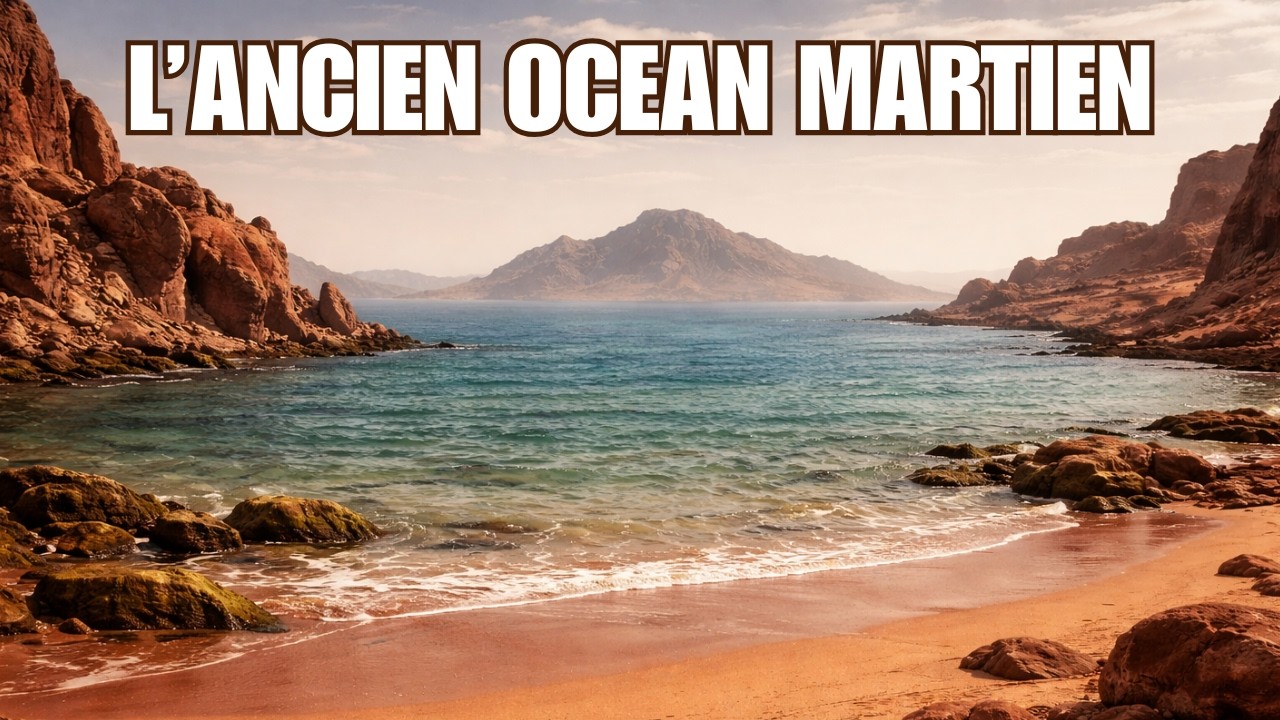
Mars, une Terre ratée ? L’histoire de son OCÉAN PERDU !
Keywords
Summary
116 words
Critical Evaluation
Value of the Information & Strength of the Argument
The video provides a balanced and informative overview of the scientific evidence for and against a past Martian ocean. It effectively presents the argumentation by first building the case with geological and chemical evidence, then systematically addressing the weaknesses and alternative hypotheses. The use of visual aids and clear explanations enhances the value of the information, making complex planetary science accessible without oversimplifying the uncertainties.
Scientific Rigor, Source Quality, Title Accuracy
The video demonstrates scientific rigor by referencing peer-reviewed studies and NASA mission data. The sources cited in the description include reputable scientific journals (Nature, PMC) and Smithsonian Magazine, which adds credibility. The title accurately reflects the content, focusing on the lost ocean hypothesis. The video does not overstate claims and clearly communicates the current state of scientific debate, which is commendable.
141 words
Title / Content Match
The title accurately reflects the content, which explores the hypothesis of a lost ocean on Mars and the evidence for it.
Quality & Reliability
8/10
The video presents a well-structured synthesis of the scientific debate on the possible ancient ocean on Mars, citing several peer-reviewed studies and NASA missions. It clearly distinguishes established facts from hypotheses and acknowledges uncertainties, demonstrating scientific rigor.
Key Moments
Markers derived by PSI from the transcript: the creator did not define chapters.
- Introduction: Mars as a former blue world and the importance of liquid water.
- Imaginary journey to the shores of Oceanus Borealis 3.8 billion years ago.
- Mariner 9's discovery of the Martian dichotomy and the birth of the ocean hypothesis.
- Viking orbiters detect shorelines and the alignment of river deltas.
- Evidence from mega-tsunamis and the role of Olympus Mons.
- Chemical evidence: deuterium ratio and atmospheric loss.
- Counterarguments and the conclusion: Mars was wet, but the ocean remains debated.
Cited Sources
- A global ocean on Mars? Evidence from shorelines and deltas — Peer-reviewed article supporting the ocean hypothesis.
- Nature Geoscience: Evidence for an ancient ocean on Mars — Study on shorelines and ocean extent.
- Nature: A record of ancient tsunamis on Mars — Study on mega-tsunami deposits.
- Smithsonian Magazine: Mars Tsunamis and Olympus Mons — Popular science article on tsunami evidence.
Concurring Sources
- A global ocean on Mars? Evidence from shorelines and deltas — Supports the ocean hypothesis.
- Nature Geoscience: Evidence for an ancient ocean on Mars — Supports the ocean hypothesis.
- Nature: A record of ancient tsunamis on Mars — Supports the ocean hypothesis via tsunami deposits.
Dissenting Sources
- Alternative hypotheses: episodic flooding and lakes — The video mentions that some scientists argue for intermittent floods or isolated lakes rather than a stable ocean, citing irregular shorelines and closed-basin deltas.
External References
Contribution & Novelties
The video provides a comprehensive and accessible synthesis of the current scientific debate on a past Martian ocean, effectively balancing evidence and counterarguments. It highlights recent findings such as mega-tsunami deposits and deuterium ratios, offering a fresh perspective for a general audience.
Pour aller plus loin :
- Oceanus Borealis (Wikipedia) — Background on the hypothesized ocean.
- Mars ocean hypothesis (Wikipedia) — Overview of the scientific debate.
- Deuterium on Mars (NASA) — Explanation of deuterium evidence.
75 words
Radar Profile
The radar profile shows high scores in information quantity, quality, and reliability, with a slightly lower technical level, indicating a well-researched and accessible science communication piece.
💬 Très positif. Sur les 30 commentaires analysés, l'enthousiasme est unanime : les spectateurs saluent la qualité de la synthèse, la beauté des images et la clarté de l'explication, avec de nombreux remerciements adressés à Maxime pour la narration.