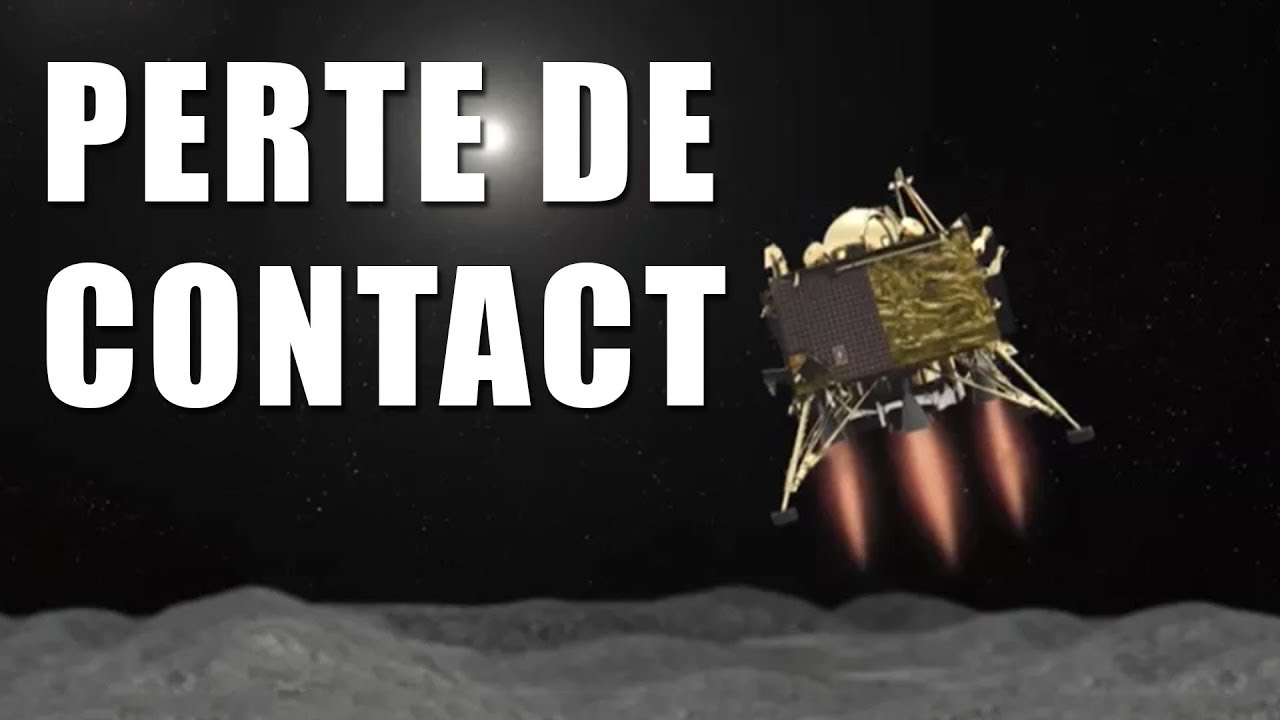
Mission LUNAIRE en DANGER ! DNDE #120
Keywords
Summary
168 words
Critical Evaluation
Value of the Information & Strength of the Argument
The video provides valuable, up-to-date information on several space missions, synthesizing details from official reports and scientific publications. The argumentation is clear and logical, presenting facts with appropriate context. For instance, it explains the significance of the Chandrayaan-2 orbiter’s continued operation and the scientific value of the MASCOT data. The discussion of the Vega failure is well-structured, outlining the cause and potential consequences. The presentation of Ryugu’s properties is supported by references to scientific studies. The video maintains a balanced tone, acknowledging both successes and failures in space exploration.
Scientific Rigor, Source Quality, Title Accuracy
The video demonstrates strong scientific rigor by citing official sources, such as the ESA inquiry report and peer-reviewed articles in Science. The description provides direct links to these sources, enhancing transparency. The title accurately reflects the primary topic, though it omits the other significant stories covered. The content aligns well with the title, focusing on the lunar mission’s danger while also providing broader space news. The video’s credibility is reinforced by its use of reputable space news outlets like Space.com and Universe Today.
187 words
Title / Content Match
The title accurately reflects the main topic (the Indian lunar mission in danger) and the episode number, though it doesn't mention the other significant stories covered.
Quality & Reliability
8/10
The video is a well-structured news review with clear sourcing to official reports (ESA inquiry, scientific papers) and reputable space news outlets. The information is presented with appropriate nuance, acknowledging uncertainties (e.g., Vikram's status). Minor limitations include reliance on secondary sources for some claims and a lack of in-depth technical detail.
Key Moments
Markers derived by PSI from the transcript: the creator did not define chapters.
- Introduction to the episode and the Chandrayaan-2 mission.
- Details of Vikram lander's descent and loss of communication.
- Status update on Vikram and the orbiter's continued mission.
- Discussion of Chang'e 4's discovery of a gel-like substance on the Moon.
- Report on the Vega VV15 failure and the inquiry findings.
- Analysis of the competitive small launcher market and Firefly Aerospace.
- Introduction to MASCOT and its exploration of Ryugu.
- Scientific results from MASCOT: Ryugu's composition and structure.
- Implications of Ryugu's history and future sample analysis.
Cited Sources
- India's Moon Lander May Be in One Piece, Reports Say — Source for the status of the Vikram lander after loss of communication.
- What has China's rover found on the moon's far side? — Source for the Chang'e 4 discovery of a gel-like substance.
- Vega flight VV15 findings of the Independent Inquiry Commission's investigations — Official ESA report on the Vega VV15 failure.
- Chinese light launch blitz continues with Kuaizhou-1A mission — Source for Chinese small launcher activity.
- Firefly Aerospace pushes back first launch to 2020 — Source for Firefly Aerospace's launch schedule.
- Asteroid Ryugu is a fragile rubble pile — Source for the nature of asteroid Ryugu.
- Science article on Ryugu — Peer-reviewed article on Ryugu's properties.
Concurring Sources
- Chandrayaan-2 - Wikipedia — Provides mission details consistent with the video's account.
- Vega VV15 failure - ESA press release — Official report confirming the cause of the failure.
- Ryugu - Science article — Peer-reviewed findings on Ryugu's properties, aligning with the video's claims.
External References
Contribution & Novelties
The video provides a concise synthesis of recent space news, offering a valuable update for enthusiasts. Its main contribution is in contextualizing the failures and successes, such as explaining the significance of the Chandrayaan-2 orbiter’s continued operation and the implications of the Vega failure for European launch capabilities. The presentation of MASCOT’s findings helps popularize recent scientific discoveries about asteroids.
Pour aller plus loin :
- Chandrayaan-2 — Overview of the mission and its objectives.
- Vega (rocket) — Background on the European launch vehicle and its variants.
- Hayabusa2 — Details on the Japanese asteroid sample-return mission.
- Carbonaceous chondrite — Explanation of the meteorite type linked to Ryugu’s composition.
107 words
Radar Profile
The radar profile shows high scores in information quantity, quality, and reliability, with a slightly lower technical level. This indicates a well-researched and informative video that remains accessible to a broad audience, though it does not delve into highly technical details.
💬 Très positif. Sur les 30 commentaires analysés, l'enthousiasme est unanime : les spectateurs saluent la qualité des informations, la clarté des explications et la beauté des images, exprimant un fort soutien à la chaîne.