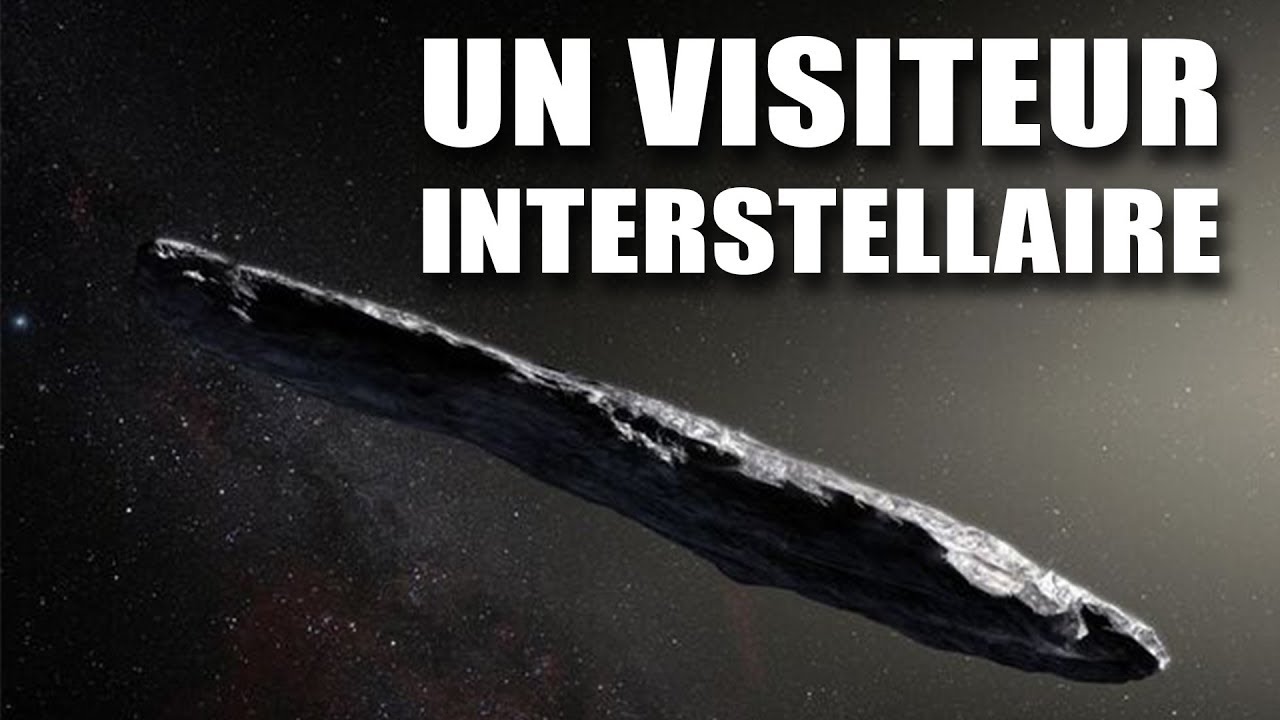
Que sait-on vraiment d’Oumuamua ? - EC
Keywords
Summary
174 words
Critical Evaluation
Value of the Information & Strength of the Argument
The video provides valuable, up-to-date information on several space topics, with clear explanations of complex concepts. The argumentation is solid, particularly in the Oumuamua segment, where Hugo presents the mainstream hypothesis and the alternative solar sail idea, then critically evaluates the evidence, noting the lack of proof and the silence of radio telescopes. He also explains the equivalence principle and the significance of the MICROSCOPE results in a way that is accessible yet accurate. The structure is logical, moving from one topic to another with smooth transitions.
Scientific Rigor, Source Quality, Title Accuracy
The video demonstrates scientific rigor by presenting multiple hypotheses and clearly stating the limitations of current knowledge. The sources are not explicitly cited in the video, but the information aligns with scientific consensus. The title accurately reflects the main content, which is a detailed discussion of Oumuamua, with additional segments on other space news. The video does not overstate claims and appropriately uses cautionary language when discussing speculative ideas.
171 words
Title / Content Match
The title accurately reflects the main topic, which is a thorough discussion of what is known about Oumuamua, with additional space news segments.
Quality & Reliability
8/10
The video presents a balanced overview of the Oumuamua debate, clearly distinguishing the mainstream cometary outgassing hypothesis from the Harvard solar sail speculation, and correctly notes the lack of concrete evidence for the latter. It also covers ion propulsion, Parker Solar Probe, the MICROSCOPE mission, and space debris mitigation with accurate technical details. The information aligns with scientific consensus as of late 2018, though some specifics (e.g., mission statuses) have since evolved.
Key Moments
Markers derived by PSI from the transcript: the creator did not define chapters.
- Introduction to the episode and the topic of Oumuamua.
- Discussion of Oumuamua's discovery, shape, and color.
- Explanation of the acceleration and the outgassing hypothesis.
- Presentation of the Harvard solar sail hypothesis and its critique.
- Mention of SETI and Breakthrough Listen observations, and the silence of Oumuamua.
- Transition to ion propulsion, with examples of missions using it.
- Discussion of ion propulsion in commercial satellites and cubesats.
- NASA's lunar Gateway and the use of electric propulsion.
- Update on Parker Solar Probe's first perihelion and its success.
- Introduction to the MICROSCOPE mission and the equivalence principle.
- Results of MICROSCOPE confirming the equivalence principle.
- Discussion of space debris mitigation, including MICROSCOPE's deorbit test and OneWeb's plans.
Cited Sources
- Hugo Lisoir on Twitch — Link to the creator's Twitch channel, mentioned in the video description.
Concurring Sources
- NASA - Oumuamua — NASA's official page about Oumuamua's acceleration, consistent with the video's explanation.
- ESA - MICROSCOPE — ESA's page on the MICROSCOPE mission, confirming the results mentioned in the video.
Dissenting Sources
- Bialy & Loeb (2018) - Could Solar Radiation Pressure Explain 'Oumuamua's Peculiar Acceleration? — This paper proposes the solar sail hypothesis, which the video presents as an alternative but notes lacks evidence.
Contribution & Novelties
The video provides a concise and accessible synthesis of the Oumuamua debate, highlighting the scientific process of hypothesis evaluation. It also offers a broad update on multiple space topics, making it a valuable resource for enthusiasts. The segment on MICROSCOPE is particularly informative, explaining the equivalence principle and the significance of the results.
Pour aller plus loin :
- Oumuamua on Wikipedia — Provides comprehensive details about the object, its discovery, and the scientific debate.
- Equivalence principle on Wikipedia — Explains the principle tested by MICROSCOPE and its role in general relativity.
- Parker Solar Probe on Wikipedia — Details the mission, its objectives, and the first results.
106 words
Radar Profile
The radar profile shows high scores in information quantity and quality, with a slightly lower technical level, indicating that the video is informative and reliable but not overly technical. The global reliability score is high, reflecting the accurate presentation of scientific consensus.
💬 Très positif. Sur les 30 commentaires analysés, la grande majorité exprime des remerciements et des éloges pour la qualité du contenu, avec quelques remarques constructives sur le ton de la voix.