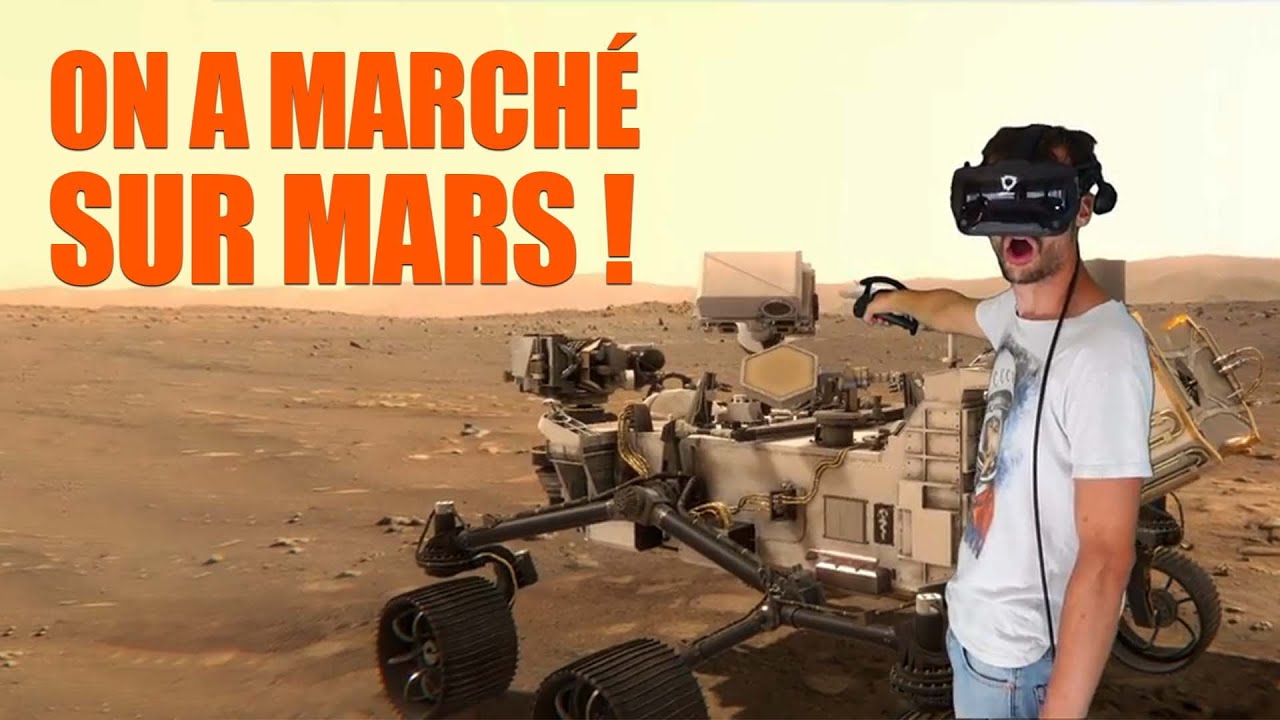
La SIMULATION LA PLUS RÉALISTE de MARS ! #metaverse
Keywords
Summary
142 words
Critical Evaluation
Value of the Information & Strength of the Argument
The video provides a clear and engaging demonstration of a VR tool applied to planetary science. It effectively argues that VR can enhance data visualization and scientific analysis by allowing researchers to interact with Martian environments in an intuitive way. The argumentation is supported by concrete examples, such as the integration of spectrometer data and the use of orbital imagery to model large-scale terrain. The creator is honest about the limitations of the simulation, particularly the speculative nature of the water reconstruction. However, the video is more of a showcase than a critical evaluation, and it does not delve into the technical challenges or potential biases of the VR approach.
Scientific Rigor, Source Quality, Title Accuracy
The video relies on the expertise of VR2Planets and the data from NASA missions, which are credible sources. The description provides links to the company’s website and the festival, but no direct scientific publications are cited. The title accurately reflects the content, and the video clearly distinguishes between real data and speculative reconstructions. The promotional nature of the video is transparent, but it does not undermine the scientific value of the demonstration.
197 words
Title / Content Match
The title accurately reflects the content: a demonstration of a highly realistic Mars VR simulation.
Quality & Reliability
7/10
The video presents a VR simulation of Mars based on real mission data, with clear explanations of the scientific value and limitations. The creator is transparent about the speculative nature of the water simulation. However, the video is primarily a promotional piece for the VR company and the festival, and the scientific depth is limited.
Key Moments
Markers derived by PSI from the transcript: the creator did not define chapters.
- Introduction: Hugo and Maxime on Mars in VR, explaining the simulation is based on real data.
- Explanation of VR2Planets' collaboration with space agencies for research.
- Demonstration of Perseverance rover environment and integration of spectrometer data.
- Zooming out to see the Jezero crater and the ancient lake, using HiRISE data.
- Flying over the Martian landscape, showing canyons and riverbeds.
- Activating the water simulation to visualize Mars 4 billion years ago.
- Tour of a hypothetical Martian base with augmented reality elements.
- Discussion of VR2Planets' work on other celestial bodies like comets and Venus.
- Promotion of the Explor'espace festival and the opportunity to try the VR experience.
- Conclusion and invitation to comment and join the community.
Cited Sources
- Explor'espace festival — Event promoted in the video where the VR simulation can be tried.
- Charlie Duke event — Conference by astronaut Charlie Duke mentioned in the video.
- Hugo Lisoir Podcast on Spotify — Podcast platform for the channel.
- Hugo Lisoir Podcast on iTunes — Podcast platform for the channel.
- Hugo Lisoir Podcast on Deezer — Podcast platform for the channel.
- RSS feed for podcast — RSS feed for the podcast.
- Book on Amazon — Book by the creator.
- Book on FNAC — Book by the creator.
- Support on Tipeee — Support page.
- Support on uTip — Support page.
- Twitch channel — Live streaming channel.
- Music by Pedro Camacho — Music used in the video.
- Utho Riley YouTube channel — Music used in the video.
- Générique by Gérald M. Dorai — Theme music for the video.
Concurring Sources
- NASA Mars Exploration — Official NASA site with data and images from Mars missions, supporting the real data used in the simulation.
- ESA Mars Express — ESA mission that provides additional data on Mars, consistent with the video's use of orbital data.
Contribution & Novelties
The video showcases a novel application of VR technology for planetary science, demonstrating how real mission data can be transformed into an interactive and immersive environment. It highlights the potential of VR as a tool for data visualization, scientific analysis, and training, going beyond mere entertainment. The video also introduces the concept of using VR to reconstruct past environments, such as ancient Mars with water, which can help scientists and the public visualize planetary evolution.
Pour aller plus loin :
- Virtual reality in science — Provides an overview of VR applications, including scientific visualization.
- Mars Science Laboratory — Background on the Curiosity rover mission, which is referenced in the video.
- HiRISE — The high-resolution camera on the Mars Reconnaissance Orbiter, used for terrain modeling.
- InSight lander — The lander mission that the video starts with.
- Perseverance rover — The rover mission featured in the video.
145 words
Radar Profile
The radar profile shows high scores in information quality and quantity, reflecting the video's rich content and clear explanations. The technical level is moderate, suitable for a general audience, while the global reliability is good due to the use of real mission data. The video excels in presenting scientific information in an engaging way, though it remains a promotional piece.
💬 Très positif. Sur les 30 commentaires analysés, les spectateurs expriment un enthousiasme marqué pour la démonstration VR, saluant son réalisme et son intérêt scientifique, avec quelques remarques humoristiques et des retours d'expérience du festival.