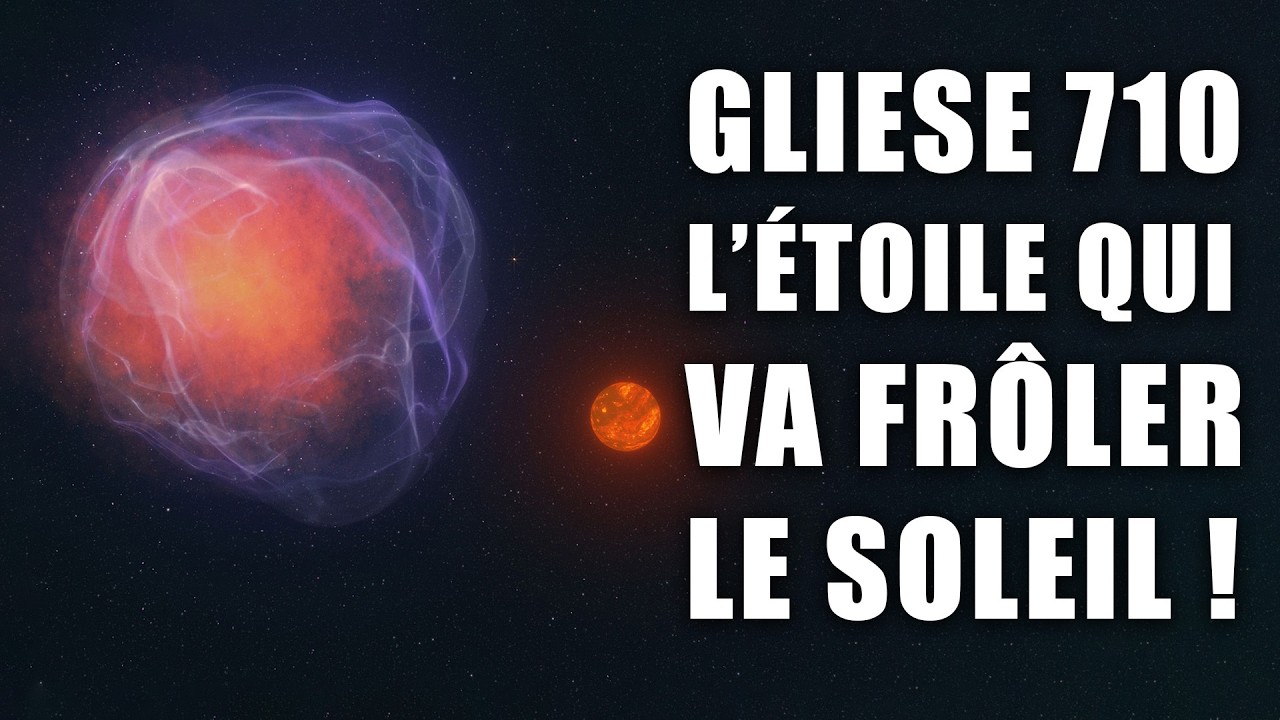
Une étoile fonce vers notre système solaire !
Keywords
Summary
157 words
Critical Evaluation
Value of the Information & Strength of the Argument
The video provides valuable information by synthesizing recent scientific research on stellar flybys, including specific data on Scholz’s star and Gliese 710. The argumentation is solid, as it builds from historical hypotheses to current simulations, clearly explaining the evidence and uncertainties. The presenter effectively communicates the scale of distances and the potential effects on the solar system, making complex topics accessible without oversimplifying. The use of specific examples, such as the comet C/2023 A3, adds credibility and illustrates the practical implications of these encounters.
Scientific Rigor, Source Quality, Title Accuracy
The video demonstrates strong scientific rigor by citing peer-reviewed papers and NASA sources, which are listed in the description. The information is presented accurately, with appropriate caveats about uncertainties. The title is somewhat sensationalist but does not mislead; it accurately reflects the content about a star approaching our solar system. The video maintains a high standard of scientific accuracy, and the sources are credible and relevant.
165 words
Title / Content Match
The title is slightly sensationalist but accurately reflects the content about a star approaching our solar system.
Quality & Reliability
8/10
The video presents a well-structured overview of stellar flybys, citing recent scientific papers and NASA sources. The information is accurate and up-to-date, with clear explanations of complex concepts. Minor simplifications are present but do not compromise scientific integrity.
Key Moments
Markers derived by PSI from the transcript: the creator did not define chapters.
- Introduction to the concept of stars passing close to the Sun
- Discussion of the Late Heavy Bombardment and the hypothesis of a stellar flyby
- Discovery of Scholz's star and its past close approach
- Explanation of the Oort cloud and potential perturbations by Scholz's star
- Upcoming close approach of Gliese 710 in 1.3 million years
- Hypothetical scenario of a Sun-like star passing very close to the Sun
- Conclusion and implications for planetary systems and interstellar travel
Cited Sources
- arXiv paper on stellar flybys — Referenced for simulations of close stellar encounters and their effects on planetary systems.
- NASA Science article on a passing star — Referenced for information on Scholz's star and its past close approach.
- A&A paper on stellar encounters — Referenced for the study of Gliese 710's future close approach and its potential effects.
Concurring Sources
- NASA Science article on a passing star — Provides information on Scholz's star and its past close approach, consistent with the video's claims.
- A&A paper on stellar encounters — Supports the prediction of Gliese 710's close approach and its potential effects on the Oort cloud.
External References
Contribution & Novelties
The video provides a comprehensive and accessible synthesis of recent research on stellar flybys, highlighting both past events (Scholz’s star) and future predictions (Gliese 710). It effectively communicates the scientific process, from hypothesis to simulation, and explains the potential consequences for the solar system. The video also introduces the concept of planetary capture and ejection, which is a relatively novel aspect for a general audience.
Pour aller plus loin :
- Stellar flyby — Wikipedia article providing an overview of stellar flybys and their effects.
- Oort cloud — Wikipedia article on the Oort cloud, its structure, and its role in cometary activity.
- Gliese 710 — Wikipedia article on Gliese 710, including its predicted close approach to the Sun.
117 words
Radar Profile
The radar profile shows high scores in information quality and reliability, with a slightly lower score in technical level, indicating that the video is well-researched and accurate but may not delve into the most advanced technical details. The overall balance suggests a strong educational resource for a general audience interested in astronomy.
💬 Très positif. Sur les 30 commentaires analysés, les spectateurs expriment une admiration unanime pour la qualité de la vulgarisation, la rigueur scientifique et la clarté des explications, avec quelques remarques constructives sur la grammaire et des suggestions de sujets.