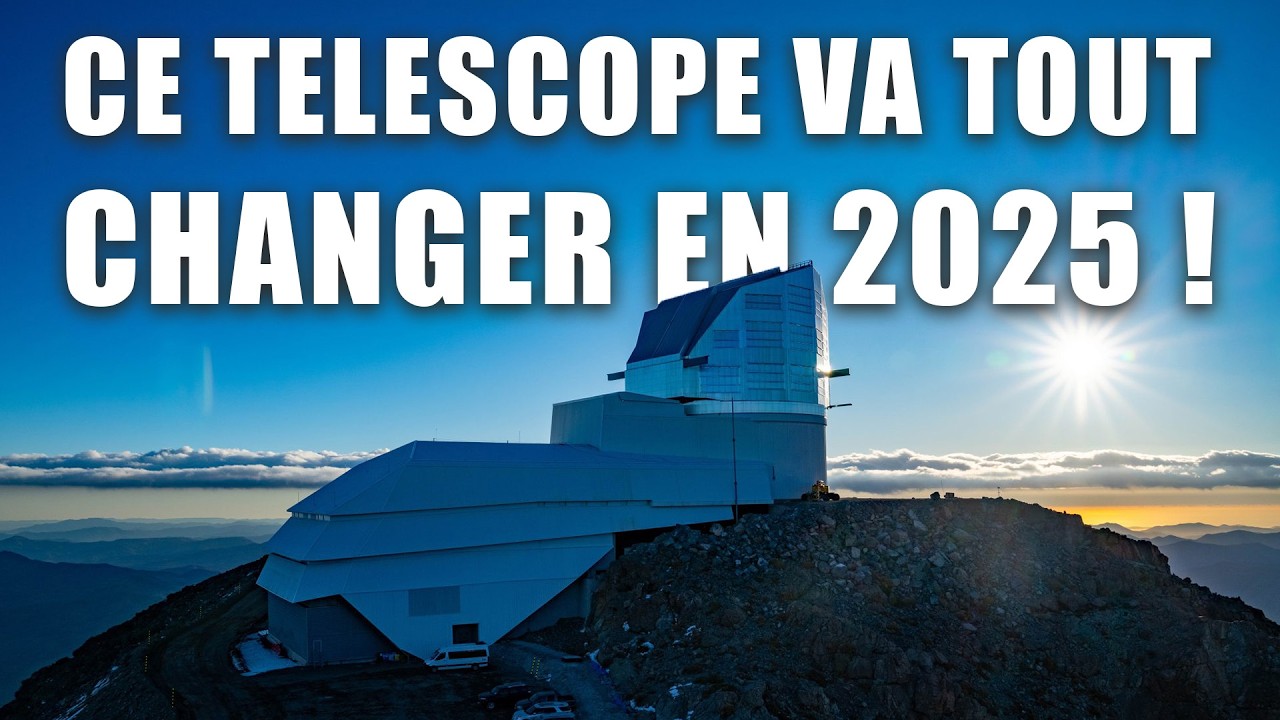
VERA RUBIN - Le télescope avec la plus grande caméra du monde !
Keywords
Summary
151 words
Critical Evaluation
Value of the Information & Strength of the Argument
The video provides substantial information about the Vera Rubin Observatory, explaining its unique survey strategy and expected scientific returns. The argumentation is solid, drawing on comparisons with the SDSS and referencing specific studies. The presenter effectively communicates the significance of the project without overhyping, maintaining a balanced view by also addressing challenges like satellite constellations. The technical details are presented clearly, making the content valuable for both enthusiasts and those with some background in astronomy.
Scientific Rigor, Source Quality, Title Accuracy
The video cites several credible sources, including the official LSST project status page, an arXiv paper, and the SDSS website. These sources are relevant and support the claims made. The title accurately reflects the content, focusing on the telescope and its camera. The presentation is rigorous, with clear explanations and appropriate caveats. The video does not overstate the capabilities of the telescope, and it acknowledges uncertainties, such as the existence of Planet Nine.
163 words
Title / Content Match
The title accurately reflects the content, focusing on the Vera Rubin Observatory and its unique camera.
Quality & Reliability
8/10
The video is well-structured, based on established scientific projects (LSST, SDSS) and includes references to official sources and an arXiv paper. The presenter clearly explains the technical aspects and potential discoveries, maintaining a neutral and informative tone. Minor simplifications are present but do not undermine the overall reliability.
Key Moments
Markers derived by PSI from the transcript: the creator did not define chapters.
- Introduction to the Vera Rubin Observatory and its significance.
- Explanation of the Decadal Survey and the LSST project.
- Comparison with James Webb and the survey strategy.
- Expected discoveries in the solar system: asteroids and trans-Neptunian objects.
- Potential for discovering Planet Nine and interstellar objects.
- Technical specifications: mirror, camera, and data volume.
- Challenges from satellite constellations and future prospects.
Cited Sources
- LSST Project Status — Official project status page for the Vera Rubin Observatory.
- LSST Science Book — arXiv paper detailing the LSST science goals.
- SDSS Science — Sloan Digital Sky Survey science page, used as a comparison.
- LSST Data Management — Information about the data management infrastructure of LSST.
Concurring Sources
- LSST Project Status — Official status page confirming the telescope's construction and expected first light.
- LSST Science Book — Scientific publication outlining the expected discoveries and capabilities.
External References
Contribution & Novelties
The video provides a clear and accessible overview of the Vera Rubin Observatory, highlighting its unique survey approach and potential discoveries. It effectively explains the scientific value of continuous sky monitoring and places the project in the context of astronomical history.
Pour aller plus loin :
- Vera C. Rubin Observatory — Detailed overview of the observatory and its instruments.
- Large Synoptic Survey Telescope — Background on the project’s development and goals.
- Sloan Digital Sky Survey — The predecessor survey that demonstrated the power of wide-field surveys.
86 words
Radar Profile
The radar profile shows high scores across all dimensions, indicating a well-balanced and informative video. The strength lies in the quantity and quality of information, with a solid technical level and high reliability.
💬 Très positif. Sur les 30 commentaires analysés, les spectateurs expriment un fort enthousiasme pour le télescope et la chaîne, avec plusieurs demandes de vidéos complémentaires sur l'infrastructure informatique et le traitement des données.