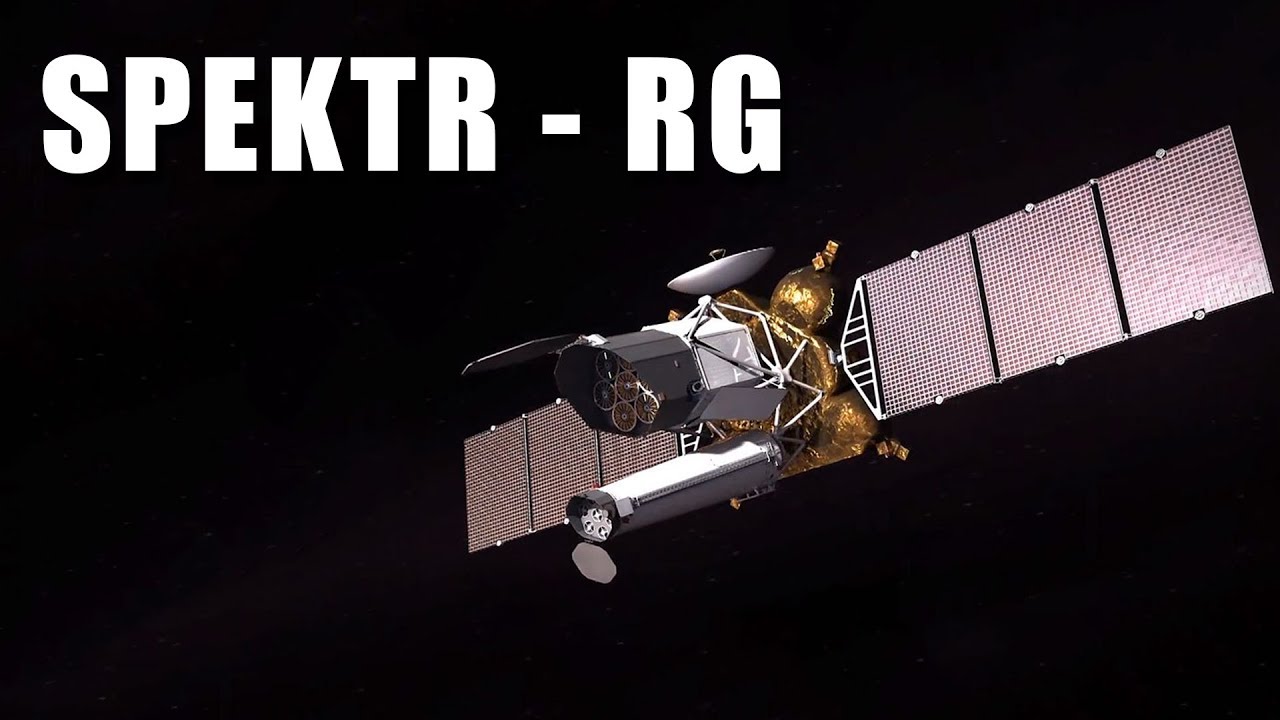
Un Super Télescope Russe frôle la catastrophe ! DNDE #112
Keywords
Summary
165 words
Critical Evaluation
Value of the Information & Strength of the Argument
The video provides valuable, up-to-date information on significant space events, with clear explanations of technical details and implications. The argumentation is solid, presenting facts and uncertainties without overstatement. The host effectively contextualizes each story, such as the historical background of the Spektr program and the significance of methane detection. The discussion of conflicting data between Curiosity and ExoMars is balanced, acknowledging the scientific debate.
Scientific Rigor, Source Quality, Title Accuracy
The video demonstrates scientific rigor by citing reputable sources like NASA, Nature, and NASASpaceflight, and by clearly distinguishing between confirmed facts and speculation. The title accurately highlights the main story, though it uses a dramatic tone. The content aligns well with the title, focusing on the Spektr-RG near-miss, while also covering other news. The sources are appropriately credited in the description, enhancing credibility.
142 words
Title / Content Match
The title accurately reflects the main story about the Spektr-RG telescope's battery issue, though it sensationalizes the 'catastrophe' aspect.
Quality & Reliability
8/10
The video is well-documented, citing multiple reliable sources such as NASA, Nature, and NASASpaceflight. The information is current as of the publication date and presented with appropriate caution regarding uncertainties.
Key Moments
Markers derived by PSI from the transcript: the creator did not define chapters.
- Introduction to the Spektr-RG observatory and its importance
- Details on the battery issue and launch delay
- Discussion of SpaceX crewed Dragon timeline and Raptor engine explosion
- Falcon Heavy third flight and military certification prospects
- Curiosity's methane detection and the discrepancy with ExoMars
- Possible explanations for methane observations and future missions
Cited Sources
- Russian Proton-M launches Spektr-RG observatory — Source for the Spektr-RG launch details and battery issue
- Spektr-RG mission page — Background on the Spektr-RG mission and program
- Station planning new crew launch dates — Information on crewed Dragon launch schedule
- SpaceX Falcon Heavy STP-2 launch success — Details on Falcon Heavy's third flight
- Curiosity detects unusually high methane levels — NASA announcement of Curiosity's methane detection
- Nature news article on Mars methane — Scientific perspective on the methane findings
Concurring Sources
- NASA's Curiosity rover — Official mission page for Curiosity, supporting methane detection claims.
- ExoMars Trace Gas Orbiter — ESA page on ExoMars TGO, relevant to the methane discrepancy.
Dissenting Sources
- ExoMars TGO finds no methane — The orbiter's lack of methane detection contrasts with Curiosity's findings, as discussed in the video.
External References
Contribution & Novelties
The video synthesizes recent space news with clear explanations, providing context that is often missing in mainstream coverage. It highlights the significance of the Spektr-RG mission for Russian space science and the ongoing methane debate on Mars.
Pour aller plus loin :
- Spektr-RG mission overview — Provides background on the observatory and its objectives.
- Mars methane mystery — Explores the scientific debate around methane detections on Mars.
- Falcon Heavy — Details the launch vehicle’s capabilities and missions.
77 words
Radar Profile
The radar profile shows high scores in information quantity, quality, and reliability, with a slightly lower technical level, indicating a well-researched and accessible presentation for a general audience.
💬 Très positif. Sur les 30 commentaires analysés, la grande majorité exprime une appréciation chaleureuse et un soutien enthousiaste pour la chaîne, saluant la qualité de l'information et la pédagogie de Hugo Lisoir.