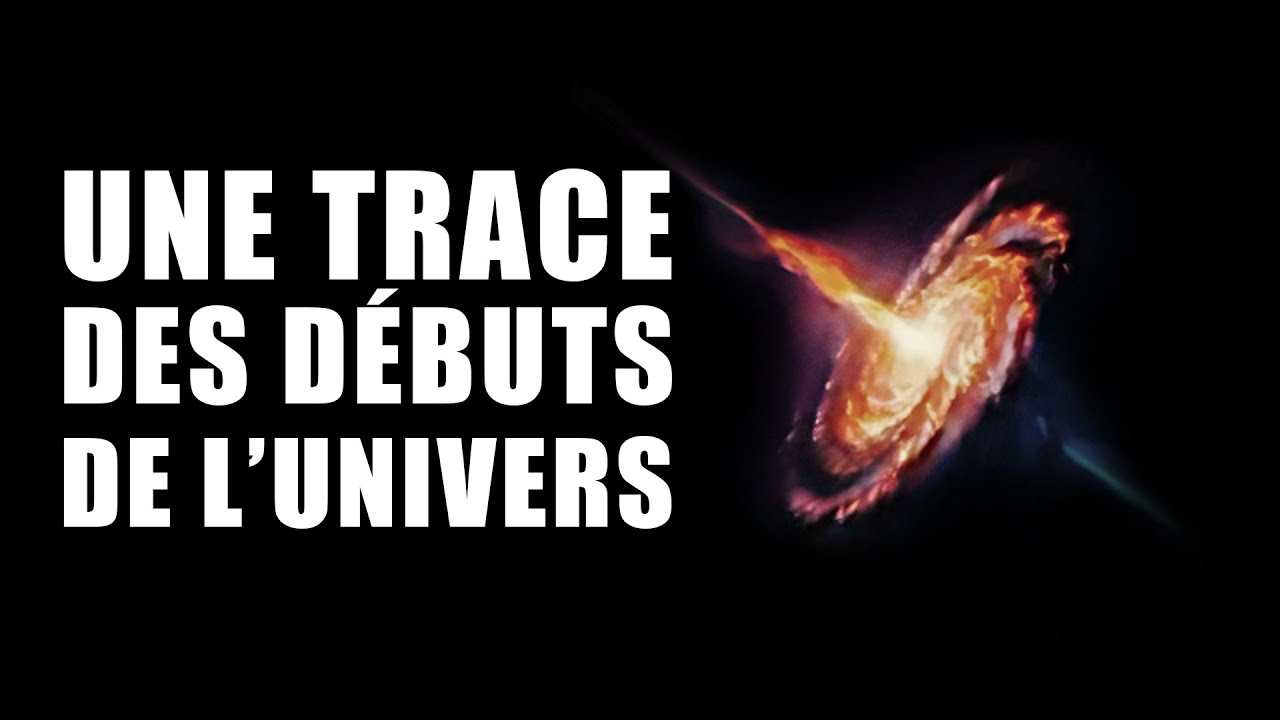
Une GIGANTESQUE ÉTOILE presque aussi ANCIENNE que L'UNIVERS ! DNDE 267
Keywords
Summary
157 words
Critical Evaluation
Value of the Information & Strength of the Argument
The video provides valuable information by summarizing recent scientific developments and space missions in an accessible manner. The argumentation is solid, as it clearly distinguishes between confirmed facts and hypotheses, and explains the significance of each finding. For instance, the segment on Population III stars explains the theoretical background and the indirect evidence, while acknowledging the uncertainties. The coverage of space missions like SLS and DART is factual and up-to-date, with references to official sources. The presenter’s enthusiasm is balanced with a critical perspective, making the content informative and engaging.
Scientific Rigor, Source Quality, Title Accuracy
The video demonstrates scientific rigor by citing specific sources for each topic, including peer-reviewed articles (IOP) and official space agency announcements (NASA, ESA). The sources are credible and directly relevant to the claims made. The title accurately reflects the main topic of the video, though it emphasizes the Population III star segment, which is indeed the most striking. The content aligns well with the title, as the video covers a range of space news, with the star story being the headline. The presentation is clear and well-structured, with appropriate use of visuals and explanations.
199 words
Title / Content Match
The title highlights the most striking topic (a giant ancient star) which is indeed the main segment, though the video also covers other space news.
Quality & Reliability
8/10
The video presents a well-structured summary of recent astronomical findings, citing specific scientific sources (e.g., the IOP article on Population III stars) and official space agency announcements. The information is accurate and up-to-date as of the publication date, with clear distinctions between established facts and hypotheses. The presenter maintains a neutral tone and acknowledges uncertainties.
Key Moments
Markers derived by PSI from the transcript: the creator did not define chapters.
- Introduction and overview of the video topics
- Discussion on Population III stars and their characteristics
- Explanation of the indirect detection method using quasar J1342+0928
- Details on the iron-to-magnesium ratio and pair-instability supernova hypothesis
- Update on SLS and Artemis I launch window in November
- Ariane 6 Vinci engine hot-fire tests and capabilities
- Crew-5 mission to ISS and international collaboration
- DART impact results and LICIACube images
- China's new 110-meter radio telescope construction
- Conclusion and call for questions
Cited Sources
- The Astrophysical Journal - Possible detection of a Population III star — Source for the Population III star detection claim
- Kennedy Space Center - Artemis I launch window — Source for SLS launch schedule
- ESA - Ariane 6 upper stage hot fire tests — Source for Ariane 6 testing
- NASA - First images from LICIACube — Source for DART impact images
- Global Times - China's new radio telescope — Source for the new Chinese radio telescope
Concurring Sources
- NASA - DART mission — Official mission page confirming the impact and results.
- ESA - Ariane 6 — Official page for Ariane 6 program.
Dissenting Sources
- No discordant sources found — The video's claims align with the cited sources and current scientific consensus.
External References
Contribution & Novelties
The video provides a concise synthesis of recent astronomical discoveries and space missions, making complex topics accessible to a general audience. Its main novelty lies in highlighting the potential indirect detection of Population III stars, a topic rarely covered in mainstream media. The video also updates viewers on ongoing space projects, offering a comprehensive overview of current space exploration efforts.
Pour aller plus loin :
- Population III stars — Background on the first generation of stars.
- Pair-instability supernova — Explanation of the proposed explosion mechanism.
- Quasar — Overview of quasars and their role in the detection.
- James Webb Space Telescope — Future observations that may confirm these findings.
108 words
Radar Profile
The radar profile shows high scores across all dimensions, indicating a well-rounded and reliable video. The strongest aspects are the quantity and quality of information, while the technical level is slightly lower, reflecting its accessible approach. Overall, the video is a trustworthy source of space news.
💬 Très positif. Sur les 30 commentaires analysés, les spectateurs expriment un fort enthousiasme et une gratitude pour la qualité du contenu, saluant la passion et le travail des créateurs.