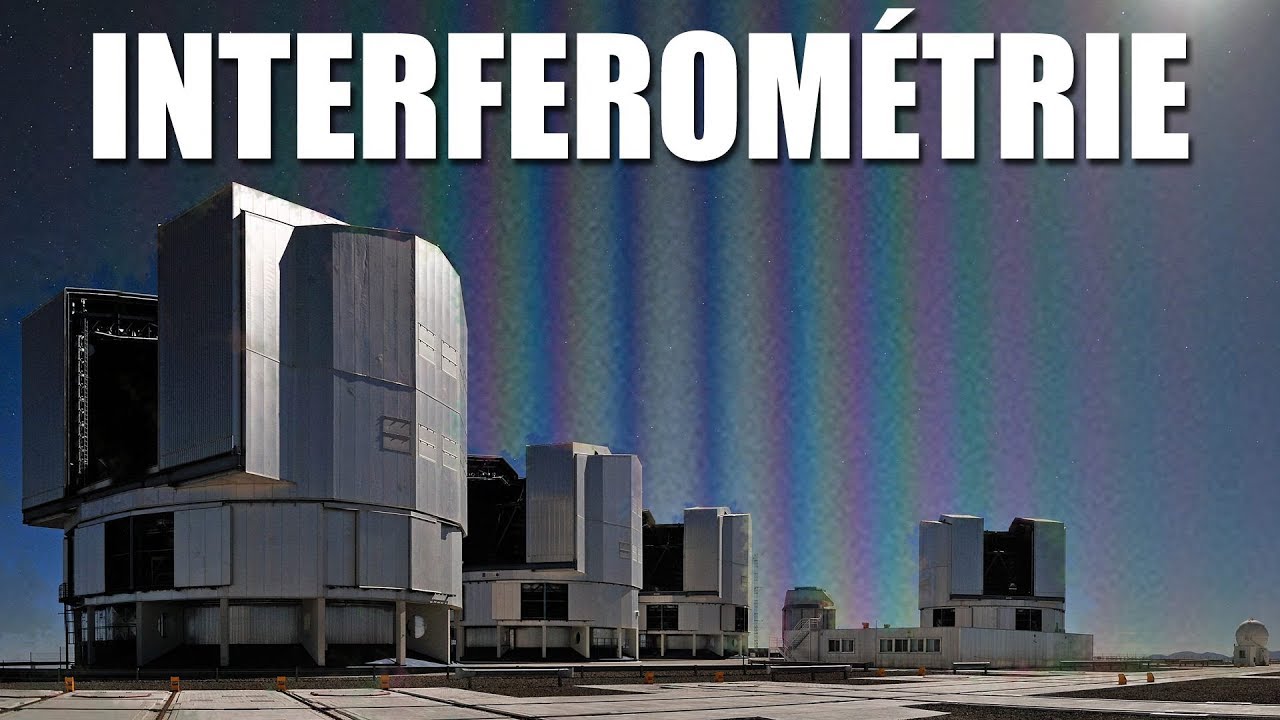
Interférométrie : L'Univers à travers des franges !
Keywords
Summary
96 words
Critical Evaluation
Value of the Information & Strength of the Argument
The video provides a high-quality explanation of a complex topic, using clear analogies and historical context to build understanding. The argumentation is logical and well-structured, progressing from basic concepts to advanced applications. The use of diagrams and animations effectively illustrates the principles, making the content accessible without oversimplifying.
Scientific Rigor, Source Quality, Title Accuracy
The video cites reliable sources, including academic papers and educational resources from Observatoire de Paris. The historical accounts are accurate, and the technical details are consistent with current knowledge. The title accurately reflects the content, and the video maintains a high standard of scientific rigor throughout.
109 words
Title / Content Match
The title accurately reflects the content, which explains how interferometry uses interference fringes to study the universe.
Quality & Reliability
8/10
The video provides a clear and accurate explanation of interferometry, supported by references to historical experiments and modern observatories. The scientific content is well-structured and technically sound, though it remains at a popularization level without deep mathematical derivations.
Key Moments
Markers derived by PSI from the transcript: the creator did not define chapters.
- Introduction to interferometry and the promise of the VLT.
- Explanation of wave optics and the formation of Airy disks.
- Michelson's experiment and the first stellar diameter measurements.
- Labeyrie's pioneering work and the development of modern interferometers.
- Technical challenges: coherence, delay lines, and atmospheric turbulence.
- Applications and limitations of optical interferometry.
Cited Sources
- Optique ondulatoire - ressources — Educational resource on wave optics used for background.
- 1975ApJ...196L..71L — Scientific paper referenced for historical context.
- ESO video on interferometry — Visual material from ESO illustrating interferometry.
Concurring Sources
- ESO VLTI page — Official information on the VLTI, consistent with the video's description.
- Michelson and Pease 1921 paper — Original paper on stellar interferometry, supporting the historical account.
External References
Contribution & Novelties
The video offers a clear and engaging synthesis of interferometry, making a complex technique accessible to a broad audience. It highlights the historical evolution and current capabilities, providing a solid foundation for further exploration.
Pour aller plus loin :
- Interférométrie (Wikipedia) — General overview of interferometry.
- Very Large Telescope Interferometer (ESO) — Official page of the VLTI.
- Optical interferometry in astronomy (arXiv) — Review article on the topic.
68 words
Radar Profile
The radar profile shows high scores in information quality and technical level, with slightly lower scores in quantity and reliability, reflecting a focused and well-explained but not exhaustive treatment of the subject.
💬 Très positif. Sur les 30 commentaires analysés, la grande majorité exprime une admiration pour la clarté des explications et la qualité de la vulgarisation, certains notant la complexité du sujet mais saluant l'accessibilité.