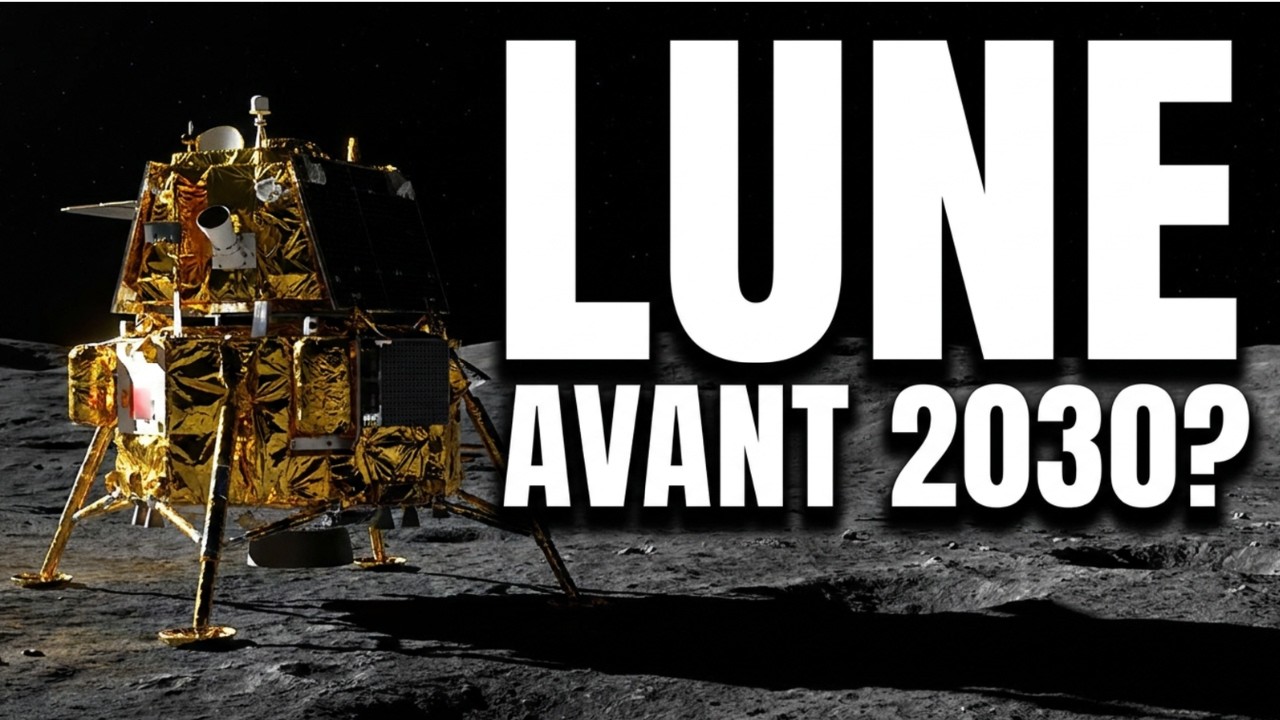
La CHINE accélère : L'objectif LUNE 2030 devient une priorité absolue !
Keywords
Summary
164 words
Critical Evaluation
Value of the Information & Strength of the Argument
The video provides valuable, up-to-date information on China’s lunar program, including recent milestones such as the Lanyue lander test and the upcoming Chang’e 7 mission. The argumentation is structured and logical, presenting China’s approach as methodical and risk-averse compared to the US. The presenter supports his claims with references to official sources and technical details, making the content informative. However, the argumentation is somewhat one-sided, with a clear pro-China bias and limited discussion of potential setbacks or challenges. The comparison with Artemis is simplified, and the presenter’s personal skepticism about NASA’s timeline is presented as fact.
Scientific Rigor, Source Quality, Title Accuracy
The video cites several official sources, including CCTV+, Global Times, and China-in-Space, which are credible for reporting on Chinese space activities. The technical information appears accurate and up-to-date. The title accurately reflects the content, focusing on China’s accelerated lunar program. However, the video lacks critical analysis of the sources and does not mention any potential contradictions or alternative viewpoints. The presenter’s subjective opinions are clearly distinguished from factual reporting, but the overall tone is promotional rather than balanced.
189 words
Title / Content Match
The title accurately reflects the content, which focuses on China's accelerated lunar program and the 2030 goal.
Quality & Reliability
7/10
The video presents a coherent overview of China's lunar program, citing official sources (CCTV+, Global Times, China-in-Space) and technical milestones. However, it includes subjective opinions and lacks critical scrutiny of potential challenges, slightly reducing the reliability score.
Key Moments
Markers derived by PSI from the transcript: the creator did not define chapters.
- Introduction to the new space race and China's goal of landing astronauts before 2030.
- Overview of the Chang'e robotic missions, from Chang'e 1 to Chang'e 6.
- Explanation of the reorganization between CNSA and CMSA to coordinate robotic and crewed programs.
- Details on the Long March 10 rocket and its dual-launch architecture for lunar missions.
- Progress on the Mengzhou crew capsule and Lanyue lander, including recent tests.
- Use of the Tiangong space station for testing technologies like sloshing and perovskite solar cells.
- Upcoming Chang'e 7 mission to the lunar south pole and its role as reconnaissance.
- Conclusion comparing China's approach to Artemis and the symbolic nature of the race.
Cited Sources
- CCTV+ article on China's lunar program — Official Chinese media report on recent lunar program developments.
- China-in-Space article on Lanyue lander test — Detailed report on the simulated lunar landing test of the Lanyue lander.
- Global Times article on China's lunar ambitions — Chinese state media coverage of the lunar program's progress.
Concurring Sources
- NASA Artemis program — Official NASA page on the Artemis program, providing context for comparison.
Dissenting Sources
- SpaceNews article on Artemis delays — Reports on delays and challenges in the Artemis program, contrasting with the video's optimistic view of China's timeline.
External References
Contribution & Novelties
The video provides a concise and accessible synthesis of China’s lunar program, highlighting recent organizational changes and technical milestones. It offers a comparative perspective with the US Artemis program, emphasizing China’s incremental and risk-averse strategy. The video also brings attention to less-known aspects such as the use of Tiangong for testing technologies like sloshing and perovskite solar cells.
Pour aller plus loin :
- Chang’e 7 mission overview — Wikipedia article on the upcoming mission.
- Long March 10 rocket — Wikipedia article on the launch vehicle.
- Lanyue lander — Wikipedia article on the crewed lunar lander.
- International Lunar Research Station — Wikipedia article on the planned lunar base.
107 words
Radar Profile
The radar profile shows high scores in information quantity and technical level, reflecting the video's detailed and technical content. The quality and reliability scores are moderate, indicating good but not exceptional rigor. The overall balance suggests a well-informed but somewhat opinionated presentation.
💬 Très positif. Sur les 30 commentaires analysés, la grande majorité exprime une admiration pour la méthode et la planification chinoises, avec des critiques récurrentes envers le programme américain, perçu comme moins cohérent.