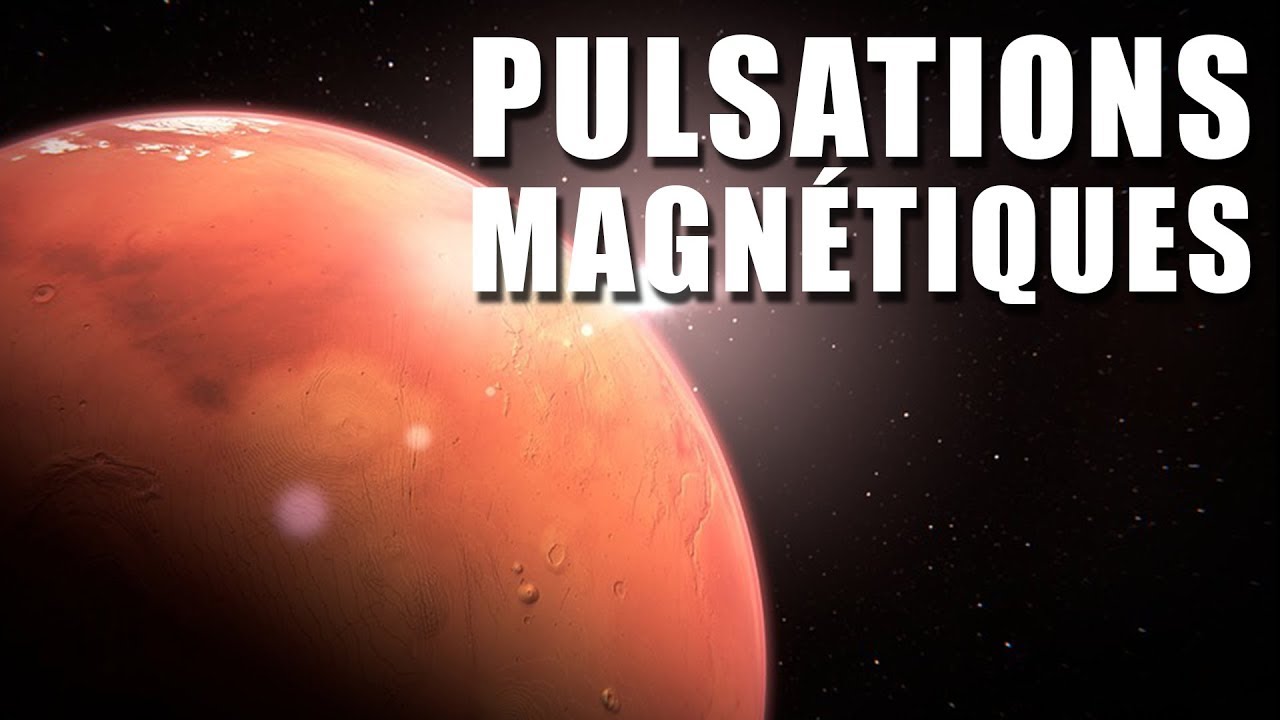
Des pulsations magnétiques sur MARS ! EC
Keywords
Summary
164 words
Critical Evaluation
Value of the Information & Strength of the Argument
The video provides valuable information on recent space science developments, particularly the InSight mission’s magnetic field measurements. The argumentation is solid, as the creator clearly distinguishes between confirmed data and preliminary interpretations. For instance, he notes that the magnetic pulsations are ‘preliminary results’ that require further analysis. The explanation of gravitational microlensing is clear and highlights the method’s strengths and limitations. The discussion on Starship’s safety is balanced, acknowledging the lack of an escape system while considering potential future solutions. Overall, the content is informative and well-structured, with a logical flow from one topic to the next.
Scientific Rigor, Source Quality, Title Accuracy
The video demonstrates scientific rigor by referencing official missions (InSight, WFIRST, DESI) and instruments (SEIS). The creator mentions that the magnetometer data is from the InSight lander and that results are preliminary. However, specific sources are not cited in the video or description, limiting the ability to verify claims independently. The title accurately reflects the main topic, and the content aligns well with the title. The video does not include any sponsored content, and the description provides links to support the channel and social media, but no direct scientific references.
202 words
Title / Content Match
The title accurately reflects the main topic of the video, which focuses on magnetic pulsations on Mars detected by InSight.
Quality & Reliability
8/10
The video presents scientific findings from the InSight mission, clearly distinguishing preliminary results from established facts. The creator references official missions and instruments (SEIS, InSight) and mentions ongoing research. The tone is measured and avoids overstatement, though some topics (e.g., PLD Space) are presented with less depth.
Key Moments
Markers derived by PSI from the transcript: the creator did not define chapters.
- Introduction to the episode and first question about magnetic pulsations on Mars.
- Explanation of InSight's SEIS instrument and its magnetometer.
- Discussion of the surprising intensity of magnetic activity and its possible origin.
- Mention of pulsations around midnight and possible explanations.
- Transition to PLD Space and its reusable rocket projects.
- Details on PLD Space's engines and partnership with ESA.
- Explanation of gravitational microlensing and its use in exoplanet detection.
- Discussion on WFIRST and its potential to survey exoplanets.
- Segment on SpaceX Starship's lack of escape system and safety concerns.
- Introduction to dark energy and the DESI instrument.
- Explanation of baryon acoustic oscillations and DESI's goals.
Cited Sources
- Support Hugo Lisoir on Tipeee — Support link for the channel, mentioned in the description.
- Support Hugo Lisoir on uTip — Alternative support link for the channel.
- Hugo Lisoir on Twitter — Social media link for the creator.
- Hugo Lisoir on Twitch — Streaming channel link.
- Discord community — Community discussion link.
- Hugo Lisoir on Facebook — Facebook page link.
- Star Citizen Soundtrack by Pedro Macedo Camacho — Music source used in the video.
- Utho Riley YouTube channel — Music source used in the video.
Concurring Sources
- NASA InSight Mission — Official mission page, consistent with the video's description of InSight's instruments and findings.
- ESA Future Launchers — ESA page on launch vehicles, relevant to the discussion on PLD Space and European launchers.
Contribution & Novelties
The video provides a concise overview of recent space science news, particularly the InSight mission’s magnetic field measurements, which are not widely covered in mainstream media. It also offers insights into lesser-known topics like PLD Space and gravitational microlensing, making them accessible to a general audience. The discussion on Starship’s safety is timely and adds perspective on the challenges of human spaceflight.
Pour aller plus loin :
- InSight Mission — Official NASA page for the InSight mission, providing detailed information on its instruments and findings.
- Gravitational microlensing — Wikipedia article explaining the technique and its applications.
- Dark Energy Spectroscopic Instrument (DESI) — Official DESI project page, detailing its goals and status.
- PLD Space — Company website with information on their launch vehicles and progress.
124 words
Radar Profile
The radar profile shows high scores in information quantity and quality, with a slightly lower technical level, indicating that the video is informative and reliable but may not delve deeply into technical details. The overall balance suggests a well-rounded science communication piece.
💬 Très positif. Sur les 30 commentaires analysés, la grande majorité exprime un soutien enthousiaste et des éloges pour la qualité et la rigueur des vidéos, avec quelques remerciements personnels pour les réponses apportées.