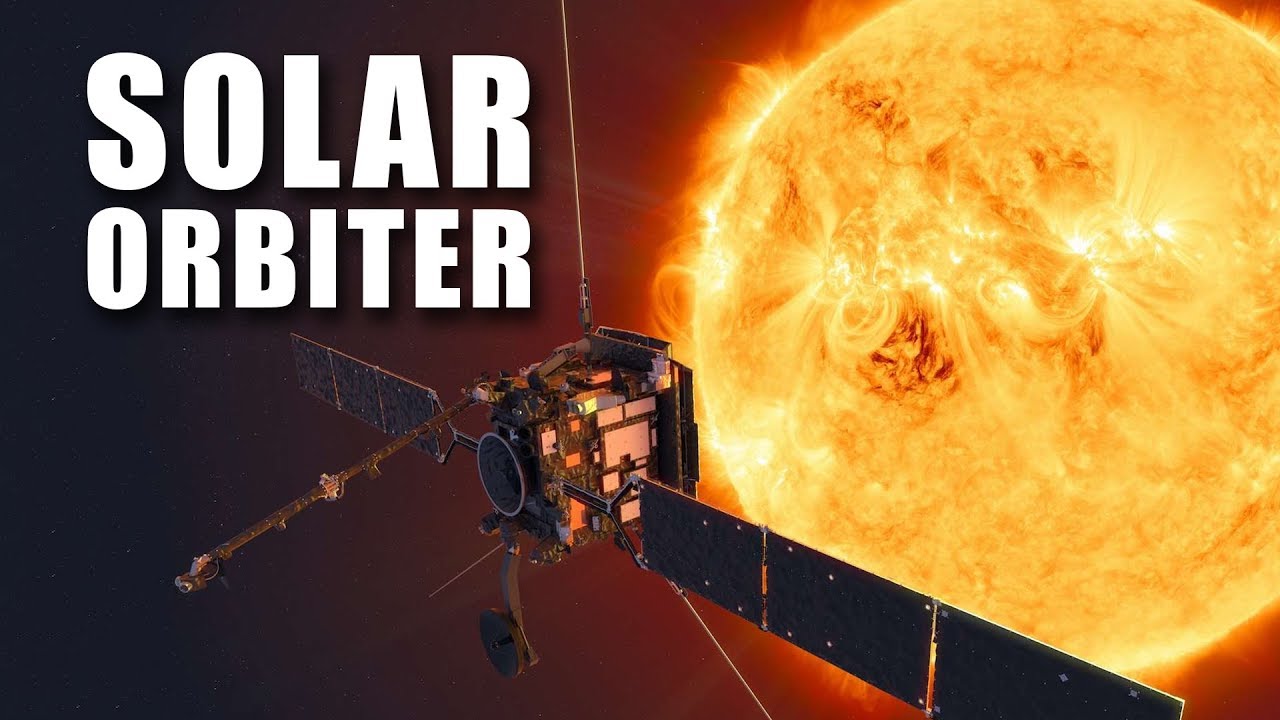
Solar Orbiter - Percer les MYSTÈRES du SOLEIL ! LDDE
Keywords
Summary
119 words
Critical Evaluation
Value of the Information & Strength of the Argument
The video provides substantial value by explaining the scientific questions behind the Solar Orbiter mission and the technological solutions employed. The argumentation is solid, based on official sources and clear reasoning. It effectively connects the mission’s design to its scientific goals, such as the importance of the inclined orbit for observing the poles and the co-rotation for studying solar phenomena. The presentation is logical and well-structured, making complex concepts accessible without oversimplifying.
Scientific Rigor, Source Quality, Title Accuracy
The video demonstrates strong scientific rigor, citing official ESA and scientific sources. The information is accurate and up-to-date as of the publication date. The title accurately reflects the content, focusing on the mysteries of the Sun and the mission’s role in addressing them. The video’s quality is high, with clear visuals and a well-paced narrative. The sources cited are credible and directly relevant to the mission.
153 words
Title / Content Match
The title accurately reflects the content, which focuses on the mysteries of the Sun and how Solar Orbiter aims to unravel them.
Quality & Reliability
8/10
The video presents a detailed and accurate overview of the Solar Orbiter mission, based on official ESA and scientific sources. The information is technically sound and well-structured, with clear explanations of orbital mechanics and scientific objectives. Minor simplifications are present but do not compromise accuracy.
Key Moments
Markers derived by PSI from the transcript: the creator did not define chapters.
- Introduction to Solar Orbiter mission and its launch date.
- History of ESA's solar missions: ISEE, Ulysses, SOHO.
- Orbit design: Venus flybys to increase inclination and achieve co-rotation.
- Scientific objectives: solar wind origin, transient events, magnetic field.
- Spacecraft design: heat shield, instruments, and architecture.
- Comparison with Parker Solar Probe and future missions like Aditya-L1.
- Conclusion and call to action for comments and questions.
Cited Sources
- ESA Solar Orbiter summary — Official ESA summary of the Solar Orbiter mission.
- eoportal Solar Orbiter mission — Detailed mission description on eoportal.
- ScienceDirect article on Solar Orbiter — Scientific paper on Solar Orbiter mission design.
- MPS Solar Orbiter page — Max Planck Institute page on Solar Orbiter.
Concurring Sources
- ESA Solar Orbiter summary — Official ESA summary aligns with the video's description of mission objectives.
- eoportal Solar Orbiter mission — Detailed mission description confirms technical details presented in the video.
External References
Contribution & Novelties
The video provides a comprehensive and accessible overview of the Solar Orbiter mission, highlighting its unique orbit and scientific objectives. It effectively explains the mission’s role in advancing our understanding of the Sun, particularly the solar wind and magnetic field. The video also places the mission in the context of other solar observation efforts, such as Parker Solar Probe and Aditya-L1.
Pour aller plus loin :
- Solar Orbiter mission page — Official ESA mission page with latest updates.
- Parker Solar Probe — NASA’s mission to touch the Sun, complementary to Solar Orbiter.
- Solar wind — Wikipedia article on solar wind, key phenomenon studied by the mission.
106 words
Radar Profile
The radar profile shows high scores in information quantity, quality, and reliability, with a slightly lower technical level, indicating a well-balanced and accessible presentation. The video excels in providing accurate and comprehensive information while maintaining a clear and engaging style.
💬 Très positif. Sur les 30 commentaires analysés, les spectateurs expriment un enthousiasme marqué pour la qualité pédagogique et la rigueur scientifique de la vidéo, saluant le travail des créateurs et la clarté des explications.