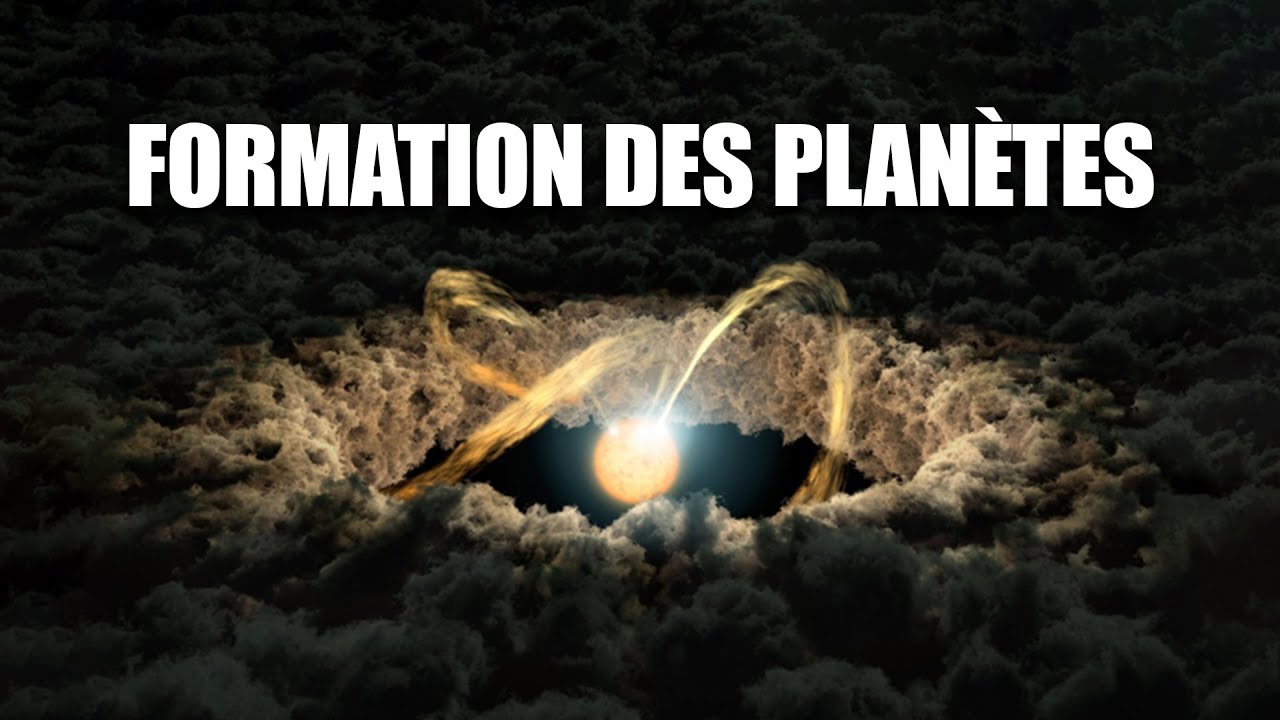
Podcast - Comment se forment les planètes ? Avec Héloïse Méheut /CNRS
Keywords
Summary
177 words
Critical Evaluation
Value of the Information & Strength of the Argument
The value of the information is high for a general audience, as it provides a clear and structured overview of planet formation, a complex topic, in an accessible manner. The argumentation is solid, based on the expert’s knowledge and current scientific understanding. Méheut presents multiple hypotheses and explains the reasoning behind them, without oversimplifying the uncertainties. The conversational format allows for clarifications and examples, enhancing the educational value.
Scientific Rigor, Source Quality, Title Accuracy
The scientific rigor is good, as the guest is a professional researcher and the content aligns with current astrophysical knowledge. However, the podcast does not cite specific sources or papers, which limits its utility for those seeking deeper references. The title accurately reflects the content, and the video is well-structured with a clear progression from basics to more advanced topics.
143 words
Title / Content Match
The title accurately reflects the content: a podcast interview with Héloïse Méheut about planet formation.
Quality & Reliability
8/10
The content is an expert interview with a CNRS researcher, providing a high-level overview of planet formation. The scientific accuracy is strong, but the format is conversational and lacks detailed citations.
Key Moments
Markers derived by PSI from the transcript: the creator did not define chapters.
- Introduction and presentation of Héloïse Méheut
- Overview of planet formation stages
- Discussion on the collapse of molecular clouds
- Growth from dust to planetesimals and the meter barrier
- Hypotheses for planetesimal formation, including streaming instability
- Comparison of our solar system with exoplanetary systems
- Planetary migration and its effects
- Timescales for planet formation and the role of gas disk lifetime
- Observational tools: interferometry, ALMA, and JWST
- Numerical simulations and the scientific method
Cited Sources
- Podcast RSS feed — RSS feed for the podcast, allowing listeners to access the audio version.
- Spotify podcast page — Spotify page for the Hugo Lisoir podcast.
- Apple Podcasts page — Apple Podcasts page for the Hugo Lisoir podcast.
- Deezer podcast page — Deezer page for the Hugo Lisoir podcast.
- Tipeee support page — Support page for the channel.
- uTip support page — Support page for the channel.
- Music by Pedro — Music used in the video.
- Utho Riley YouTube channel — Music used in the video.
- Twitch channel — Twitch channel of the host.
Concurring Sources
- NASA Exoplanet Archive — A database of exoplanets that supports the discussion on exoplanetary systems.
- ALMA Observatory — Official site of ALMA, mentioned in the podcast as a key tool for observing protoplanetary disks.
Contribution & Novelties
The podcast provides a comprehensive and accessible overview of planet formation, synthesizing current knowledge and highlighting open questions. It is valuable for a general audience interested in astronomy, offering insights from a researcher actively working in the field.
Pour aller plus loin :
- Protoplanetary disk — Wikipedia article on protoplanetary disks, the birthplaces of planets.
- Streaming instability — Wikipedia article on streaming instability, a key mechanism for planetesimal formation.
- Planetary migration — Wikipedia article on planetary migration, explaining how planets move within disks.
- ALMA Observatory — Wikipedia article on ALMA, a key observatory for studying protoplanetary disks.
97 words
Radar Profile
The radar profile shows high scores in information quantity, quality, and reliability, with a moderate technical level. This indicates a content that is informative and trustworthy, but not overly technical, making it suitable for a general audience.
💬 Très positif. Sur les 30 commentaires analysés, les spectateurs expriment une grande appréciation pour la qualité du contenu et la clarté des explications, avec des remerciements chaleureux envers l'invitée et l'équipe.