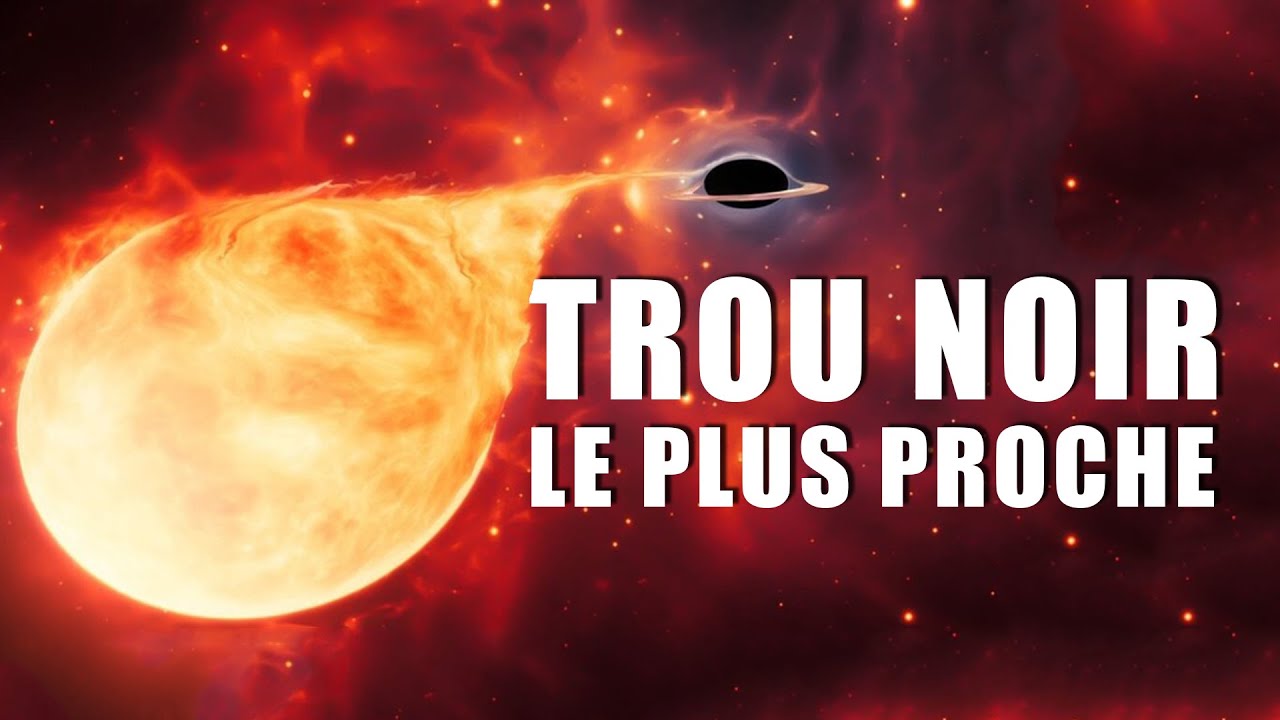
LE TROU NOIR LE PLUS PROCHE de la TERRE ! DNDE #199
Keywords
Summary
164 words
Critical Evaluation
Value of the Information & Strength of the Argument
The video provides valuable, up-to-date information on a wide range of space topics, from astrophysics to commercial spaceflight. The main story on the black hole is well-explained, with a clear description of the detection method and the scientific implications. The argumentation is solid, presenting the discovery as a plausible interpretation while acknowledging uncertainties. The other news items are presented concisely but accurately, with appropriate context. The host’s explanations are accessible without oversimplifying, and the use of visuals enhances understanding.
Scientific Rigor, Source Quality, Title Accuracy
The video demonstrates strong scientific rigor by citing multiple recent sources, including peer-reviewed studies and official space agency announcements. The sources listed in the description are relevant and credible (e.g., phys.org, SpaceNews, NASA). The title accurately reflects the main topic, and the content is well-structured. The host clearly distinguishes between confirmed facts and hypotheses, and provides context for each news item. The video also includes a brief mention of a potential debris collision, highlighting the growing concern of space debris, which is well-supported by the cited sources.
181 words
Title / Content Match
The title accurately reflects the main topic, which is the closest known black hole to Earth, and the content delivers on this promise.
Quality & Reliability
8/10
The video is a weekly space news roundup, citing multiple recent sources (phys.org, SpaceNews, NASA, etc.) and clearly distinguishing between confirmed facts and hypotheses. The presentation is rigorous, with appropriate caveats about the black hole discovery and the debris alert. Minor limitations: some claims lack direct citations within the video, and the tone is engaging rather than purely academic.
Key Moments
Markers derived by PSI from the transcript: the creator did not define chapters.
- Introduction to the episode and the main topic: the closest black hole to Earth.
- Explanation of black hole types and the discovery of a low-mass black hole.
- Details on the detection method: tidal distortion of a red giant companion.
- Discussion on the mass of the black hole and the possibility of primordial black holes.
- News about Crew-2 mission and the debris alert during their journey to the ISS.
- China's announcement of a 13,000-satellite megaconstellation and its implications.
- Amazon selects Atlas V for Kuiper launches; Firefly Alpha ready for first flight.
- Isar Aerospace wins contract with Airbus; updates on European launch vehicles.
- International Lunar Research Station (ILRS) details and China's lunar plans.
- Ingenuity's third flight on Mars and its performance.
Cited Sources
- Black hole closest to Earth discovered — Source for the main story on the closest black hole.
- NASA's Ingenuity Mars Helicopter Flies Faster, Farther on Third Flight — Source for Ingenuity's third flight details.
- China is developing plans for a 13,000-satellite communications megaconstellation — Source for China's megaconstellation plans.
- Isar Aerospace signs launch deal with Airbus — Source for Isar Aerospace contract.
- China, Russia open moon base project to international partners — Source for ILRS details.
- Crew-2 launch video — Source for Crew-2 mission and debris alert.
Concurring Sources
- NASA's Ingenuity Mars Helicopter Flies Faster, Farther on Third Flight — Confirms the details of Ingenuity's third flight.
- China is developing plans for a 13,000-satellite communications megaconstellation — Confirms China's megaconstellation plans.
External References
Contribution & Novelties
The video provides a concise and accessible synthesis of recent space news, with a focus on the discovery of the closest black hole. It adds value by explaining the significance of the discovery in the context of black hole formation and the possibility of primordial black holes. The coverage of multiple topics in a single episode offers a broad overview of current space activities.
Pour aller plus loin :
- Stellar black hole — Background on stellar black holes and their formation.
- Primordial black hole — Explanation of hypothetical primordial black holes.
- International Lunar Research Station — Details on the proposed lunar base.
- Ingenuity (helicopter) — Information on the Mars helicopter.
110 words
Radar Profile
The radar profile shows high scores across all dimensions, with a slight dip in technical level, indicating a well-balanced and reliable news video that is accessible to a broad audience while maintaining scientific accuracy.
💬 Très positif. Sur les 30 commentaires analysés, la grande majorité exprime des remerciements et des félicitations pour la qualité du contenu, avec quelques questions techniques et suggestions de sujets.