Ces OBJETS ont un COMPORTEMENT INCROYABLE dans l’espace !
Keywords
Summary
192 words
Critical Evaluation
Value of the Information & Strength of the Argument
The video provides a valuable compilation of microgravity phenomena, supported by real experiments and demonstrations. The argumentation is generally solid, explaining the physical principles behind each behavior, such as surface tension, convection, and rotational stability. The use of visual examples, like the GoPro in a water bubble and the T-handle rotation, enhances understanding. However, some explanations are simplified, and the video occasionally lacks depth, such as when discussing the mechanisms behind bacterial growth in microgravity. The presentation is engaging and accessible, making complex topics understandable without oversimplifying the science.
Scientific Rigor, Source Quality, Title Accuracy
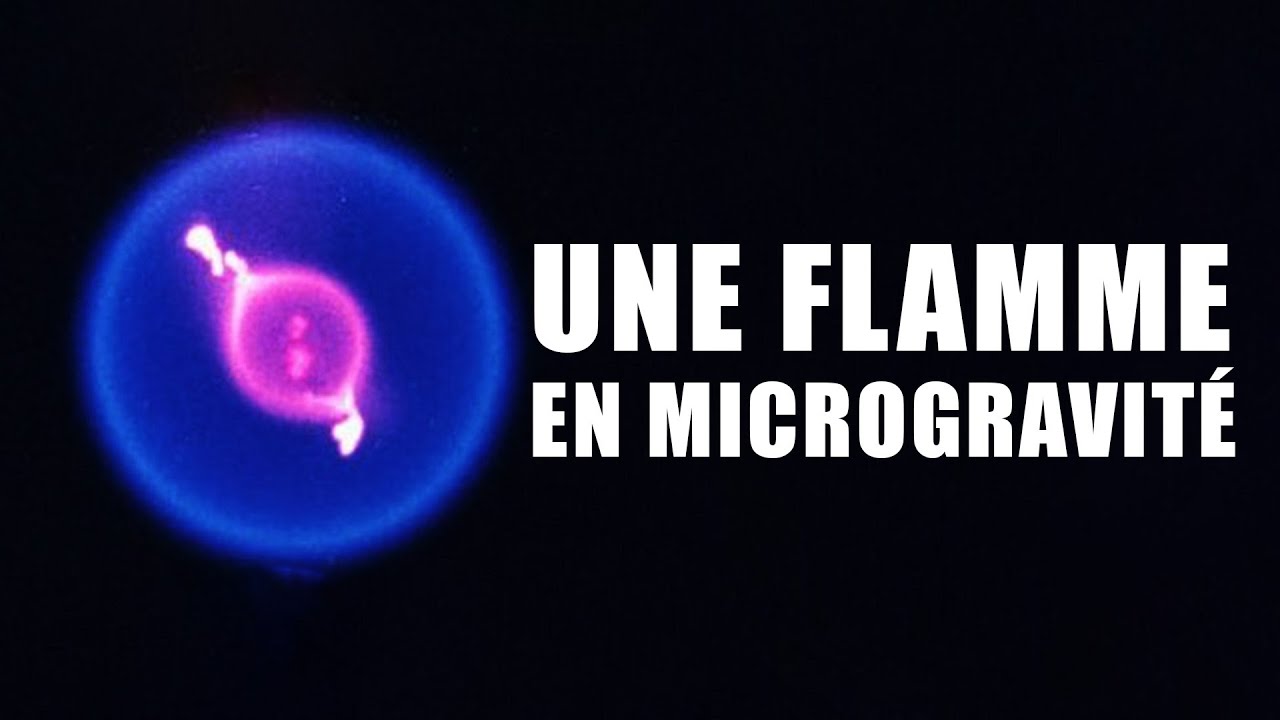
The video cites several credible sources, including NASA, USGS, and Smithsonian, which are listed in the description. These sources support the main claims about water behavior, flame shape, and the T-handle effect. The title accurately reflects the content, which focuses on surprising behaviors in space. The video maintains a good level of scientific rigor, though it does contain a minor error regarding flame color temperature (blue flames are hotter than yellow, contrary to a statement in the video). Overall, the sources are appropriate and the content aligns well with the title.
195 words
Title / Content Match
The title accurately reflects the content, which explores surprising behaviors of objects and phenomena in microgravity.
Quality & Reliability
7/10
The video presents a broad overview of microgravity phenomena, relying on established scientific sources (NASA, USGS, Smithsonian) and real experiments. However, some simplifications and a minor error regarding flame color (blue vs yellow temperature) slightly reduce the overall reliability.
Key Moments
Markers derived by PSI from the transcript: the creator did not define chapters.
- Introduction to microgravity and its effects on everyday experiences.
- Demonstration of water spheres and surface tension in microgravity.
- Explanation of capillary action and its use in fluid management in space.
- Discussion on boiling water in microgravity and the formation of a single large bubble.
- Explanation of spherical flames and the phenomenon of cool flames.
- Introduction to the T-handle rotation instability and its discovery on Salyut 7.
- Effects of microgravity on living organisms, including bacteria and fish.
Cited Sources
- A Tumbling T-Handle in Space — Source for the T-handle rotation instability phenomenon.
- In Space, Flames Behave in Ways Nobody Thought Possible — Source for flame behavior in microgravity.
- Strange Flames — NASA article on cool flames and combustion in microgravity.
- Water in Space: How Does Water Behave in Outer Space? — USGS source on water behavior in space.
Concurring Sources
- NASA - Strange Flames — Supports the discussion on cool flames and combustion in microgravity.
- Smithsonian - Flames in Space — Corroborates the description of spherical flames and their properties.
Dissenting Sources
- Comment on flame color — A viewer pointed out that blue flames are hotter than yellow flames, contradicting a statement in the video. This is a minor inaccuracy in the explanation of flame temperature.
External References
Contribution & Novelties
The video synthesizes known microgravity phenomena into an accessible format, highlighting the counterintuitive nature of physics in space. It brings together diverse examples, from fluid dynamics to biology, offering a broad overview that is both educational and engaging. The inclusion of recent experiments, such as the cool flame research, adds contemporary relevance.
Pour aller plus loin :
- Microgravity (Wikipedia) — Provides a comprehensive overview of microgravity conditions and their effects.
- Capillary action (Wikipedia) — Explains the physical principle behind fluid management in space.
- Cool flame (Wikipedia) — Details the phenomenon of low-temperature combustion mentioned in the video.
- Dzhanibekov effect (Wikipedia) — Further reading on the T-handle rotation instability.
108 words
Radar Profile
The radar profile shows high scores in quantity of information and technical level, indicating a content-rich video with moderate depth. The quality and reliability scores are slightly lower, reflecting minor inaccuracies and simplifications. Overall, the video is informative and technically sound, suitable for a general audience interested in space science.
💬 Très positif. Sur les 30 commentaires analysés, les spectateurs expriment une admiration constante pour la qualité des vidéos et la clarté des explications, avec quelques demandes de sujets supplémentaires et des discussions techniques sur des points précis.