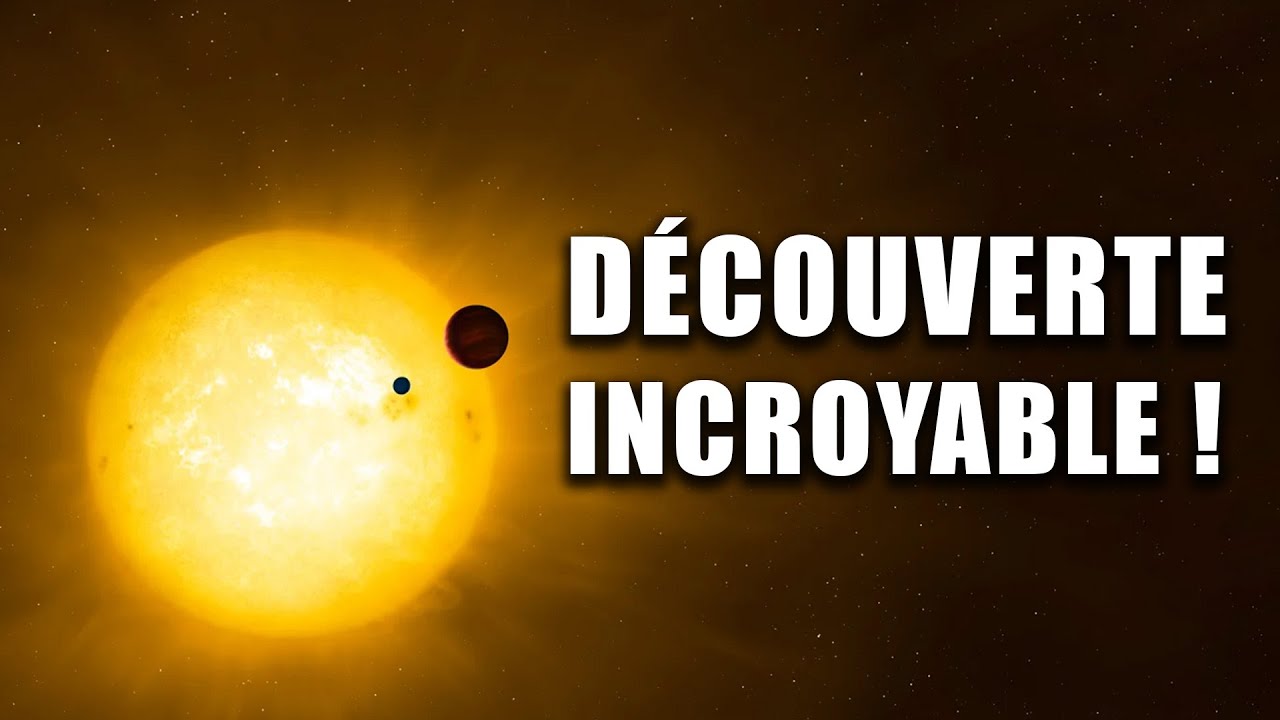
Incroyable ! La première exolune vient-elle d’être détectée ? DNDE 421
Keywords
Summary
175 words
Critical Evaluation
Value of the Information & Strength of the Argument
The video provides valuable information on recent developments in exomoon detection and space industry news. The argumentation is solid, with clear explanations of the astrometry technique and the significance of the findings. The presenter also offers balanced perspectives on the Chinese space program and NASA’s challenges, avoiding sensationalism. The discussion of the LTV contract and the potential dual-provider approach is well-reasoned, highlighting the risks of single-source dependencies.
Scientific Rigor, Source Quality, Title Accuracy
The video demonstrates strong scientific rigor by citing primary sources, including the arXiv preprint for the exomoon detection and reputable outlets like Ars Technica and Space.com for other news. The title accurately reflects the main content, focusing on the exomoon detection while also covering other space news. The presenter clearly distinguishes between reported facts and his own interpretations, enhancing credibility. The inclusion of a sponsored segment is transparently disclosed and does not detract from the overall quality.
159 words
Title / Content Match
The title accurately reflects the main topic of the video, which focuses on the potential first detection of an exomoon, while also covering other space news.
Quality & Reliability
8/10
The video presents recent scientific findings and space industry news, citing primary sources such as arXiv and reputable outlets (Ars Technica, Space.com). The information is accurate and well-contextualized, though the presenter's interpretations are clearly separated from the reported facts.
Key Moments
Markers derived by PSI from the transcript: the creator did not define chapters.
- Introduction to the episode's topics: exomoon detection, Chinese reusable rockets, and Artemis challenges.
- Discussion of exoplanet discoveries and the potential for detecting exomoons.
- Presentation of the HD 206893 system and the astrometry method used to detect the exomoon.
- Coverage of China's Zhuque-3 first flight and its landing failure.
- Overview of other Chinese reusable rockets and the Long March 10 landing barge.
- Analysis of NASA's Artemis program challenges and congressional criticism.
- Discussion of the LTV contract and NASA's consideration of dual providers.
Cited Sources
- arXiv preprint on exomoon detection — Primary source for the exomoon detection around HD 206893.
- Space.com article on Zhuque-3 launch — Source for the Zhuque-3 first flight and landing failure.
- Ars Technica article on congressional criticism of NASA — Source for the congressional hearings and criticism of Artemis.
- Ars Technica article on LTV decision — Source for the Lunar Terrain Vehicle contract details.
Concurring Sources
- NASA Exoplanet Archive — Confirms the count of known exoplanets and provides data on HD 206893.
- SpaceNews article on Chinese reusable rockets — Reports on the progress of Chinese reusable rocket programs.
Dissenting Sources
- Critique of Artemis architecture by Mike Griffin — The video mentions Mike Griffin's criticism of the Artemis architecture, which contrasts with NASA's current approach.
External References
Contribution & Novelties
The video provides a clear and accessible explanation of a novel technique (high-precision astrometry) for detecting exomoons, which is a cutting-edge area of research. It also offers a comprehensive update on the rapidly evolving Chinese reusable rocket landscape and the strategic challenges facing NASA’s Artemis program. The presenter adds value by contextualizing these developments within the broader space exploration narrative.
Pour aller plus loin :
- Exomoon — Overview of exomoons and detection methods.
- Astrometry — Explanation of astrometry and its applications.
- Zhuque-3 — Details on the Chinese rocket.
- Artemis program — Overview of NASA’s lunar program.
96 words
Radar Profile
The radar profile shows high scores in information quantity, quality, and reliability, with a slightly lower technical level, indicating that the video is well-researched and reliable but may require some background knowledge to fully appreciate the technical details.
💬 positif — Sur les 30 commentaires analysés, le climat est très positif, avec des éloges pour la qualité des informations et la pédagogie, ainsi que des demandes de vidéos supplémentaires sur des sujets connexes.