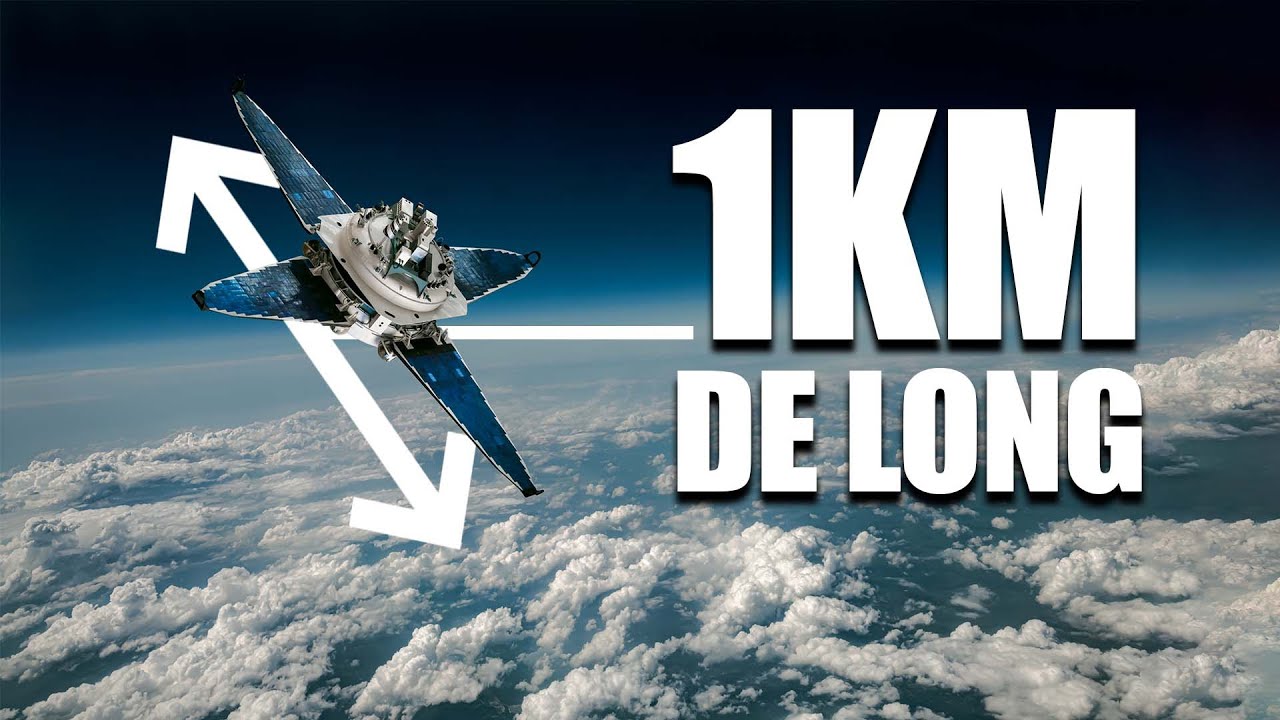
Chine - Des VAISSEAUX d'1 KILOMÈTRE de LONG ! EC #4K
Keywords
Summary
183 words
Critical Evaluation
Value of the Information & Strength of the Argument
The video provides valuable updates on several space-related topics, offering a mix of factual reporting and analysis. The creator presents information clearly and engages with viewer questions, which adds a participatory element. The argumentation is generally solid, with explanations of scientific concepts like novae and bolides. However, some points are speculative, such as the future of JWST in case of failure, and the creator acknowledges uncertainty. The discussion on European space industry is opinionated but grounded in reported facts. Overall, the video serves as a good summary of recent space news with reasonable depth.
Scientific Rigor, Source Quality, Title Accuracy
The video demonstrates a moderate level of scientific rigor. The creator accurately describes the nova mechanism and meteor phenomena, though a simplification about atmospheric heating (attributing it to friction rather than compression) is a minor inaccuracy. Sources are not explicitly cited within the video, but the description includes links to the creator’s book, support platforms, and music credits, which are not directly related to the content. The title highlights the Chinese spacecraft project, which is the first topic, but the video covers multiple other stories, making the title slightly misleading. The creator does not provide direct references to official announcements or scientific papers, relying on general knowledge and news reports.
219 words
Title / Content Match
The title focuses on the Chinese kilometer-long spacecraft project, which is the first topic, but the video covers several other space news items, making the title somewhat narrower than the content.
Quality & Reliability
7/10
The video presents a mix of factual news items (Chinese space projects, nova observations, meteor events, JWST launch schedule, European space industry developments) with reasonable accuracy. The creator clearly distinguishes between confirmed facts and speculative or preliminary announcements. However, some technical explanations are simplified and could be misleading (e.g., atmospheric heating mechanism), and the video lacks explicit citations to primary sources, relying on general knowledge and news reports.
Key Moments
Markers derived by PSI from the transcript: the creator did not define chapters.
- Introduction and topic overview
- China's kilometer-scale space structures project
- Long March 9 and crewed lunar plans
- RS Ophiuchi nova eruption explanation
- Meteors and bolides, Oslo and Brittany events
- James Webb Space Telescope launch and failure scenarios
- Germany's sea launch site and European space industry concerns
Cited Sources
- Hugo Lisoir's book on Amazon — Promotional link to the creator's book, not directly related to video content.
- Hugo Lisoir's book on Fnac — Promotional link to the creator's book, not directly related to video content.
- Support Hugo Lisoir on Tipeee — Crowdfunding platform link for channel support.
- Support Hugo Lisoir on uTip — Crowdfunding platform link for channel support.
- Music by Pedro Macedo Camacho — Music credit for Star Citizen soundtrack used in the video.
- Utho Riley YouTube channel — Music credit for additional background music.
Concurring Sources
- Recurrent nova RS Ophiuchi — Confirms the recurrent nova nature and eruption history.
- Chelyabinsk meteor — Provides details on the 2013 airburst event mentioned in the video.
Dissenting Sources
- Atmospheric heating mechanism — The video attributes heating to friction, but it is primarily due to air compression. This is a minor scientific inaccuracy.
External References
Contribution & Novelties
The video provides a concise update on multiple space news items, offering a French perspective on international space developments. It highlights China’s ambitious projects and European industrial concerns, which may be less covered in mainstream media. The explanation of recurrent novae and bolides adds educational value. The creator’s engagement with viewer questions fosters a community-driven approach to science communication.
Pour aller plus loin :
- Recurrent nova — Background on recurrent novae, including RS Ophiuchi.
- Bolide — Definition and characteristics of bolides, with examples.
- James Webb Space Telescope — Overview of the JWST mission and its challenges.
- Long March 9 — Details on China’s super-heavy rocket program.
- Ariane 6 — Information on the European launch vehicle and its industrial context.
119 words
Radar Profile
The radar profile shows balanced scores across information quantity, quality, technical level, and reliability, indicating a well-rounded but not exceptional science communication video. The technical level is moderate, suitable for a general audience, while reliability is decent with minor inaccuracies.
💬 Équilibré. Sur les 30 commentaires analysés, les réactions sont majoritairement positives, avec des discussions sur la politique spatiale européenne et des questions techniques, mais aussi quelques critiques sur des points scientifiques.