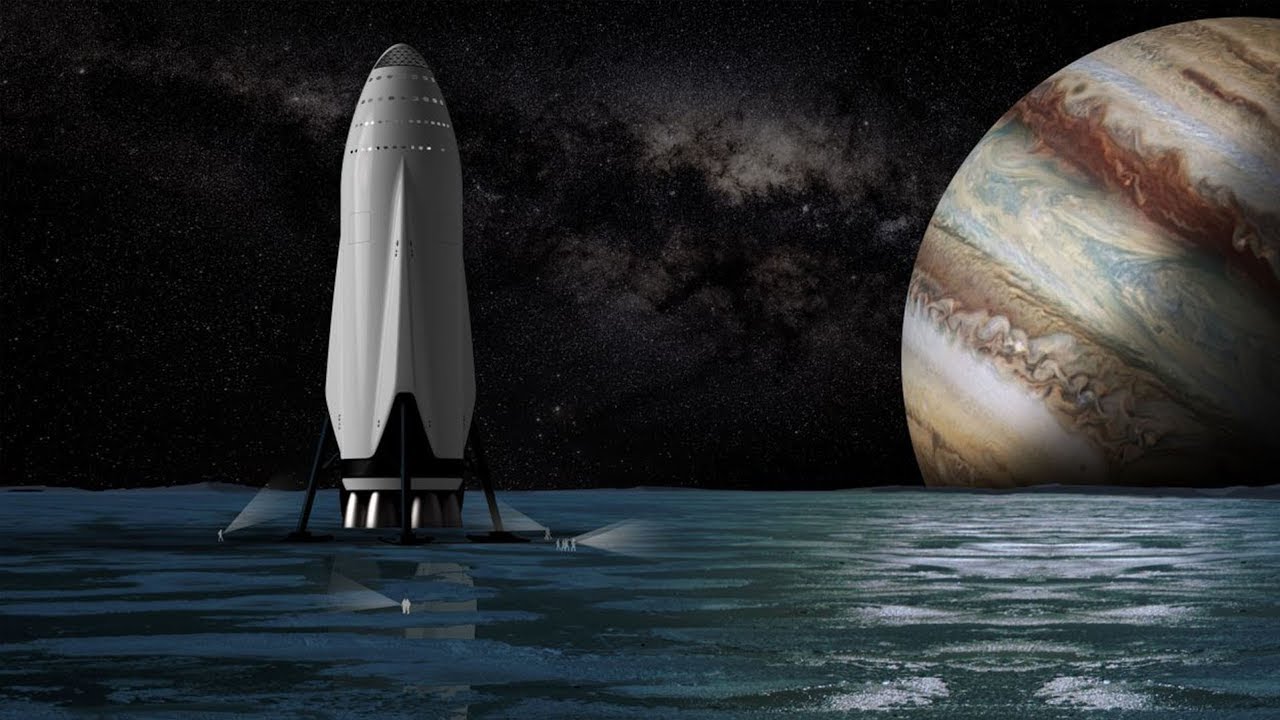
Coloniser les lunes de Jupiter - LDDE
Keywords
Summary
124 words
Critical Evaluation
Value of the Information & Strength of the Argument
The video provides a balanced and informative overview, combining scientific facts with speculative future scenarios. It effectively argues for the feasibility of colonizing Jupiter’s moons by addressing both opportunities and challenges, particularly radiation. The argumentation is logical and well-supported by quantitative data, though some claims about future technologies are speculative.
Scientific Rigor, Source Quality, Title Accuracy
The video cites NASA studies and other scientific sources, which are listed in the description. The information is presented with appropriate caveats, such as the uncertainty about subsurface oceans. The title accurately reflects the content, and the video maintains a high standard of scientific rigor.
110 words
Title / Content Match
The title accurately reflects the content, which focuses on the feasibility and challenges of colonizing Jupiter's moons.
Quality & Reliability
8/10
The video presents a well-structured overview of the Galilean moons, citing NASA studies and providing quantitative data on radiation levels and distances. The information is consistent with established scientific knowledge, though some speculative elements (e.g., ocean presence) are presented with appropriate uncertainty.
Key Moments
Markers derived by PSI from the transcript: the creator did not define chapters.
- Introduction to Jupiter's moons and the focus on Galilean moons.
- Description of Ganymede and Callisto, including their size and composition.
- Discussion of Io's volcanic activity and Europa's subsurface ocean.
- Explanation of Jupiter's radiation belts and their impact on the moons.
- Comparison of radiation levels on the four moons.
- Challenges of distance and travel time to Jupiter.
- NASA study proposing a crewed mission to Callisto.
- Potential for resource extraction, including water and helium-3.
- Future missions like Europa Clipper and JUICE.
- Conclusion and summary of the colonization prospects.
Cited Sources
- STAIF-2003-177.pdf — NASA study on human missions to Callisto.
- NASA NTRS 20030063128 — NASA technical report on Jupiter system exploration.
- Galileo_WaS_Journal.pdf — Journal article on Galileo mission findings.
- Universe Today: Colonize Jupiter's Moons — Article discussing colonization of Jupiter's moons.
Concurring Sources
- NASA - Europa Clipper — NASA's official mission page for Europa Clipper.
- ESA - JUICE — ESA's official mission page for JUICE.
External References
Contribution & Novelties
The video synthesizes existing scientific knowledge and speculative concepts about colonizing Jupiter’s moons, providing a clear and accessible overview. It highlights the unique challenges of radiation and distance, and proposes Callisto as a prime candidate for a human base.
Pour aller plus loin :
- Europa Clipper — NASA mission to study Europa’s habitability.
- JUICE (Jupiter Icy Moons Explorer) — ESA mission to explore Ganymede, Callisto, and Europa.
- Van Allen radiation belt — Explanation of radiation belts, relevant to the challenges discussed.
81 words
Radar Profile
The radar profile shows high scores in information quantity, quality, and reliability, with a slightly lower technical level. This indicates a well-researched and informative video that remains accessible to a general audience.
💬 Très positif. Sur les 30 commentaires analysés, les spectateurs expriment une admiration unanime pour la qualité de la vidéo, la clarté des explications et la capacité à susciter l'émerveillement.