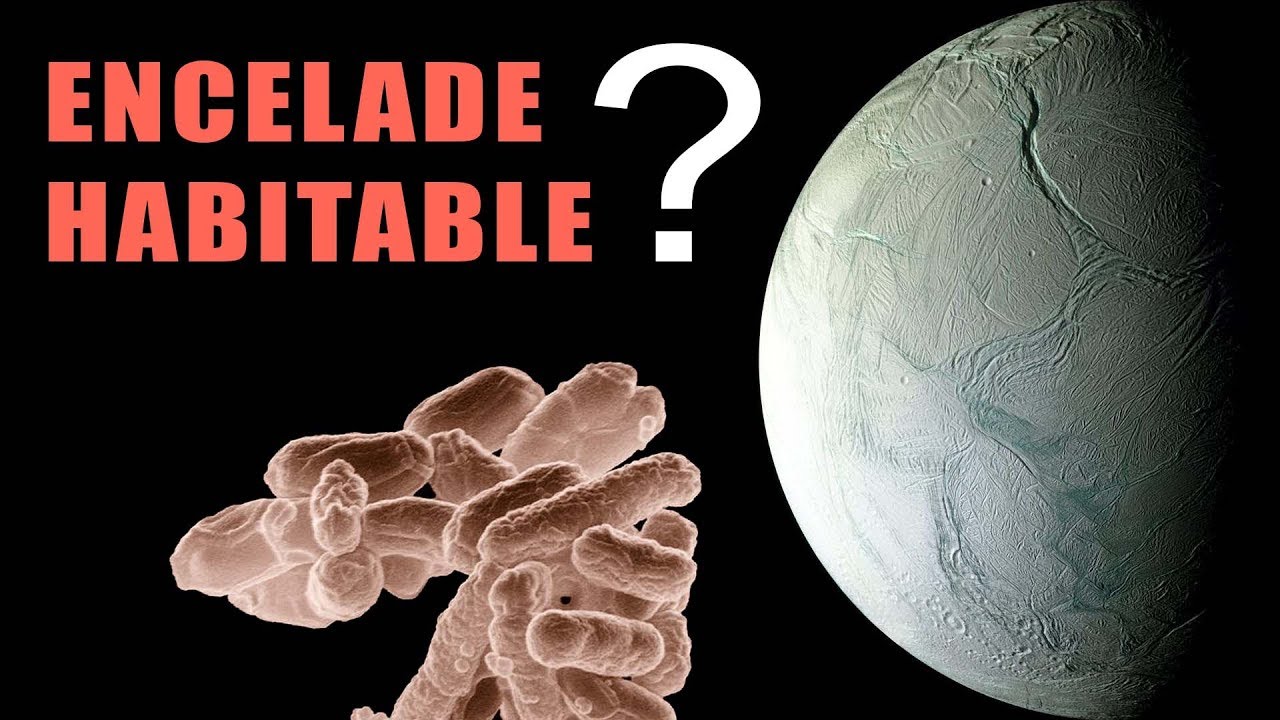
Une LUNE de SATURNE pourrait ACCUEILLIR LA VIE ! DNDE #48
Keywords
Summary
157 words
Critical Evaluation
Value of the Information & Strength of the Argument
The video provides valuable information by presenting recent scientific findings and space industry updates. The argumentation is solid, as it clearly explains the scientific basis for the Enceladus study, including the conditions simulated and the organism’s metabolism. It also appropriately contextualizes the results, noting that while the conditions are favorable for this particular organism, it does not prove that life exists or could emerge on Enceladus. The SpaceX segment is informative, detailing the company’s launch cadence and future plans, with appropriate skepticism about the timeline. The Twins Study segment is well-explained, highlighting the novel genetic findings and their implications for long-duration spaceflight. The host maintains a balanced tone, presenting facts and hypotheses without overstating conclusions.
Scientific Rigor, Source Quality, Title Accuracy
The video demonstrates scientific rigor by citing the primary sources for each segment: the Nature Communications article for the Enceladus study, a SpaceX video for the BFR update, and a NASA page for the Twins Study. These sources are reputable and directly relevant. The title accurately reflects the main topic, focusing on the potential habitability of Enceladus. The content is well-structured, with clear transitions between topics. The host also directs viewers to the description for sources, enhancing transparency. Overall, the video maintains high standards of accuracy and source quality.
219 words
Title / Content Match
The title accurately reflects the main topic of the video, which focuses on the potential habitability of Enceladus, a moon of Saturn.
Quality & Reliability
8/10
The video presents a scientific study published in Nature Communications, with direct links to the source, and discusses NASA's Twins Study with a link to NASA's official page. The information is accurately reported, with appropriate caveats about the speculative nature of the findings. The host clearly distinguishes between established facts and hypotheses.
Key Moments
Markers derived by PSI from the transcript: the creator did not define chapters.
- Introduction to the episode and the topic of potential life in the solar system.
- Presentation of the Austrian study on Methanothermococcus okinawensis and Enceladus.
- Discussion of the experimental setup and results of the Enceladus simulation.
- SpaceX news: 50th Falcon 9 launch and upcoming launch cadence.
- Elon Musk's plans for BFR and BFS, including testing timeline.
- NASA Twins Study: preliminary results on genetic changes and telomeres.
- Conclusion and implications for future Mars missions.
Cited Sources
- Nature Communications: Methanogenic archaea can survive under simulated Enceladus conditions — Primary source for the Enceladus study discussed in the video.
- NASA Twins Study confirms preliminary findings — Source for the NASA Twins Study results.
- SpaceX BFR presentation video — Reference for SpaceX's BFR plans.
Concurring Sources
- NASA's Cassini mission findings on Enceladus — Provides context on the discovery of geysers and the composition of Enceladus's plumes, supporting the study's assumptions.
External References
Contribution & Novelties
The video synthesizes recent scientific and industrial developments, providing an accessible overview of astrobiology and spaceflight effects. It highlights the potential of extremophiles to survive on other celestial bodies, which is a key step in assessing habitability. The coverage of the Twins Study offers insights into the genetic impacts of long-duration spaceflight, which is crucial for future Mars missions.
Pour aller plus loin :
- Enceladus - Wikipedia — Overview of Enceladus, its subsurface ocean, and exploration history.
- Extremophile - Wikipedia — Background on organisms that thrive in extreme environments.
- NASA Twins Study - NASA — Official page with detailed results and ongoing research.
- Methanothermococcus okinawensis - BacDive — Database entry for the archaeon studied.
- SpaceX BFR - Wikipedia — Information on the BFR and BFS vehicles.
126 words
Radar Profile
The radar profile shows high scores in information quantity, quality, and reliability, with a slightly lower technical level. This indicates a well-researched and informative video that remains accessible to a broad audience, balancing depth with clarity.
💬 Très positif. Sur les 30 commentaires analysés, les spectateurs expriment un enthousiasme marqué pour la qualité de la réalisation, la pédagogie et la passion transmise par le présentateur, sans aucune critique négative.