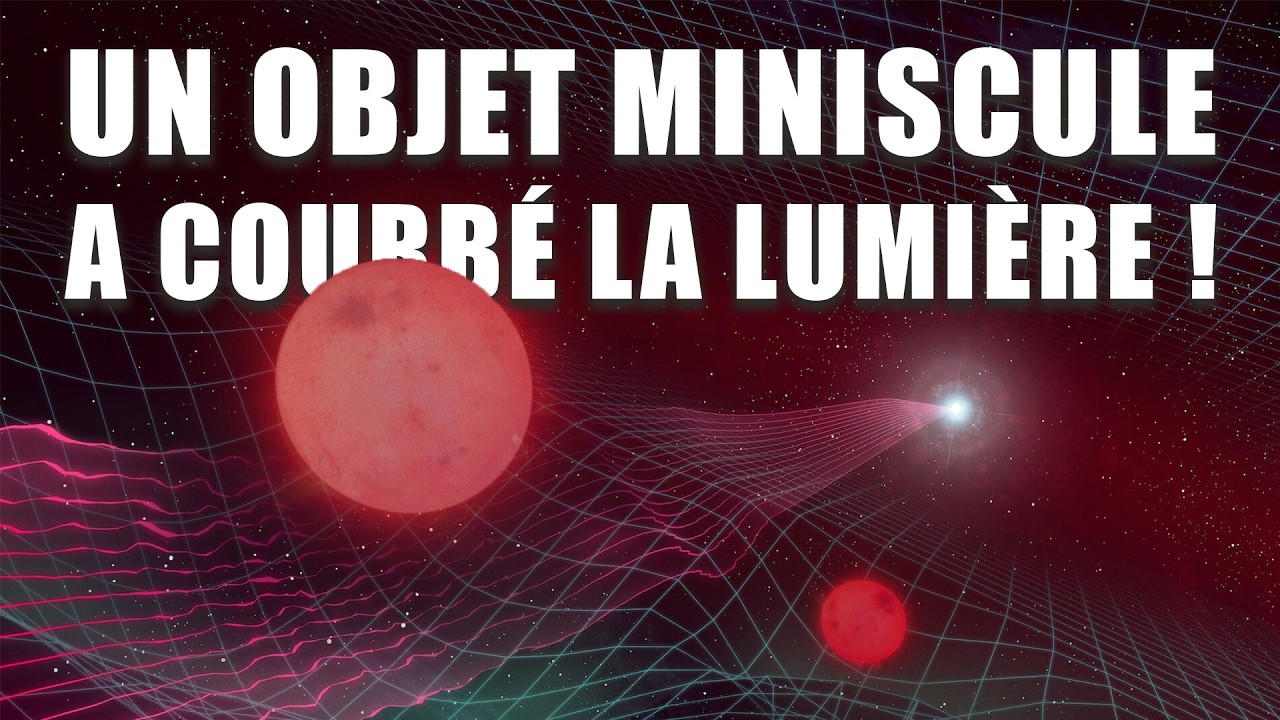
Incroyable ! Un objet MYSTÉRIEUX DÉTECTÉ dans le halo de MATIÈRE NOIRE de notre galaxie !
Keywords
Summary
174 words
Critical Evaluation
Value of the Information & Strength of the Argument
The video provides a solid overview of the scientific process behind the detection and interpretation of Phoebe. It clearly explains the microlensing phenomenon and how the duration of the event constrains the mass of the lens. The argumentation is logical, presenting the evidence step by step: the observation, the mass estimate, the location probability, and the comparison with known objects. The video also acknowledges the speculative nature of the primordial black hole hypothesis, noting that it is a plausible but not proven explanation. The value lies in its ability to convey complex astrophysical concepts to a general audience while maintaining scientific accuracy.
Scientific Rigor, Source Quality, Title Accuracy
The video cites a specific arXiv preprint (2605.19375) as the primary source, which is appropriate for the content. The explanation of the scientific concepts is accurate and well-structured. The title is somewhat sensationalist but does not misrepresent the content. The video does not overstate the certainty of the findings, and it clearly distinguishes between observation and interpretation. However, it could have benefited from a more critical discussion of the uncertainties and alternative hypotheses.
190 words
Title / Content Match
The title is sensationalist but accurately reflects the content: the detection of a mysterious object in the galactic dark matter halo.
Quality & Reliability
7/10
The video presents a clear and accurate explanation of gravitational microlensing and the candidate primordial black hole interpretation, based on a specific arXiv preprint. However, it lacks critical discussion of alternative explanations and the speculative nature of the conclusions is not always emphasized.
Key Moments
Markers derived by PSI from the transcript: the creator did not define chapters.
- Introduction to the mysterious object Phoebe and the microlensing event.
- Explanation of gravitational lensing and microlensing.
- Details of the observation campaign and the detection of Phoebe.
- Analysis of the mass and location of Phoebe, suggesting it is in the dark matter halo.
- Discussion of dark matter and the primordial black hole hypothesis.
- Comparison with other explanations and the implications for dark matter research.
Cited Sources
- arXiv preprint 2605.19375 — Primary source for the detection and analysis of Phoebe.
Concurring Sources
- arXiv preprint 2605.19375 — The primary source supports the claims made in the video.
External References
Contribution & Novelties
The video presents a recent and intriguing astronomical finding, the detection of a microlensing event that could be a primordial black hole. It explains the significance of this potential discovery for dark matter research. The novelty lies in the specific object Phoebe and the hypothesis that it might belong to a population of primordial black holes constituting dark matter.
Pour aller plus loin :
- Primordial black hole — Overview of primordial black holes and their possible role as dark matter.
- Gravitational microlensing — Explanation of the technique used to detect Phoebe.
- Dark matter — General information about dark matter and its properties.
102 words
Radar Profile
The radar profile shows high scores in quantity of information and technical level, reflecting the video's detailed explanation of a complex topic. The quality and reliability scores are slightly lower, indicating that while the content is accurate, it could benefit from more critical analysis. Overall, the video is informative and well-presented.
💬 Très positif. Sur les 30 commentaires analysés, les spectateurs expriment un fort enthousiasme et une fascination pour le sujet, saluant la qualité de la vulgarisation et la narration.