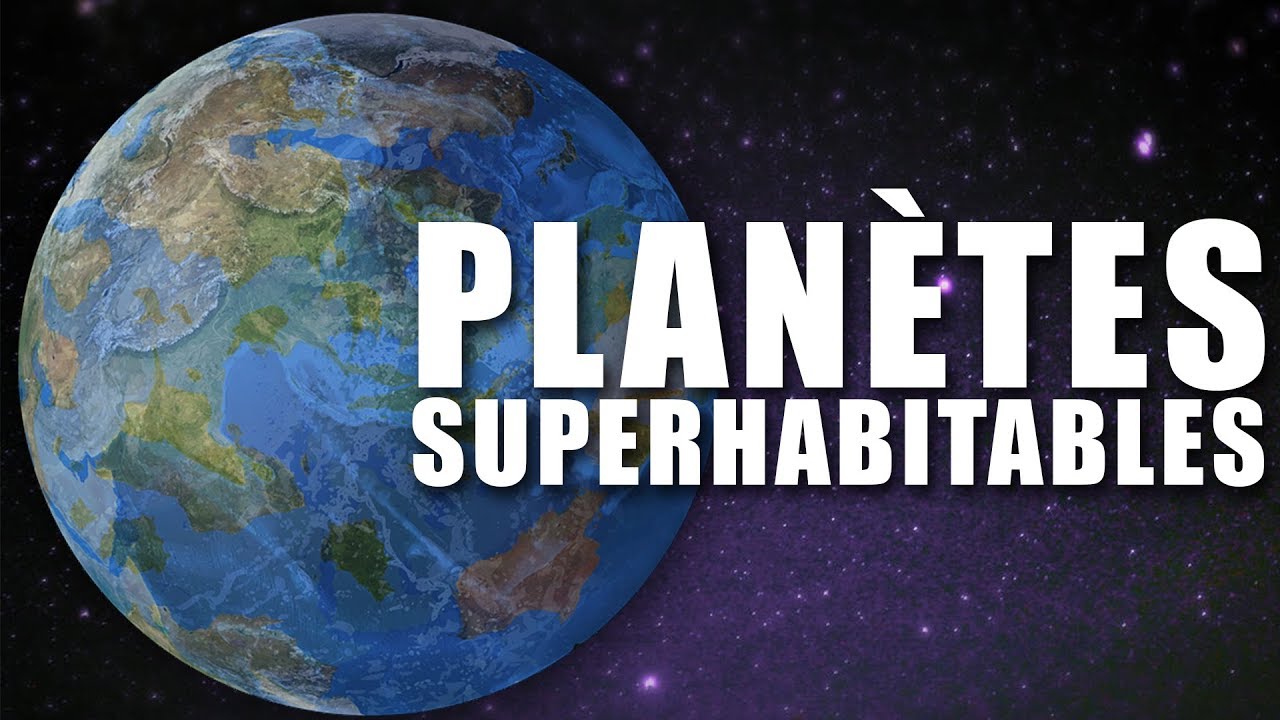
Des PLANÈTES encore plus HABITABLES que la Terre ? DNDE #119
Keywords
Summary
165 words
Critical Evaluation
Value of the Information & Strength of the Argument
The video provides valuable information by synthesizing recent space news with a focus on scientific studies and technological developments. The argumentation is solid: the superhabitable planets segment is based on a specific study, and the presenter clearly explains the methodology and limitations. The robotics segment is well-structured, comparing different robots and their purposes. The SpaceX segment is informative, with concrete pricing details and strategic analysis. The presentation is clear and engaging, with good use of visuals to support the narrative.
Scientific Rigor, Source Quality, Title Accuracy
The video demonstrates scientific rigor by citing specific sources in the description, including the study on superhabitable planets and articles on the robots. The presenter distinguishes between established facts and hypotheses, and acknowledges uncertainties. The title accurately reflects the content, focusing on the superhabitable planets topic, which is the most prominent segment. The sources are reputable (e.g., Astronomy.com, Space.com, official space agency information), and the video does not appear to contain misinformation. The adéquation between title and content is good, though the title might overemphasize the superhabitable planets aspect relative to the other topics.
189 words
Title / Content Match
The title accurately reflects the main segment of the video, which discusses the concept of superhabitable planets, while the rest of the episode covers other space news.
Quality & Reliability
8/10
The video presents a balanced review of recent space news, citing specific studies and missions. The main scientific claim about superhabitable planets is based on a peer-reviewed study presented at a conference, and the video appropriately notes the limitations of the model. The information is generally accurate and well-contextualized, though some details (e.g., pricing) are subject to change.
Key Moments
Markers derived by PSI from the transcript: the creator did not define chapters.
- Introduction to the episode and the concept of superhabitable planets.
- Explanation of the study on superhabitable planets and its findings.
- Discussion of the limitations and implications of the superhabitable planet model.
- Transition to the ISS robotics segment, featuring Skybot F-850.
- Details on CIMON and Astrobee robots and their roles.
- SpaceX segment: new pricing for small satellite launches and market impact.
- Updates on Starship development, including thermal tiles and potential larger vehicle.
Cited Sources
- Life on alien worlds could be more diverse than on Earth — Source for the superhabitable planets study.
- Goldschmidt Conference Abstract — Abstract of the study on superhabitable planets.
- Russian Humanoid Robot Skybot F-850 Photos — Source for Skybot F-850 mission details.
- Soyuz MS-14 mission page — Source for Soyuz MS-14 mission details.
- CIMON robot returns to Earth — Source for CIMON robot return.
- SpaceX SmallSat page — Source for SpaceX small satellite pricing.
- Elon Musk tweet on Starship — Source for potential larger Starship vehicle.
Concurring Sources
- Life on alien worlds could be more diverse than on Earth — This article aligns with the video's presentation of the superhabitable planets study.
- Goldschmidt Conference Abstract — The abstract confirms the study's findings as presented in the video.
External References
Contribution & Novelties
The video brings a concise synthesis of recent space news, with a particular focus on the concept of superhabitable planets, which is a relatively new and thought-provoking idea. It effectively communicates the findings of a scientific study to a general audience, highlighting the potential for planets more suitable for life than Earth. The coverage of ISS robotics and SpaceX developments provides up-to-date information on ongoing space activities. The video’s originality lies in its ability to connect these diverse topics into a coherent narrative that informs and engages viewers.
Pour aller plus loin :
- Superhabitable planets — Wikipedia article on the concept, providing background and context.
- Habitable zone — Wikipedia article on the circumstellar habitable zone, relevant to the discussion of planet habitability.
- Exoplanet — Wikipedia article on exoplanets, offering general information on the subject.
- Astrobee (robot) — Wikipedia article on NASA’s Astrobee robots, mentioned in the video.
- Skybot F-850 — Wikipedia article on the Russian humanoid robot, providing additional details.
160 words
Radar Profile
The radar profile shows a balanced performance across all dimensions, with slightly lower scores in technical depth and quantity of information compared to quality and reliability. This indicates a well-rounded video that is informative and credible, though it may not delve deeply into technical details.
💬 Très positif. Sur les 30 commentaires analysés, l'immense majorité exprime une forte appréciation de la qualité des vidéos, de la clarté des explications et du travail de recherche, avec quelques suggestions de sujets pour de futurs épisodes.