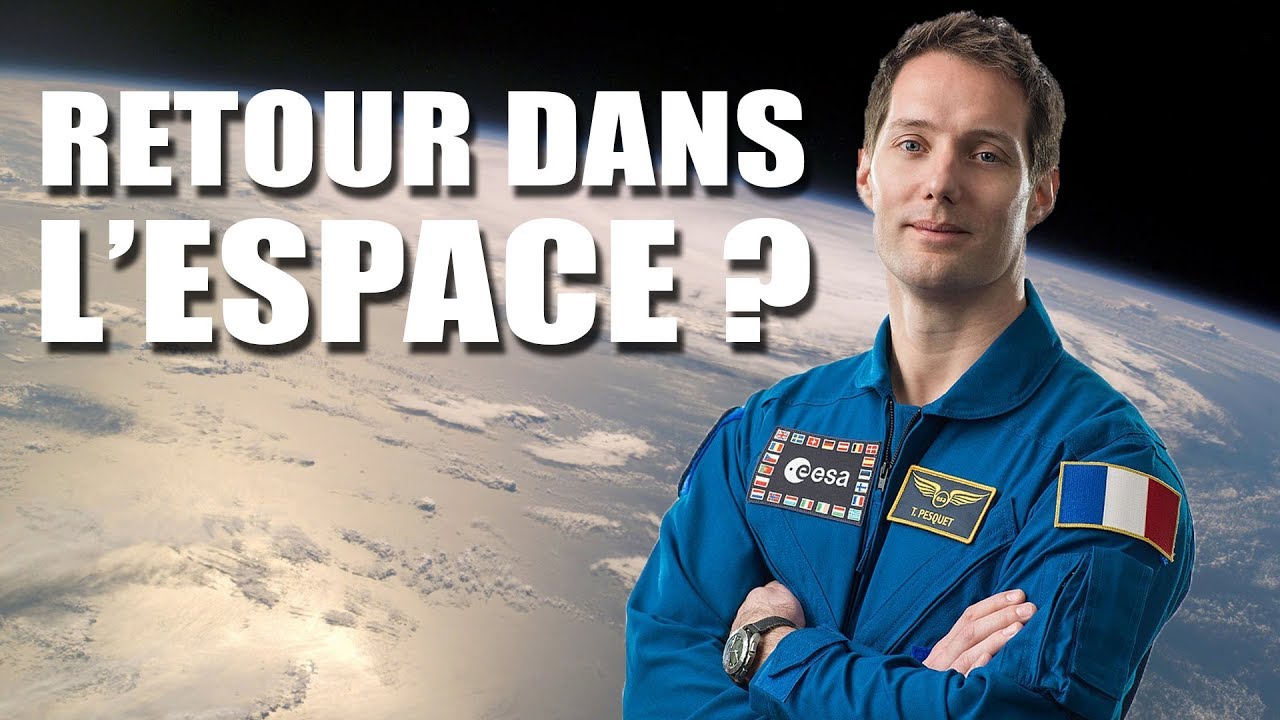
Thomas Pesquet paré à repartir dans l’espace ! EC
Keywords
Summary
158 words
Critical Evaluation
Value of the Information & Strength of the Argument
The video provides valuable insights into current space exploration topics, such as Thomas Pesquet’s potential return and the technical aspects of rocket launch infrastructure. Hugo Lisoir presents information in a clear and engaging manner, breaking down complex subjects like dwarf planet classification and rocket support systems. The argumentation is generally solid, relying on established facts and official announcements, though some explanations could benefit from more detailed sources. The Q&A format allows for a diverse range of topics, but the depth of analysis varies across segments.
Scientific Rigor, Source Quality, Title Accuracy
The video demonstrates a good level of scientific rigor, with accurate explanations of concepts like the IAU dwarf planet definition and rocket launch procedures. However, the host does not explicitly cite specific sources during the video, which limits the ability to verify claims directly. The title accurately reflects the main topic, and the content aligns well with the channel’s focus on space news. The description provides links to support the channel but no direct references to the topics discussed. Overall, the information appears reliable, but the lack of explicit citations is a minor weakness.
194 words
Title / Content Match
The title accurately reflects the main topic of Thomas Pesquet's potential return to space, though the video covers several other space-related questions.
Quality & Reliability
7/10
The video presents factual information about space missions and astronomical classifications, but relies on general knowledge and official announcements without citing specific sources. The host's expertise is evident, but the lack of direct references and the informal Q&A format limit the verifiability of some claims.
Key Moments
Markers derived by PSI from the transcript: the creator did not define chapters.
- Introduction and announcement of Thomas Pesquet's potential return to space.
- Discussion on dwarf planets and their classification criteria.
- Explanation of how rockets are supported on the launch pad.
- Details on Arianespace's use of Soyuz rockets from Baikonur and Vostochny.
- Update on the WFIRST telescope and its budget challenges.
- Conclusion and reminder to follow the channel.
Cited Sources
- Support the channel on uTip — Link to support the channel, mentioned in the video description.
- Hugo Lisoir on Twitch — Link to the host's Twitch channel, mentioned in the video description.
Concurring Sources
- ESA - Thomas Pesquet — Official ESA page about Thomas Pesquet, confirming his missions and status.
- NASA - WFIRST — NASA's official page for the WFIRST mission, providing updates and details.
Dissenting Sources
- Comment on rocket support — A viewer comment suggests that the host's explanation about rocket support on the launch pad was incomplete, as the nozzles do bear the rocket's weight after liftoff.
Contribution & Novelties
The video provides a concise update on Thomas Pesquet’s potential return to space and clarifies common misconceptions about rocket launch support systems. It also offers a clear explanation of dwarf planet classification, which is often misunderstood. The segment on Arianespace’s use of Soyuz rockets highlights an interesting international collaboration. Overall, the video serves as a good summary of recent space news and answers viewer questions effectively.
Pour aller plus loin :
- Dwarf planet - Wikipedia — Provides detailed information on the definition and list of dwarf planets.
- Soyuz (rocket family) - Wikipedia — Explains the history and variants of the Soyuz rocket.
- WFIRST - Wikipedia — Details the WFIRST mission and its objectives.
113 words
Radar Profile
The radar profile shows a balanced performance across all dimensions, with slightly lower scores in technical depth and source rigor. The video excels in providing accessible information and engaging presentation, but could benefit from more explicit citations and deeper technical analysis.
💬 Très positif. Sur les 30 commentaires analysés, la majorité exprime un soutien enthousiaste et des remerciements, avec quelques suggestions constructives et demandes de clarification.