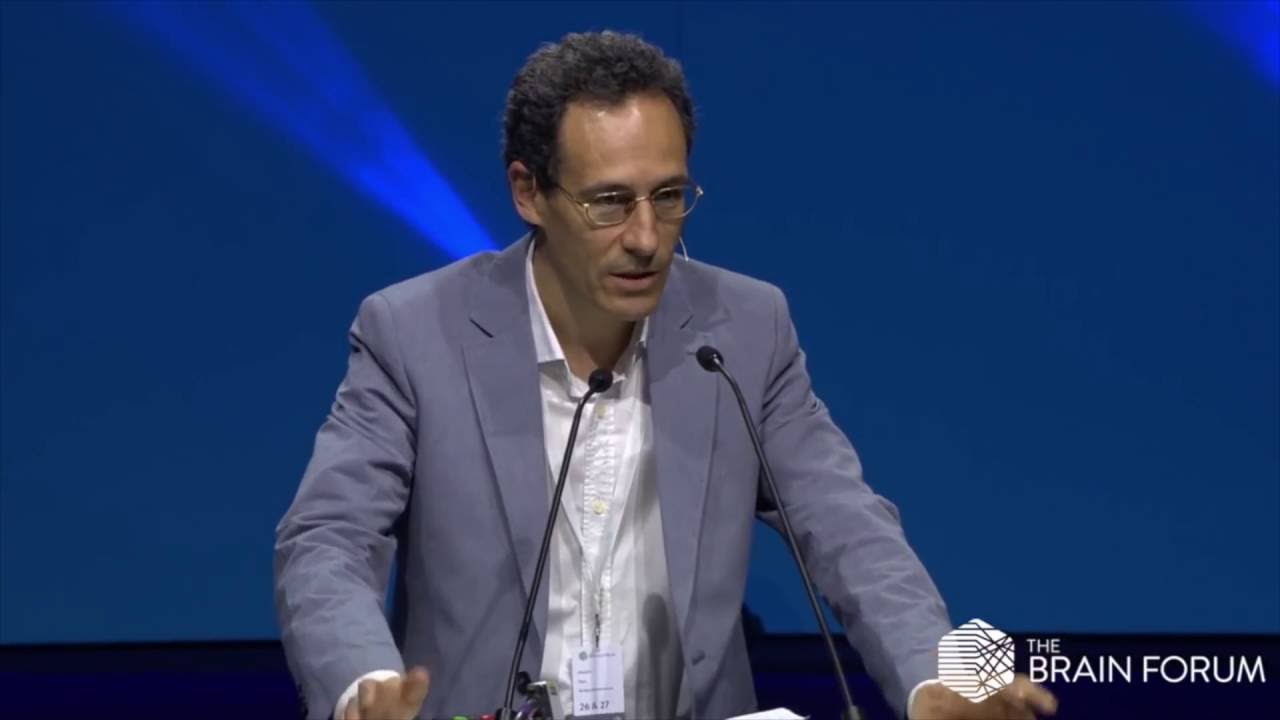
Using big data to define and validate real world outcomes in Alzheimer’s disease
Keywords
Summary
190 words
Critical Evaluation
Value of the Information & Strength of the Argument
The presentation provides valuable insights into the challenges of Alzheimer’s research and the potential of big data to address them. The argumentation is coherent, logically progressing from the problem (late diagnosis and fragmented data) to the proposed solution (ROADMAP project). The speaker effectively justifies the need for real-world evidence and the importance of multi-stakeholder collaboration. However, the talk is more of a project overview than a detailed scientific argument, with limited discussion of specific methodologies or preliminary results. The value lies in its strategic perspective and the emphasis on integrating diverse data sources.
Scientific Rigor, Source Quality, Title Accuracy
The presentation demonstrates scientific rigor in its structured approach and reliance on established IMI frameworks. However, no specific sources are cited within the talk, and the description provides only general information about the project and speaker. The title accurately reflects the content, focusing on big data and real-world outcomes. The speaker’s expertise and the involvement of reputable institutions lend credibility, but the lack of detailed references limits the ability to verify specific claims.
181 words
Title / Content Match
The title accurately reflects the content, which focuses on using big data to define and validate real-world outcomes in Alzheimer's disease.
Quality & Reliability
7/10
The speaker is a physician with extensive experience in clinical research and industry, and the talk describes a well-structured IMI project (ROADMAP) with clear objectives and consortium details. However, the presentation is a proposal overview without detailed data or peer-reviewed results, and no specific sources are cited in the talk.
Key Moments
Markers derived by PSI from the transcript: the creator did not define chapters.
- Introduction and welcome by host
- Dr. Pan begins presentation, thanks organizers
- Introduces ROADMAP project and its goals
- Discusses challenges in Alzheimer's research: late diagnosis, fragmented data
- Explains the need for real-world evidence and the role of big data
- Describes the ROADMAP consortium and its members
- Details the two-phase approach and deliverables
- Highlights the importance of stakeholder engagement and consensus
- Summarizes expected outcomes and future plans
- Concludes with take-home message and thanks
Cited Sources
- ROADMAP project — Mentioned as the project being presented, with details on its objectives and consortium.
Concurring Sources
- ROADMAP project website — Provides official information about the project, its objectives, and consortium, consistent with the talk.
Contribution & Novelties
The talk presents the ROADMAP project as an innovative initiative to leverage big data for Alzheimer’s disease research, emphasizing the integration of real-world data and multi-stakeholder collaboration. It highlights the need to move beyond traditional clinical trials and develop transferable outcome measures. The project’s novelty lies in its comprehensive approach to harmonizing data across Europe and its focus on early disease stages.
Pour aller plus loin :
- Innovative Medicines Initiative (IMI) — The funding framework for ROADMAP, providing context on public-private partnerships in health research.
- Dementias Platform UK — A UK initiative mentioned as a collaborator, relevant for its data infrastructure and research on dementia.
- Alzheimer’s Disease Neuroimaging Initiative (ADNI) — A major public-private partnership collecting longitudinal data, relevant to the discussion of data harmonization and biomarkers.
127 words
Radar Profile
The radar profile shows balanced scores across all dimensions, with slightly higher scores in information quantity and quality, reflecting the informative but not deeply technical nature of the talk. The fiabilité is solid due to the speaker's expertise and institutional backing, while the technical level is moderate, suitable for a general scientific audience.
💬 No comments were provided for analysis.