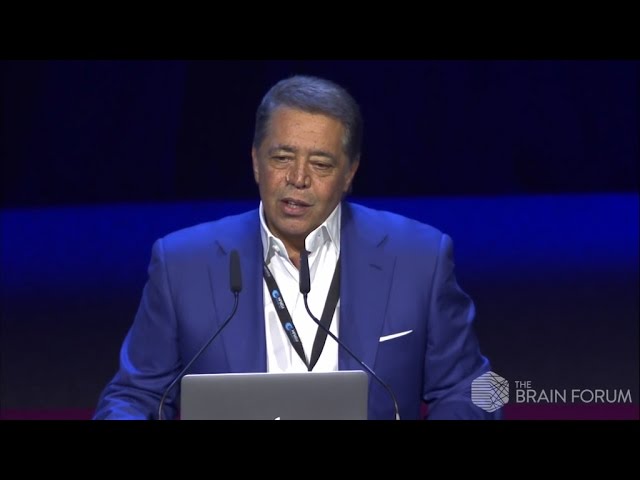
Opening remarks
Keywords
Summary
173 words
Critical Evaluation
Value of the Information & Strength of the Argument
The video provides valuable high-level insights into the current state and future directions of brain research. The speakers argue for increased collaboration and interdisciplinary approaches, citing the complexity of the brain and the need for new therapies. Their argumentation is persuasive but lacks detailed evidence or data, relying on general statements and examples like DBS and gene therapy. The value lies in setting the stage for the forum and highlighting key challenges and opportunities.
Scientific Rigor, Source Quality, Title Accuracy
The scientific rigor is moderate; the speakers are credible experts, but they do not provide specific sources or data. The quality of sources is not directly addressed, but the references to major initiatives and the WHO are appropriate. The title accurately reflects the content. No comments were provided for analysis.
139 words
Title / Content Match
The title accurately reflects the content, which is indeed opening remarks for The Brain Forum 2015.
Quality & Reliability
6/10
The video consists of opening remarks by two leaders in neuroscience funding and research. They provide high-level perspectives on the state of brain research, but no detailed data or citations. The information is reliable as expert opinion, but lacks depth and verifiable sources.
Key Moments
Markers derived by PSI from the transcript: the creator did not define chapters.
- Introduction by Bruno, welcoming Dr. Walid Juffali.
- Dr. Juffali welcomes attendees and highlights global representation.
- Juffali discusses the question 'How does the brain work?' and the lack of a brain theory.
- Juffali mentions the WHO warning about mental disorders and the need to address the challenge.
- Introduction of Patrick Aebischer, President of EPFL.
- Aebischer welcomes attendees and reflects on the first Brain Forum in Jeddah.
- Aebischer discusses the brain as a last scientific frontier and mentions major initiatives.
- Aebischer highlights the lack of new drugs in neuroscience and praises deep brain stimulation.
- Aebischer talks about emerging fields: gene therapy, rehabilitation, nutrition, and microbiome.
- Aebischer announces the new research entity in Geneva and concludes with thanks.
Cited Sources
- The Brain Forum — Mentioned as the event's website in the video description.
Concurring Sources
- World Health Organization — Referenced for the statistic on mental disorders.
Contribution & Novelties
The video provides an overview of the goals and context of The Brain Forum 2015, emphasizing the need for interdisciplinary collaboration in brain research. It highlights the urgency of addressing brain diseases and the potential of emerging technologies. The speakers’ perspectives add value by framing the current landscape and future directions.
Pour aller plus loin :
- Human Brain Project — A major European initiative to simulate the brain, directly relevant to the discussion.
- BRAIN Initiative — The US initiative mentioned, aiming to revolutionize understanding of the brain.
- Deep Brain Stimulation — The therapy highlighted as a major breakthrough, with details on its applications.
103 words
Radar Profile
The radar profile shows moderate scores across all dimensions, with slightly higher quality and reliability compared to quantity and technical depth. This reflects a high-level, opinion-based content that is credible but not deeply technical or data-rich.