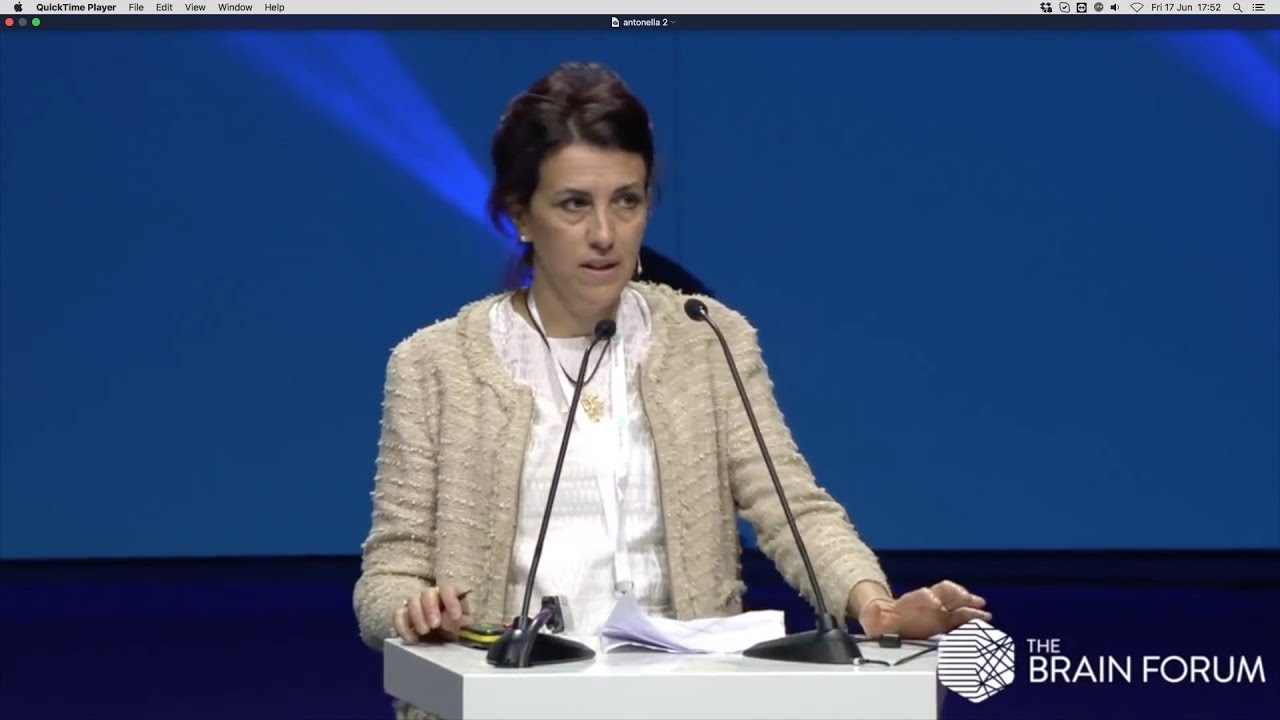
Streamlining and harmonising the global drug development pathway for Alzheimer's disease treatment
Keywords
Summary
151 words
Critical Evaluation
Value of the Information & Strength of the Argument
The talk provides valuable insights into the regulatory challenges and potential solutions for Alzheimer’s disease drug development. The speaker’s argumentation is coherent and well-structured, supported by her professional experience and references to regulatory guidelines. She effectively uses the statin analogy to illustrate how biomarker-based endpoints could accelerate drug approval. However, the talk lacks detailed data or specific examples of failed trials, and the argumentation is more opinion-based than evidence-based.
78 words
Title / Content Match
The title accurately reflects the content, which focuses on streamlining and harmonizing drug development for Alzheimer's disease from a regulatory perspective.
Quality & Reliability
7/10
The speaker is a clinical reviewer at the Swiss Agency for Therapeutic Products with relevant expertise in Alzheimer's disease. The talk is based on her professional experience and regulatory knowledge, but it is an opinion piece without detailed citations or data. The content is plausible and aligns with known regulatory guidelines, but lacks rigorous scientific evidence.
Key Moments
Markers derived by PSI from the transcript: the creator did not define chapters.
- Introduction and acknowledgment of the devastating nature of Alzheimer's disease.
- Discussion of reasons for clinical trial failures, including lack of understanding of pathogenesis and late-stage intervention.
- Proposed solutions: more research, earlier intervention, better trial design, improved diagnostics, combination therapy, and preventive factors.
- Mention of international regulatory task force and collaboration among regulators.
- Comparison of FDA and EMA guidelines, highlighting the shift towards biomarkers and early disease stages.
- Example of Lilly's trial changing endpoints from cognition and functioning to cognition only.
- Analogy with statins and the use of LDL cholesterol as a surrogate endpoint, suggesting a similar approach for AD.
Cited Sources
- FDA Guidance for Industry: Alzheimer's Disease: Developing Drugs for the Treatment of Early Stage Disease — Referenced as the FDA guidelines issued in 2013 addressing early-stage AD and biomarkers.
- EMA Draft Guideline on the clinical investigation of medicines for the treatment of Alzheimer's disease — Referenced as the European draft guideline released in January 2016, emphasizing AD as a continuum and the need for biomarkers.
Concurring Sources
- FDA Guidance for Industry: Alzheimer's Disease: Developing Drugs for the Treatment of Early Stage Disease — Supports the speaker's description of FDA guidelines emphasizing early-stage AD and biomarkers.
- EMA Draft Guideline on the clinical investigation of medicines for the treatment of Alzheimer's disease — Supports the speaker's description of EMA guidelines recognizing AD as a continuum and the need for biomarkers.
Contribution & Novelties
The talk offers a regulator’s perspective on streamlining Alzheimer’s disease drug development, emphasizing early dialogue, biomarker-based endpoints, and international harmonization. It draws a novel analogy with statins to suggest that surrogate biomarkers could accelerate approval. The speaker’s position as a regulator adds credibility to the proposed strategies.
Pour aller plus loin :
- Alzheimer’s disease biomarkers — Overview of biomarkers like amyloid and tau.
- EMA guideline on Alzheimer’s disease — The draft guideline mentioned in the talk.
- FDA guidance on early Alzheimer’s disease — The FDA guidance referenced.
- Surrogate endpoint — Concept of using biomarkers as surrogate endpoints in clinical trials.
100 words
Radar Profile
The radar profile shows balanced scores across all dimensions, with slightly higher scores in information quantity and quality, indicating a well-rounded but not exceptional presentation. The technical level is moderate, suitable for a general scientific audience.