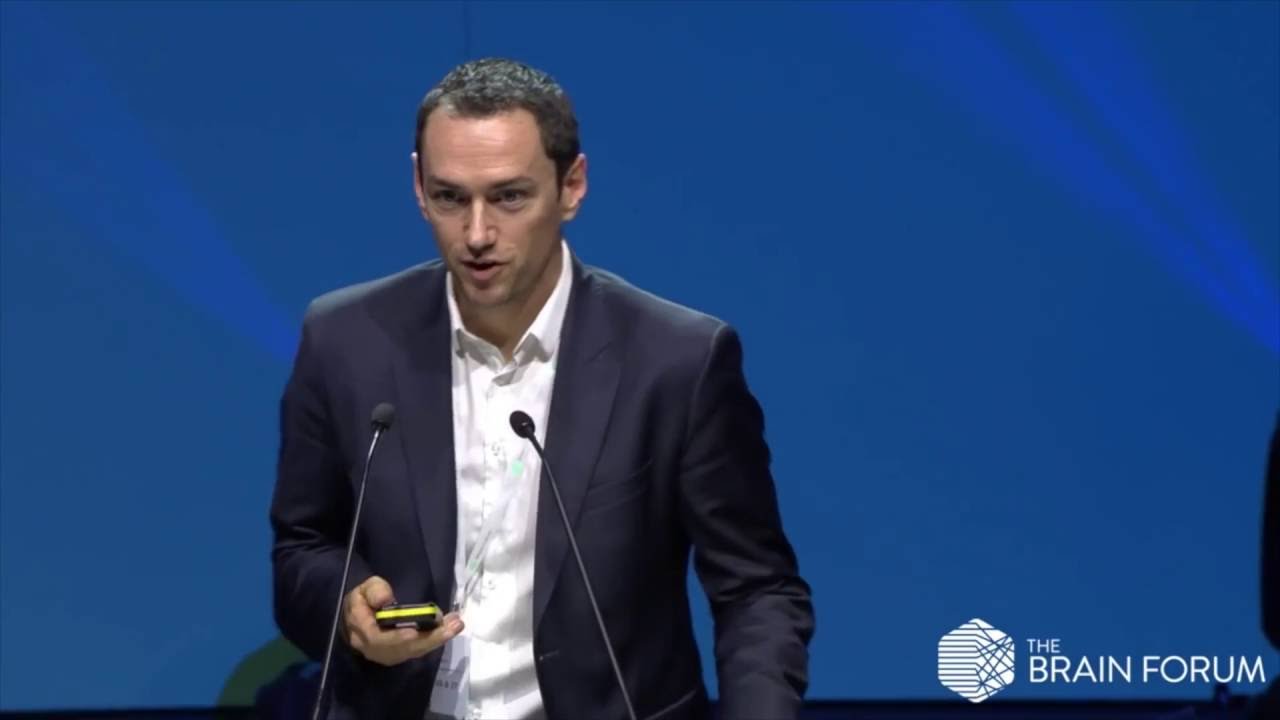
PRAGMA Therapeutics, Sylvain Celanire
Keywords
Summary
139 words
Critical Evaluation
Value of the Information & Strength of the Argument
The pitch provides a clear value proposition: addressing unmet medical needs in PTSD and hearing loss with a novel mechanism targeting mGlu7. The argumentation is logically structured, starting with the disease burden, current treatment limitations, and then introducing the target and its relevance. The speaker supports the rationale with genetic evidence linking mGlu7 to hearing loss and the role of glutamate in stress responses. However, the argumentation relies heavily on the potential of the approach rather than presenting robust preclinical data. The speaker mentions proof-of-concept in animal models but does not provide specific results. The response to jury questions demonstrates a thoughtful consideration of patient stratification and biomarkers, but the overall evidence presented is preliminary.
Scientific Rigor, Source Quality, Title Accuracy
The pitch is a company presentation, so it is not a scientific publication. The speaker cites support from recognized institutions (French National Research Agency, Action on Hearing Loss UK) and collaborations with academic centers, which adds credibility. However, no specific peer-reviewed studies are referenced. The title accurately reflects the content. The description provides a link to the company’s website, which may contain more detailed information. Overall, the scientific rigor is moderate, typical for a pitch, with a clear rationale but limited disclosed evidence.
213 words
Title / Content Match
The title accurately reflects the content, which is a pitch by Sylvain Celanire of PRAGMA Therapeutics.
Quality & Reliability
6/10
The pitch presents a plausible scientific rationale for targeting mGlu7 in PTSD and hearing loss, but lacks detailed experimental data and peer-reviewed references. Claims are supported by grants and collaborations, but the evidence is not fully disclosed.
Key Moments
Markers derived by PSI from the transcript: the creator did not define chapters.
- Introduction and overview of PRAGMA Therapeutics and its focus on PTSD and hearing loss.
- Discussion of the lack of innovation in PTSD treatment and limitations of current therapies.
- Introduction of mGlu7 receptor and its role in glutamate dysfunction.
- Explanation of the approach for hearing loss, including the expression of mGlu7 in the inner ear.
- Details on the company's progress, including grants and collaborations.
- Presentation of the lead compound and its activity in preclinical models.
- Discussion of patent applications and expansion of chemical libraries.
- Overview of the team's experience and business model.
- Investment opportunity and timeline for clinical development.
- Jury questions regarding differentiation and clinical validation.
Cited Sources
- PRAGMA Therapeutics — Company website mentioned in the video description.
Concurring Sources
- PRAGMA Therapeutics — Company website, which may contain additional information on their science and pipeline.
Contribution & Novelties
The pitch presents a novel approach to treating PTSD and hearing loss by targeting the mGlu7 receptor, which is not yet widely explored. The company claims to have discovered first-in-class allosteric modulators with oral bioavailability and proof-of-concept in preclinical models. This could represent a significant advancement if validated in clinical trials.
Pour aller plus loin :
- mGlu7 receptor — Overview of the receptor and its role in the nervous system.
- Post-traumatic stress disorder — General information on PTSD, its symptoms, and current treatments.
- Hearing loss — Comprehensive overview of hearing loss types and causes.
- Allosteric modulator — Explanation of allosteric modulation and its therapeutic potential.
105 words
Radar Profile
The radar profile shows moderate scores across all dimensions, with a slightly higher level of technical detail and lower reliability, reflecting the preliminary nature of the pitch and the lack of peer-reviewed evidence.