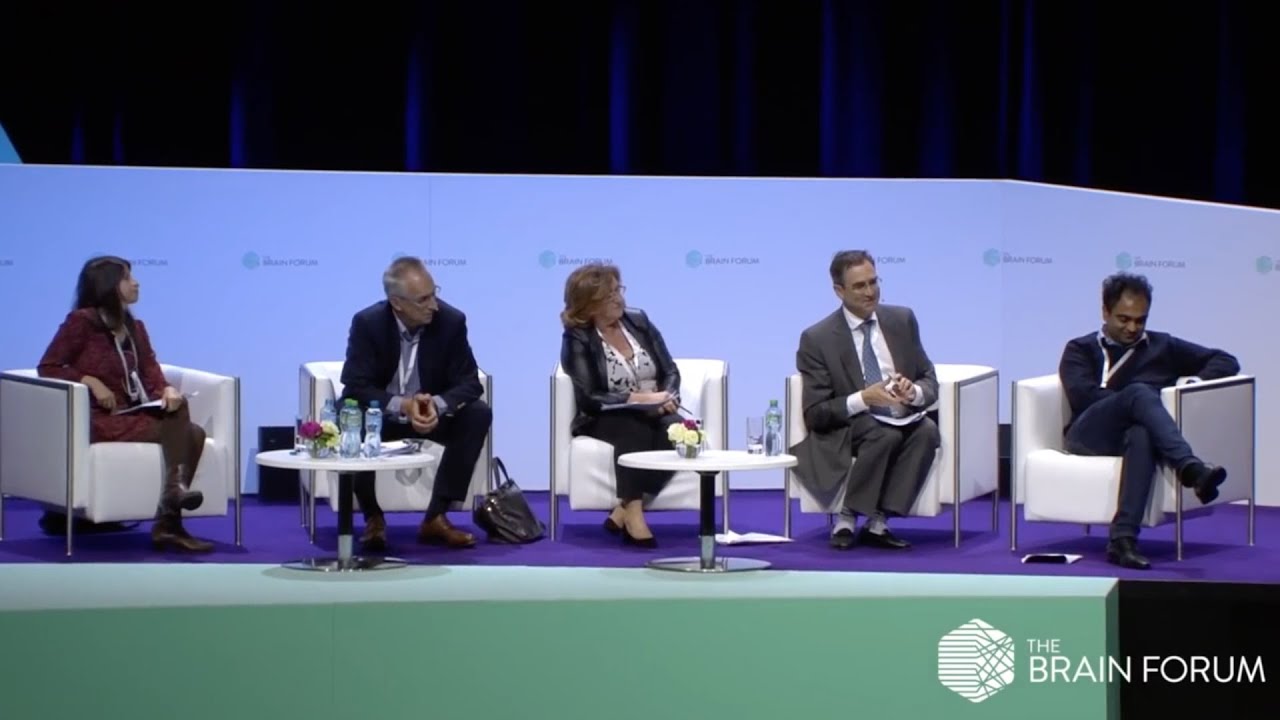
The Brain Forum 2016 Innovation Award, Jury discussion
Keywords
Summary
113 words
Critical Evaluation
Value of the Information & Strength of the Argument
The video offers valuable insights from experienced professionals in neuroscience and venture capital. The panelists provide practical advice for startups, such as the importance of understanding what you have, setting clear goals, and assessing risks. They also discuss broader trends in the industry, like the convergence of drugs and devices, and the role of data and machine learning. The argumentation is based on personal experience and professional judgment, making it credible but not empirically rigorous. The discussion is well-structured, with each panelist contributing unique perspectives, but it lacks concrete data or case studies to support their claims.
Scientific Rigor, Source Quality, Title Accuracy
The video is a panel discussion, so it does not cite specific sources. However, the panelists are credible experts from reputable organizations (e.g., Novartis Venture Fund, MindMaze, Federation of European Neuroscience Societies). The title accurately reflects the content, as it is indeed a jury discussion. The video does not provide any external references or citations, which limits its scientific rigor. The discussion is more opinion-based than evidence-based, but the expertise of the panelists adds to its credibility. The title is appropriate and does not mislead.
197 words
Title / Content Match
The title accurately reflects the content: a jury discussion at the Innovation Award of The Brain Forum 2016.
Quality & Reliability
7/10
The video is a panel discussion with experts from neuroscience, venture capital, and entrepreneurship. The content is based on their professional experience and opinions, not on original research. The discussion is insightful but subjective, reflecting the panelists' perspectives. The video is from a reputable event (The Brain Forum) and features credible experts, but the nature of the content (opinions) limits its factual reliability.
Key Moments
Markers derived by PSI from the transcript: the creator did not define chapters.
- Introduction to the Innovation Award session and jury
- Jury members introduce themselves
- Claude Florin explains the selection process
- Past participants share their experiences
- Discussion on what makes a successful startup
- Panelists discuss funding challenges and international cooperation
- Advice on entrepreneurship and risk-taking
- Discussion on future trends in neuroscience and technology
- Final thoughts on the importance of mentorship and networking
Contribution & Novelties
The video provides a unique perspective on the challenges and opportunities in neuroscience startups, as seen through the eyes of investors and scientists. It offers practical advice for entrepreneurs, such as the importance of understanding your technology and market, and the need for international cooperation. The discussion also highlights the funding gap in healthcare startups and the potential of combining drugs, devices, and software.
Pour aller plus loin :
- The Brain Forum — Official website of the event, providing context and resources.
- MindMaze — Company founded by panelist Tej Tadi, specializing in neurotechnology.
- Novartis Venture Fund — Venture capital arm of Novartis, represented by Markus Goebel.
- Federation of European Neuroscience Societies — Organization represented by Monica Di Luca.
118 words
Radar Profile
The radar profile shows a balanced score across all dimensions, with slightly higher scores in quality and reliability, reflecting the expertise of the panelists. The lower score in technical level indicates that the content is accessible to a general audience, while the moderate quantity of information suggests a focused discussion rather than a comprehensive review.