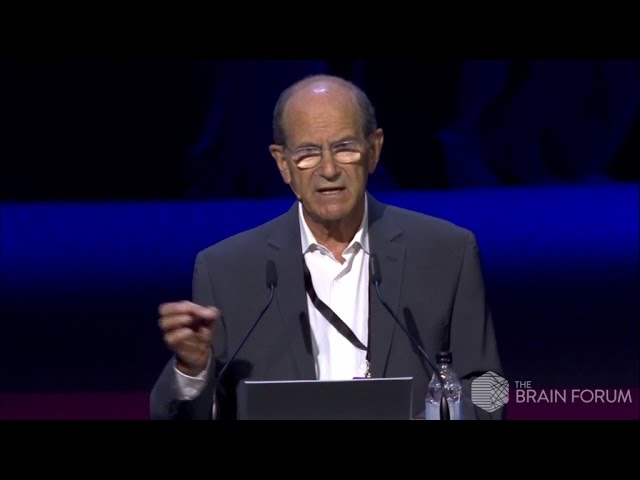
History of medical success, deep brain stimulation, Prof. Alim-Louis Benabid
Keywords
Summary
144 words
Critical Evaluation
Value of the Information & Strength of the Argument
The talk provides a comprehensive and authoritative overview of DBS, enriched by the speaker’s personal experience and pioneering contributions. The argumentation is strong, supported by clinical cases, videos, and references to published studies. The speaker effectively demonstrates the reversibility and adaptability of DBS, and highlights the importance of precise targeting. He also presents novel concepts, such as the idea that different diseases may share common abnormal firing patterns, and the potential for neuroprotection. The evidence is compelling, though some claims are based on anecdotal cases or preliminary studies.
Scientific Rigor, Source Quality, Title Accuracy
The speaker is a highly credible expert, and the talk is based on decades of research and clinical practice. He references key studies and collaborations, such as the Lasker Award shared with Maland Dong. The title accurately reflects the content, as the talk covers the history and success of DBS. The talk is well-structured and scientifically rigorous, though it lacks detailed citations for all claims. The audience appears to be a scientific forum, and the speaker assumes a certain level of background knowledge.
186 words
Title / Content Match
The title accurately reflects the content, as the talk covers the history and success of deep brain stimulation, presented by Prof. Benabid.
Quality & Reliability
9/10
The speaker is a world-renowned neurosurgeon and Lasker Award recipient, presenting his own pioneering work and established clinical evidence. The talk is based on decades of research and clinical practice, with clear demonstrations and references to published studies. Minor limitations include the lack of detailed citations and the anecdotal nature of some patient cases.
Key Moments
Markers derived by PSI from the transcript: the creator did not define chapters.
- Introduction to Parkinson's disease and the role of dopamine
- Limitations of medication and the need for surgery
- Serendipitous discovery of high-frequency stimulation effect in 1987
- Demonstration of DBS effects on tremor and dyskinesias
- Subthalamic nucleus as the 'queen of targets' for Parkinson's disease
- Applications in dystonia, epilepsy, and psychiatric disorders
- Research on neuroprotection and red light therapy
- Conclusion and future directions
Cited Sources
- The Brain Forum — The talk was given at The Brain Forum 2015, and the website provides information about the event and speakers.
Concurring Sources
- Deep brain stimulation for Parkinson's disease: a systematic review and meta-analysis — This meta-analysis supports the efficacy of DBS for Parkinson's disease, consistent with the talk's claims.
Contribution & Novelties
The talk provides a unique first-hand account of the discovery and development of DBS, offering insights into the scientific process and the potential for future therapies. The speaker’s emphasis on neuroprotection and the use of red light therapy is particularly novel and opens new avenues for research.
Pour aller plus loin :
- Deep brain stimulation - Wikipedia — Overview of DBS, its history, and applications.
- Subthalamic nucleus - Wikipedia — Detailed information on the key target for Parkinson’s disease.
- Lasker Award - Wikipedia — Information on the prestigious award received by Prof. Benabid.
93 words
Radar Profile
The radar profile shows high scores across all dimensions, indicating a well-rounded and reliable presentation. The talk excels in information quantity and quality, with a strong technical level and high reliability, reflecting the speaker's expertise and the depth of the content.