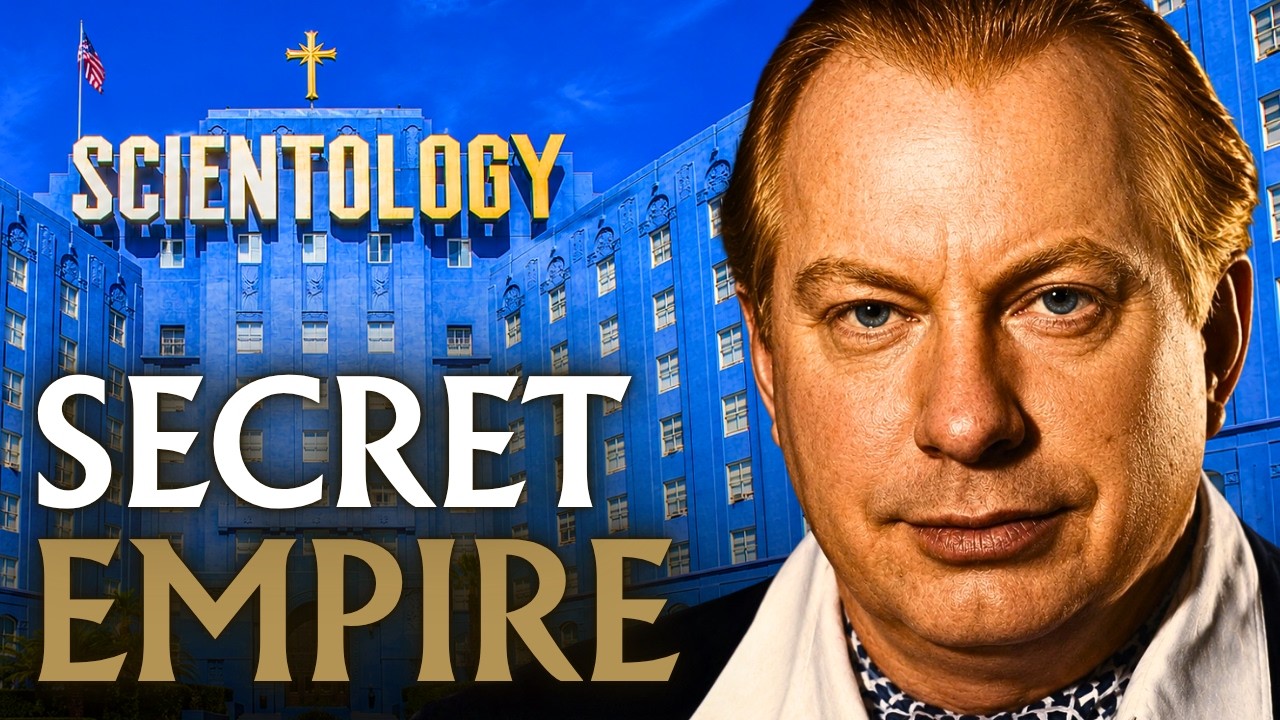
L. Ron Hubbard - The Most Powerful Cult Leader in History Documentary
Keywords
Summary
123 words
Critical Evaluation
Value of the Information & Strength of the Argument
The documentary offers valuable insights into Hubbard’s life, drawing on a range of sources including biographies, court records, and interviews. It presents a compelling narrative that connects his personal experiences to the formation of Scientology. The argumentation is solid, with clear evidence for many claims, though it acknowledges areas of uncertainty. The film effectively argues that Hubbard was a master manipulator who exploited people’s vulnerabilities for personal gain.
Scientific Rigor, Source Quality, Title Accuracy
The documentary demonstrates scientific rigor by consulting multiple historical sources and presenting a balanced view. It clearly distinguishes between verified facts and Hubbard’s own embellishments. The title accurately reflects the content, focusing on his role as a cult leader. The sources cited include biographies and historical records, though specific references are not always provided in the video itself. The film’s credibility is enhanced by its critical approach to Hubbard’s claims.
153 words
Title / Content Match
The title accurately reflects the content, focusing on Hubbard's life and his role as a cult leader.
Quality & Reliability
8/10
The documentary is well-researched, drawing on historical records and biographies, with a clear narrative. It acknowledges disputed aspects of Hubbard's life and presents a balanced view, though it relies heavily on secondary sources and Hubbard's own claims, which are critically examined.
Key Moments
Markers derived by PSI from the transcript: the creator did not define chapters.
- Introduction to Hubbard's early life and family background.
- Hubbard's time at George Washington University and his interest in writing.
- Hubbard's naval career and the incidents off Mexico.
- Development of Dianetics and publication of his book.
- Hubbard's marriage troubles and the kidnapping incident.
- Establishment of the Church of Scientology and its growth.
- Hubbard's later years, his exile, and his death.
Cited Sources
- The People Profiles Spotify — Official podcast of the channel, may contain related content.
- Related Playlist 1 — Playlist of related biographies.
- Related Playlist 2 — Playlist of related biographies.
- Related Playlist 3 — Playlist of related biographies.
Concurring Sources
- Bare-Faced Messiah: The True Story of L. Ron Hubbard — A critical biography that aligns with the documentary's portrayal.
- Going Clear: Scientology, Hollywood, and the Prison of Belief — A book and documentary that corroborates many details.
Dissenting Sources
- Scientology official website — The Church of Scientology disputes many negative claims about Hubbard and the organization.
Contribution & Novelties
This documentary provides a comprehensive and accessible overview of L. Ron Hubbard’s life, synthesizing existing research into a coherent narrative. It offers a critical perspective on his claims and highlights the contradictions in his biography. The film’s contribution lies in its engaging presentation that makes complex historical information digestible for a general audience.
Pour aller plus loin :
- Scientology on Wikipedia — Overview of the religion and its controversies.
- Dianetics on Wikipedia — Explanation of Hubbard’s early system.
- L. Ron Hubbard on Britannica — Encyclopedic entry with factual details.
89 words
Radar Profile
The radar profile shows high scores in information quantity and reliability, with moderate technical level. This indicates a well-researched documentary that is accessible to a general audience, though it may not delve into deep technical or scientific analysis.
💬 The comments are predominantly negative towards Hubbard and Scientology, with many viewers expressing disbelief and criticism. There is also appreciation for the documentary's quality. Overall, the sentiment is critical of the subject matter but positive about the content.