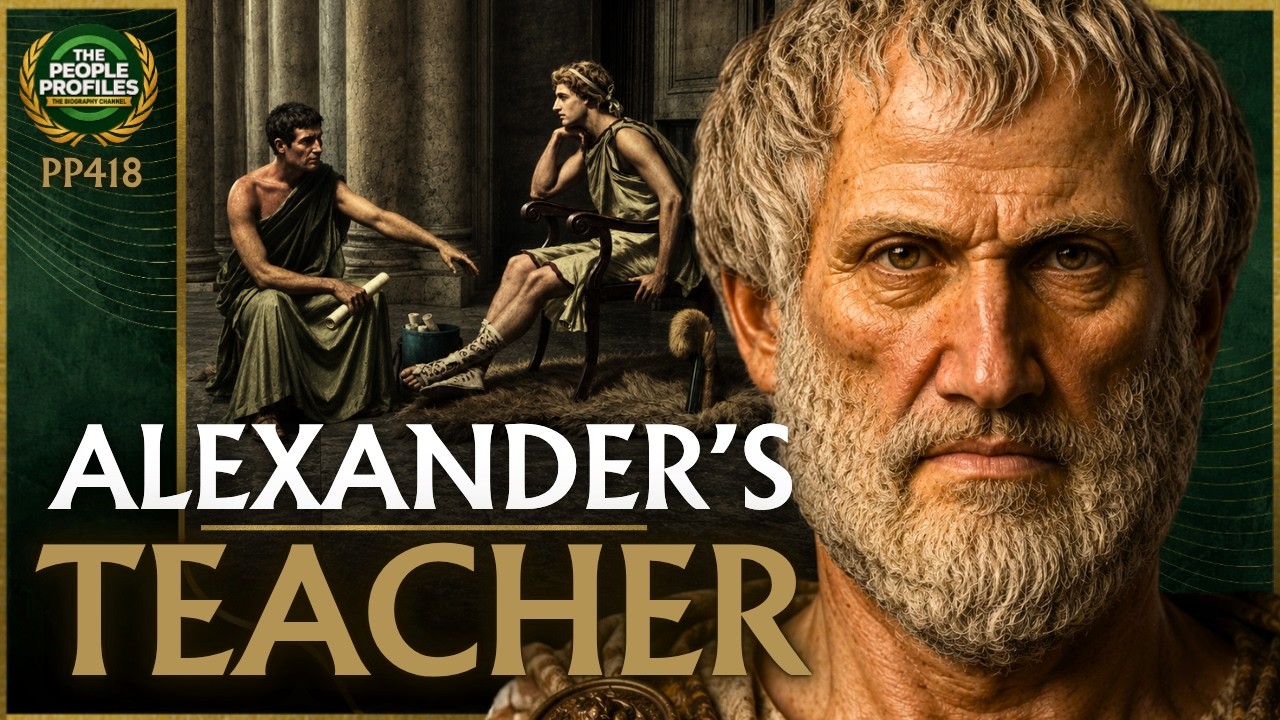
The Man Who Taught Alexander: Aristotle
Keywords
Summary
163 words
Critical Evaluation
Value of the Information & Strength of the Argument
The video provides substantial value by synthesizing a comprehensive overview of Aristotle’s life and works, drawing on both ancient sources and modern scholarship. It presents a balanced view, acknowledging uncertainties and scholarly debates, such as the reasons for Aristotle’s departure from the Academy. The argumentation is solid, with claims supported by references to specific works and historians. The documentary effectively demonstrates Aristotle’s pioneering role in multiple disciplines and his influence on later thinkers, making it a valuable educational resource.
Scientific Rigor, Source Quality, Title Accuracy
The documentary demonstrates scientific rigor by grounding its narrative in historical sources and modern academic interpretations. It cites ancient biographers like Diogenes Laertius and contemporary scholars, and it transparently notes the limitations of available evidence. The title accurately reflects the content, focusing on Aristotle’s role as Alexander’s tutor while also covering his broader contributions. The video’s production values and adherence to historical accuracy enhance its credibility.
160 words
Title / Content Match
The title accurately reflects the content, focusing on Aristotle's life and his role as Alexander's tutor, though it also covers his broader philosophical and scientific contributions.
Quality & Reliability
8/10
The video is a well-researched biographical documentary, scripted by qualified historians, with claims grounded in ancient sources and modern scholarship. It acknowledges uncertainties and cites multiple scholarly perspectives, enhancing reliability.
Key Moments
Markers derived by PSI from the transcript: the creator did not define chapters.
- Introduction to Aristotle's significance and the School of Athens fresco.
- Early life and family background in Stagira.
- Aristotle's education at Plato's Academy.
- Development of logic and the syllogism.
- Research in Assos and Lesbos; biological studies.
- Tutoring Alexander the Great.
- Political philosophy and the study of constitutions.
- Return to Athens and founding of the Lyceum.
- Ethics and the concept of eudaimonia.
- Legacy and influence on later thought.
Cited Sources
- The People Profiles - Spotify — Official podcast channel for the video.
- Related Videos Playlist 1 — Playlist of related biographical videos.
- Related Videos Playlist 2 — Playlist of related historical videos.
- Related Videos Playlist 3 — Playlist of related content.
Concurring Sources
- Aristotle - Stanford Encyclopedia of Philosophy — Provides scholarly consensus on Aristotle's life and works.
- Aristotle - Internet Encyclopedia of Philosophy — Offers detailed biographical and philosophical information.
Dissenting Sources
- Diogenes Laertius - Lives and Opinions of Eminent Philosophers — Ancient source with potential inaccuracies, as acknowledged in the video.
Contribution & Novelties
The video offers a comprehensive and accessible overview of Aristotle’s life and thought, synthesizing ancient sources and modern scholarship. It highlights his pioneering role in multiple disciplines and his influence on Western philosophy and science. The documentary’s strength lies in its balanced presentation of historical uncertainties and its emphasis on Aristotle’s empirical approach.
Pour aller plus loin :
- Aristotle - Stanford Encyclopedia of Philosophy — Authoritative overview of Aristotle’s philosophy.
- Aristotle - Internet Encyclopedia of Philosophy — Detailed biographical and philosophical analysis.
- History of Animals - Wikipedia — Information on Aristotle’s biological work.
- Syllogism - Wikipedia — Explanation of Aristotle’s logical contribution.
102 words
Radar Profile
The radar profile shows high scores in quantity and quality of information, with a moderate technical level, indicating a well-researched documentary accessible to a general audience. The reliability score is high, reflecting the use of credible sources and scholarly input.
💬 No comments were provided for analysis.