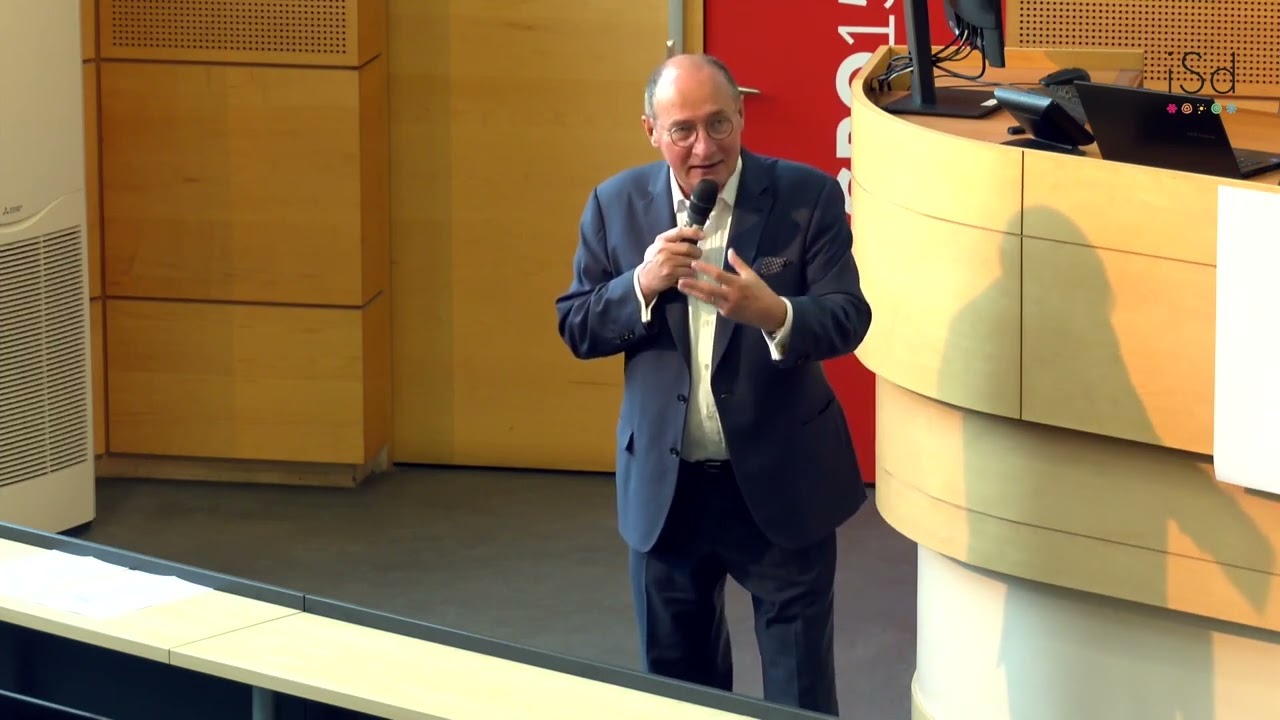
Climat social et décision
Keywords
Summary
209 words
Critical Evaluation
Value of the Information & Strength of the Argument
The value of the information lies in its practical, field-based perspective on social dialogue and decision-making. Anstett provides a concrete case study with detailed context, illustrating how a leader can shift from a traditional engineering approach to a more human-centric one. The argumentation is solid, as he logically connects the plant’s situation, the need for flexibility, and the importance of collective value. He acknowledges the difficulty and uncertainty, which adds credibility. However, the argument relies heavily on personal experience and lacks empirical data or comparative analysis, which limits its generalizability.
Scientific Rigor, Source Quality, Title Accuracy
The scientific rigor is moderate. The talk is an expert opinion based on a single case study, with no citations of academic literature or external data. The sources mentioned are limited to the organizer’s website. The title accurately reflects the content, focusing on social climate and decision-making. The speaker’s authority and practical experience lend some credibility, but the lack of verifiable sources and the anecdotal nature of the evidence reduce the overall rigor.
178 words
Title / Content Match
The title accurately reflects the content, which focuses on the relationship between social climate and decision-making in an industrial context.
Quality & Reliability
7/10
The speaker is a senior executive at Michelin with extensive industrial management experience. The talk is a personal testimony based on a real case, but it lacks external references or data to support the claims. The reasoning is coherent and grounded in practical experience, but the evidence is anecdotal.
Key Moments
Markers derived by PSI from the transcript: the creator did not define chapters.
- Introduction of the speaker and the topic: social climate and decision-making.
- Description of the plant's situation: high-performance tires, sense of invulnerability, and recent strike.
- Analysis of the gap between perception and reality, and the need for flexibility.
- Decision to focus on the collective rather than operational excellence alone.
- Reference to the founding myth of Michelin and the value of a dedicated collective.
- Discussion on the importance of social dialogue in finding a balance.
- Practical steps: transparency, building trust, and engaging with social partners.
- Q&A session and concluding remarks.
Cited Sources
- Campus de l'Innovation Managériale — Event page for the conference where this talk was given.
Concurring Sources
- Michelin's official website — Provides background on the company and its values, which align with the speaker's emphasis on collective value.
Contribution & Novelties
The talk offers a unique, field-based perspective on how social dialogue can be a strategic lever for decision-making and performance. It challenges the conventional focus on operational excellence and highlights the importance of collective value. The speaker’s experience provides a concrete example of how to reconcile economic pressures with social concerns.
Pour aller plus loin :
- Social dialogue — Provides an overview of the concept and its role in labor relations.
- Organizational culture — Relevant to understanding how collective values and beliefs influence performance.
- Employee engagement — Discusses the link between engagement and productivity, which is central to the talk.
100 words
Radar Profile
The radar profile shows high scores in quantity and quality of information, reflecting the detailed and coherent testimony. The technical level is moderate, as the talk is accessible but not deeply technical. The overall reliability is moderate, due to the anecdotal nature and lack of external sources.