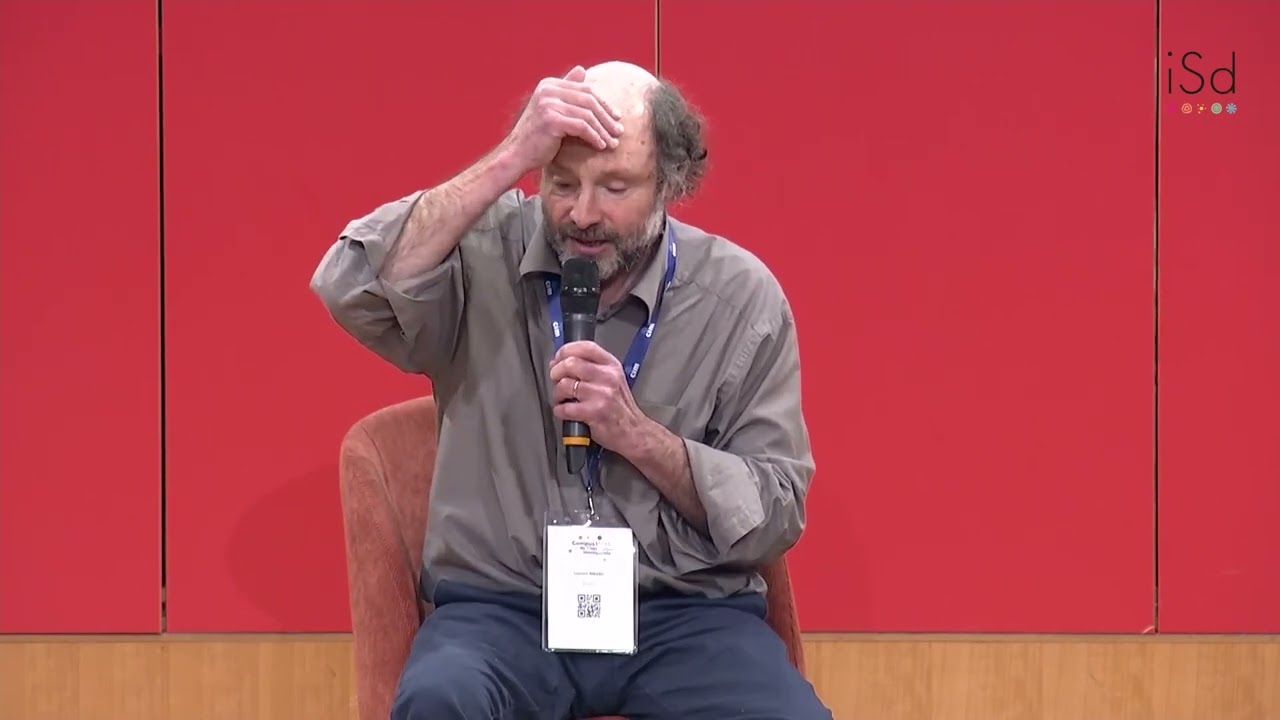
Pour une écologie réinventée
Keywords
Summary
171 words
Critical Evaluation
Value of the Information & Strength of the Argument
The talk offers valuable philosophical insights into the ecological crisis, framing it as a crisis of human nature and relationships rather than purely technical. Bibard’s argument is well-structured, using the Gleason example to illustrate a nuanced approach to decision-making in extreme situations. He builds a coherent case for reconnecting with nature and embracing temperance, drawing on philosophical and historical references. The argumentation is solid, though it remains at a conceptual level without empirical evidence, which is appropriate for a philosophical conference.
Scientific Rigor, Source Quality, Title Accuracy
Bibard demonstrates scientific rigor by grounding his ideas in philosophical traditions (Descartes, Hobbes, La Boétie, Eric Weil) and organizational theory (Karl Weick). He clearly cites these references, though he does not provide specific citations for all claims. The title accurately reflects the content, which is a philosophical exploration of ecology. The talk is well-structured and coherent, with a clear thesis and logical progression.
159 words
Title / Content Match
The title accurately reflects the content, which proposes a philosophical rethinking of ecology based on human nature and relationships.
Quality & Reliability
8/10
The speaker is a PhD in philosophy and economics, professor at ESSEC, and the talk is grounded in philosophical and historical references (Descartes, Hobbes, La Boétie, Eric Weil). The argument is coherent and well-structured, though it remains an opinion piece without empirical data.
Key Moments
Markers derived by PSI from the transcript: the creator did not define chapters.
- Introduction and context of the conference on reinventing ecology.
- Discussion on the dream of perfection and the need to renounce it.
- Historical background on humanity's detachment from nature since the Renaissance.
- Introduction of the four keywords: Gleason, humanity, rupture, and gentleness.
- Story of firefighter Paul Gleason and his decision-making approach.
- Analysis of human nature and the parent-child relationship.
- Political implications: tyranny vs. democracy, and the importance of education.
- Critique of liberalism and its assumption of equality.
- Call for rediscovering the path, temperance, and duty of means.
- Conclusion and invitation for discussion.
Cited Sources
- Campus de l'Innovation Managériale — Event page for the conference where this talk was given.
Concurring Sources
- Campus de l'Innovation Managériale — Event page for the conference where this talk was given.
Contribution & Novelties
The talk offers a novel perspective by linking ecological crisis to human nature and the parent-child relationship, suggesting that reinventing ecology requires rethinking our social and political structures. It emphasizes the importance of the journey and temperance over perfection.
Pour aller plus loin :
- Discours de la servitude volontaire — Key reference on voluntary servitude and tyranny.
- René Descartes — Philosopher who advocated mastery over nature.
- Karl Weick — Organizational theorist who studied high-reliability organizations and sensemaking.
77 words
Radar Profile
The radar profile shows high scores in quality and reliability, with moderate quantity and technical level. This indicates a well-argued, expert opinion piece that is accessible but not highly technical.