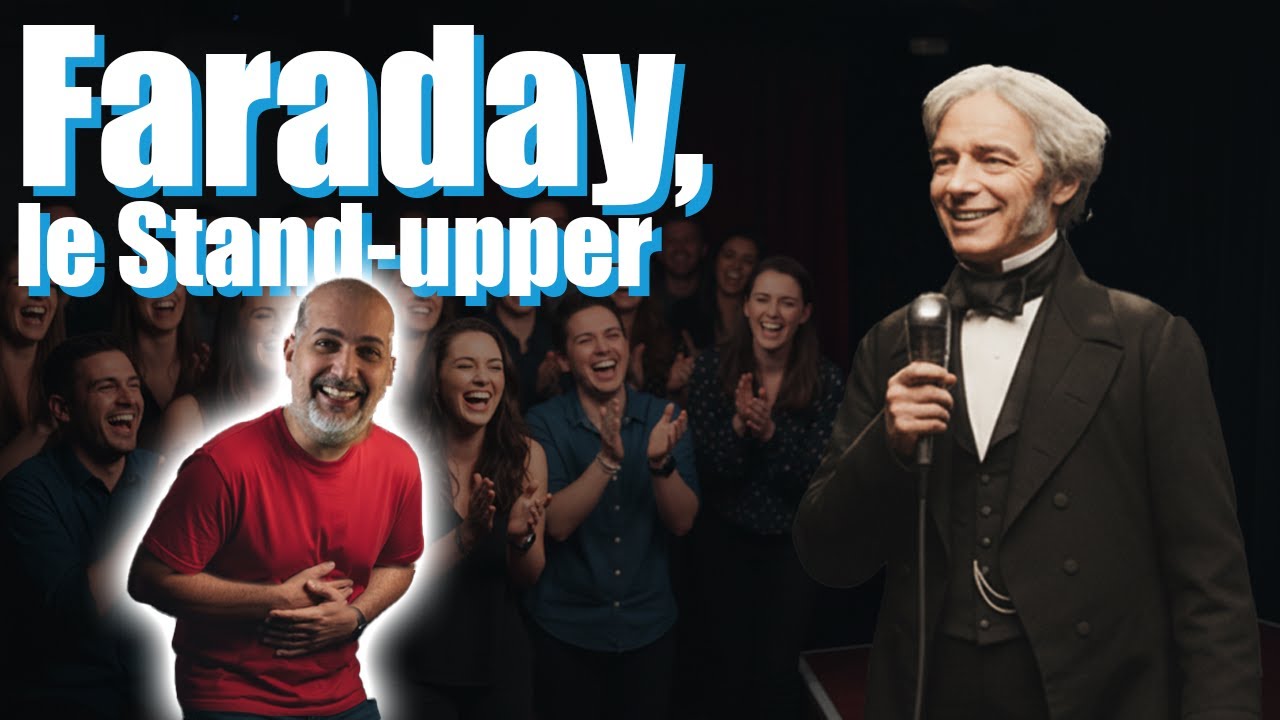
Michael Faraday, stand-upper de l'électromagnétisme
Michael Faraday, stand-up comedian of electromagnetism
Keywords
Summary
140 words
Critical Evaluation
Value of the Information & Strength of the Argument
The video provides valuable insights into Faraday’s life and work, effectively connecting his personal story to his scientific achievements. The argumentation is coherent and well-structured, presenting historical facts and scientific principles in an engaging manner. The creator uses anecdotes and clear explanations to illustrate complex concepts, making the content accessible without oversimplifying. The discussion on the cultural impact of Faraday’s Christmas Lectures and the comparison with modern science communication adds depth to the narrative.
Scientific Rigor, Source Quality, Title Accuracy
The video demonstrates a solid commitment to accuracy, referencing reliable sources such as Wikipedia articles and institutional pages. The creator clearly distinguishes between established facts and personal interpretations, and the content aligns with mainstream scientific understanding. The title accurately reflects the content, which highlights Faraday’s role as a charismatic science communicator and his contributions to electromagnetism. The video also includes a brief sponsorship segment, which is clearly separated from the main content.
161 words
Title / Content Match
The title accurately reflects the content, which highlights Faraday's role as a charismatic science communicator and his contributions to electromagnetism.
Quality & Reliability
8/10
The video is a well-researched popular science presentation, grounded in historical facts and scientific principles, with references to Wikipedia and institutional sources. The creator clearly distinguishes between established knowledge and personal interpretation, and the content aligns with mainstream scientific understanding.
Chapters
Cited Sources
- Humphry Davy - Wikipedia — Background on Humphry Davy, Faraday's mentor.
- Réaction d'oxydoréduction - Wikipedia — Explanation of redox reactions mentioned in the video.
- Induction électrique - Wikipedia — Concept of electrical induction.
- Induction électromagnétique - Wikipedia — Detailed explanation of electromagnetic induction.
- Le phénomène de cage de Faraday - Blog EBDS — Explanation of the Faraday cage phenomenon.
- Biographie de Faraday - CNRS — Institutional biography of Michael Faraday.
Concurring Sources
- Michael Faraday - Encyclopaedia Britannica — General reference on Faraday's life and work.
External References
Contribution & Novelties
The video offers a fresh perspective on Faraday by focusing on his role as a science communicator and the legacy of his Christmas Lectures, linking them to modern science communication. It also highlights lesser-known aspects of his work, such as his early principles of scientific inquiry and his contributions to electrochemistry.
Pour aller plus loin :
- Michael Faraday - Wikipedia — Comprehensive biography and scientific contributions.
- Royal Institution Christmas Lectures - Wikipedia — History and impact of the lectures.
- Electromagnetic induction - Wikipedia — Detailed explanation of the phenomenon.
89 words
Radar Profile
The radar profile shows high scores in information quantity and quality, reflecting the video's rich content and reliable sourcing. The technical level is moderate, making it accessible to a general audience while still providing depth. Overall, the video is a well-rounded and reliable source of scientific history.
💬 Très positif — Sur les 30 commentaires analysés, les spectateurs expriment une gratitude profonde pour l'impact de la chaîne sur leur intérêt pour les sciences, certains mentionnant qu'elle a inspiré leurs études ou carrières scientifiques.