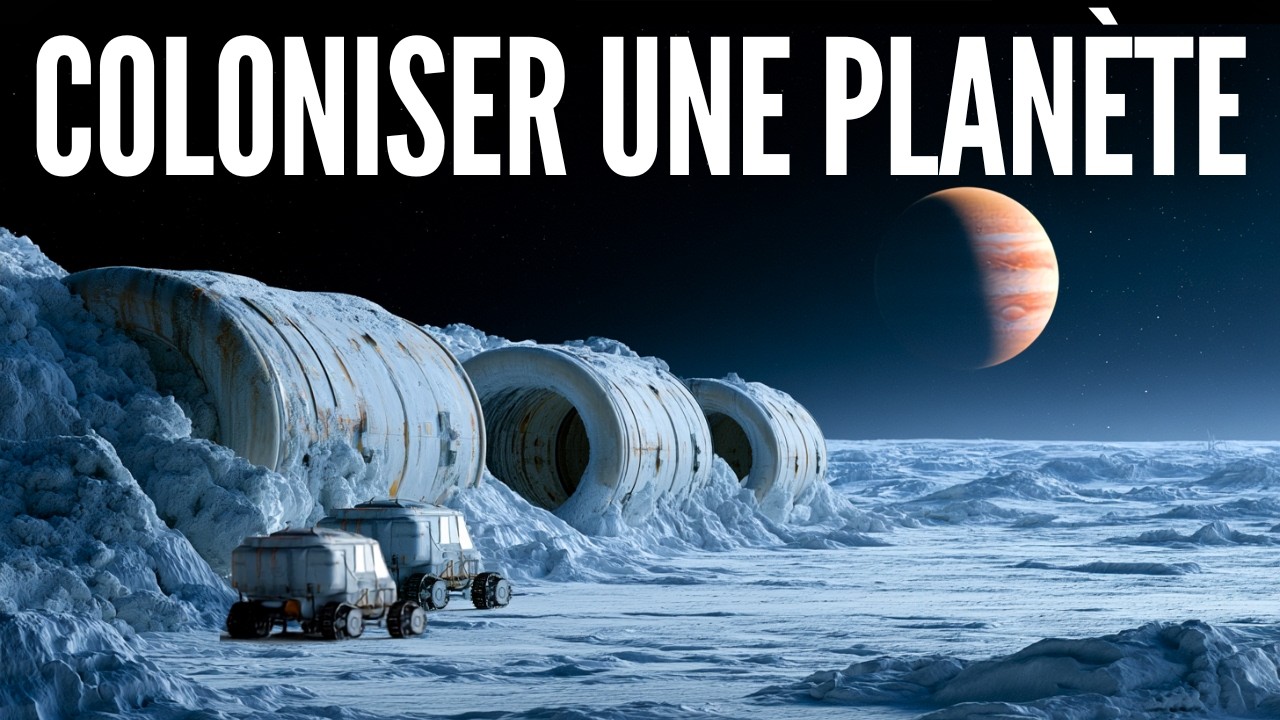
Pourquoi le SYSTÈME SOLAIRE est INHOSPITALIER (et ce que ça change pour NOUS)
Keywords
Summary
145 words
Critical Evaluation
The video provides a comprehensive and engaging overview of the habitability of solar system bodies, effectively balancing scientific accuracy with accessibility. The argumentation is solid, systematically evaluating each candidate world against key criteria for human habitation: water, atmosphere, temperature, radiation, and resources. The use of specific examples, such as the Venera probes’ survival time on Venus and the potential water ice in lunar polar craters, grounds the discussion in concrete evidence. The scientific rigor is generally high; concepts like the runaway greenhouse effect and deuterium/hydrogen ratios are explained clearly and correctly. The sources cited, including a NASA technical paper and a CNRS publication, lend credibility. However, the video simplifies some complex topics for a general audience, which is acceptable given its educational purpose. The title accurately reflects the content, and the inclusion of a sponsorship segment does not detract from the scientific value. The video’s strength lies in its ability to convey the profound inhospitality of other worlds while fostering appreciation for Earth. The public comments are overwhelmingly positive, with viewers expressing appreciation for the clarity and educational value, and some noting the importance of protecting Earth. Overall, this is a high-quality science communication piece.
195 words
Title / Content Match
The title accurately reflects the content, which systematically evaluates the inhospitable nature of various solar system worlds and discusses implications for human exploration.
Quality & Reliability
8/10
The video presents a well-structured overview of the habitability of solar system bodies, relying on established scientific knowledge and referencing credible sources such as NASA and CNRS publications. The content is accurate and up-to-date, with clear explanations of concepts like the greenhouse effect and isotopic evidence. Minor simplifications are present for accessibility, but overall the information is reliable.
Chapters
- Pourquoi retourner sur la Lune ?
- Quel monde pour une première base humaine ?
- Qu’est-ce qu’une planète « accueillante » ?
- Pourquoi l’eau est essentielle dans l’espace
- La Lune : notre terrain d’entraînement
- Mercure : beaucoup d’énergie, aucun refuge
- Vénus : la sœur infernale de la Terre
- Lire l’atmosphère grâce à la lumière
- Mars : la meilleure candidate ?
- Pourquoi les planètes géantes sont inhabitables
- Europe : un océan caché sous la glace
- Encelade : une lune qui projette son océan
- Titan : des mers et des pluies d’hydrocarbures
- Quel est le meilleur monde pour les humains ?
- La seule planète réellement accueillante
- La plus grande leçon de l’exploration spatiale
Cited Sources
- Massless Exploration – Humans as a Solar System Species — Referenced in the video description as a scientific article consulted during research, likely providing insights into human exploration concepts.
- La colonisation de l'espace à l'œil nu — Recommended book in the description, offering accessible information on space colonization.
- Interview with a scientist on exoplanets — Linked in the description as a related video interview about exoplanets, providing additional context.
Concurring Sources
- NASA Technical Reports Server — The cited NASA paper aligns with the video's discussion on human exploration of the solar system.
External References
Contribution & Novelties
The video synthesizes current knowledge on the habitability of solar system bodies, emphasizing the importance of water and the concept of ’equilibrium’ in habitability. It effectively communicates the idea that no other world offers a combination of factors comparable to Earth, reinforcing the need to protect our planet. The video also highlights the Moon as a practical first step for learning to live off-Earth.
Pour aller plus loin :
- Runaway greenhouse effect — Explains the mechanism that made Venus inhospitable.
- Deuterium/hydrogen ratio — Discusses how isotopic ratios indicate water loss on planets.
- Artemis program — NASA’s program to return humans to the Moon, relevant to the video’s discussion of lunar bases.
111 words
Radar Profile
The radar profile shows high scores in information quantity, quality, and technical level, with a slightly lower but still strong reliability score. This indicates a well-researched and informative video that maintains scientific credibility.
💬 Très positif. Sur les 30 commentaires analysés, le public exprime une admiration constante pour la qualité pédagogique et le montage, avec quelques remarques constructives sur le volume sonore et une demande de précision sur un point technique.