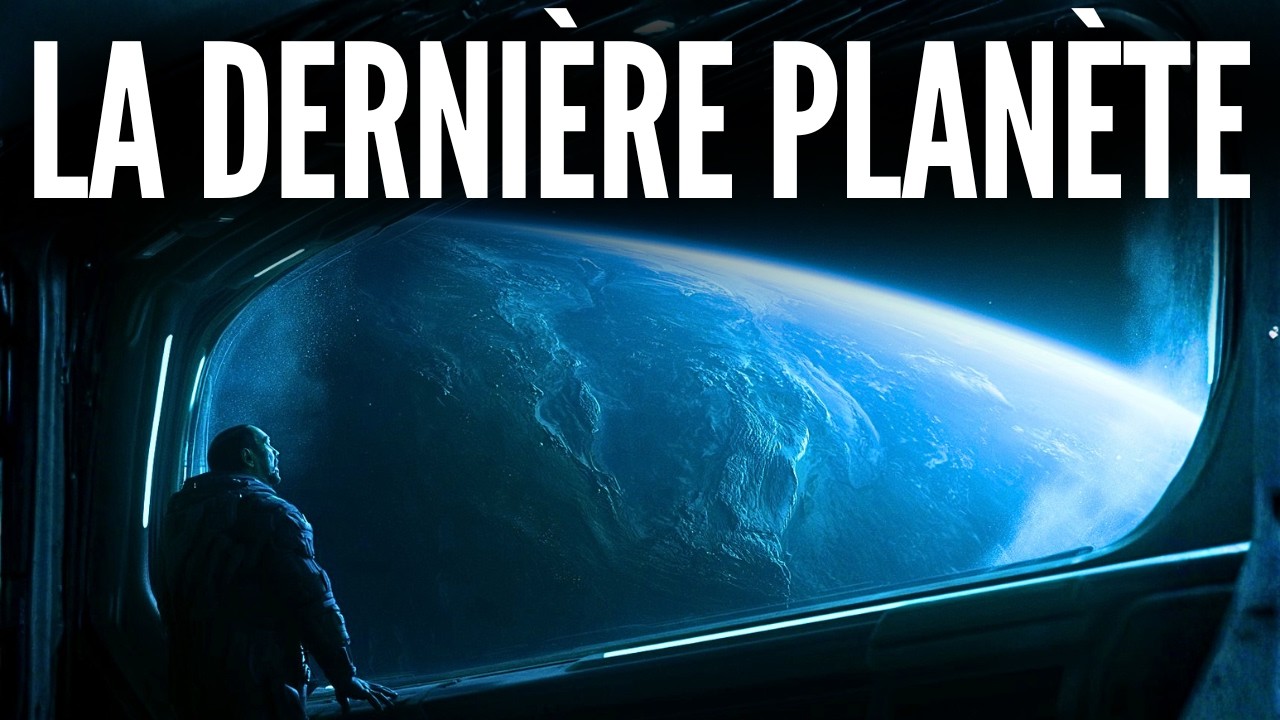
La PREUVE que la TERRE est une ANOMALIE COSMIQUE (et c'est terrifiant)
Keywords
Summary
165 words
Critical Evaluation
The video provides a scientifically accurate and well-structured overview of the challenges of finding an Earth-like exoplanet. The narrator, Christophe Pauly, demonstrates a strong understanding of astrophysics and presents complex concepts in an accessible manner. The use of a narrative scenario (the spaceship mission) effectively engages the viewer while conveying scientific information. The video cites a scientific paper on Proxima b’s habitability, adding credibility. The argumentation is solid: it systematically eliminates each candidate based on physical constraints, such as atmospheric pressure, stellar radiation, and distance. The discussion of the habitable zone correctly clarifies that it is not a guarantee of habitability. The video also touches on the psychological and social challenges of long-duration space travel, referencing the Biosphere 2 experiment, which is a relevant analogy. However, some simplifications are made for the general audience, such as the emphasis on the ’terrifying’ aspect, which may overstate the threat. The title is somewhat sensationalist, but the content remains rigorous. The video does not delve into the latest exoplanet discoveries or the potential of machine learning in exoplanet research, but it covers the main points well. Overall, it is a high-quality educational video that effectively communicates the scientific consensus on the uniqueness of Earth.
201 words
Title / Content Match
The title is somewhat sensationalist but accurately reflects the video's core message: Earth is uniquely habitable and no known exoplanet can replace it.
Quality & Reliability
8/10
The video is well-researched, citing scientific sources and presenting accurate astronomical concepts. It clearly distinguishes between facts and hypotheses, and the presentation is rigorous. Minor simplifications for a general audience are acceptable.
Chapters
- La Terre vue depuis le dernier vaisseau humain
- Le rêve rassurant d’une planète B
- Votre mission : remplacer la Terre
- À la recherche des exoplanètes
- Pourquoi Mars ne peut pas remplacer la Terre
- Proxima b : la planète la plus proche
- La zone habitable, une idée mal comprise
- Les dangers des naines rouges
- TRAPPIST-1 : sept mondes pleins de promesses
- Comment détecte-t-on une exoplanète ?
- Lire l’atmosphère d’un monde lointain
- Kepler-452b : la cousine lointaine de la Terre
- Le mur de la distance
- La liste impossible des conditions à réunir
- Le vrai problème
Cited Sources
- The habitability of Proxima Centauri b. I. Irradiation, rotation and volatile inventory from formation to the present — Cited as a scientific article read during research, providing detailed analysis of Proxima b's habitability.
- Mondes d'ailleurs — Recommended book by Trinh Xuan Thuan, offering a broader perspective on exoplanets and the universe.
- On a trouvé la TERRE 2.0 ? La vérité sur les Exoplanètes | Science & Vie — Interview with a scientist conducted by the channel, providing additional insights on exoplanets.
Concurring Sources
- The habitability of Proxima Centauri b. I. Irradiation, rotation and volatile inventory from formation to the present — Supports the video's discussion of Proxima b's potential habitability and the challenges posed by its star.
External References
Contribution & Novelties
The video synthesizes current knowledge on exoplanet habitability and emphasizes the unique conditions of Earth, arguing that no known exoplanet can serve as a true replacement. It effectively communicates the concept of the habitable zone and the challenges of interstellar travel, making a compelling case for planetary stewardship.
Pour aller plus loin :
- NASA Exoplanet Archive — A comprehensive database of confirmed exoplanets, useful for exploring the diversity of planetary systems.
- The Habitable Exoplanets Catalog — A catalog of potentially habitable exoplanets, providing a quick reference for candidates.
- Biosphere 2 — The Wikipedia article on the Biosphere 2 experiment, which illustrates the difficulty of closed ecological systems.
107 words
Radar Profile
The radar profile shows high scores in information quality and reliability, with slightly lower scores in technical depth and quantity, reflecting a well-balanced but not overly technical presentation.
💬 Très positif. Sur les 30 commentaires analysés, les spectateurs expriment une admiration unanime pour la qualité de la vidéo, la clarté des explications et la beauté du message, tout en soulignant l'importance de protéger la Terre.