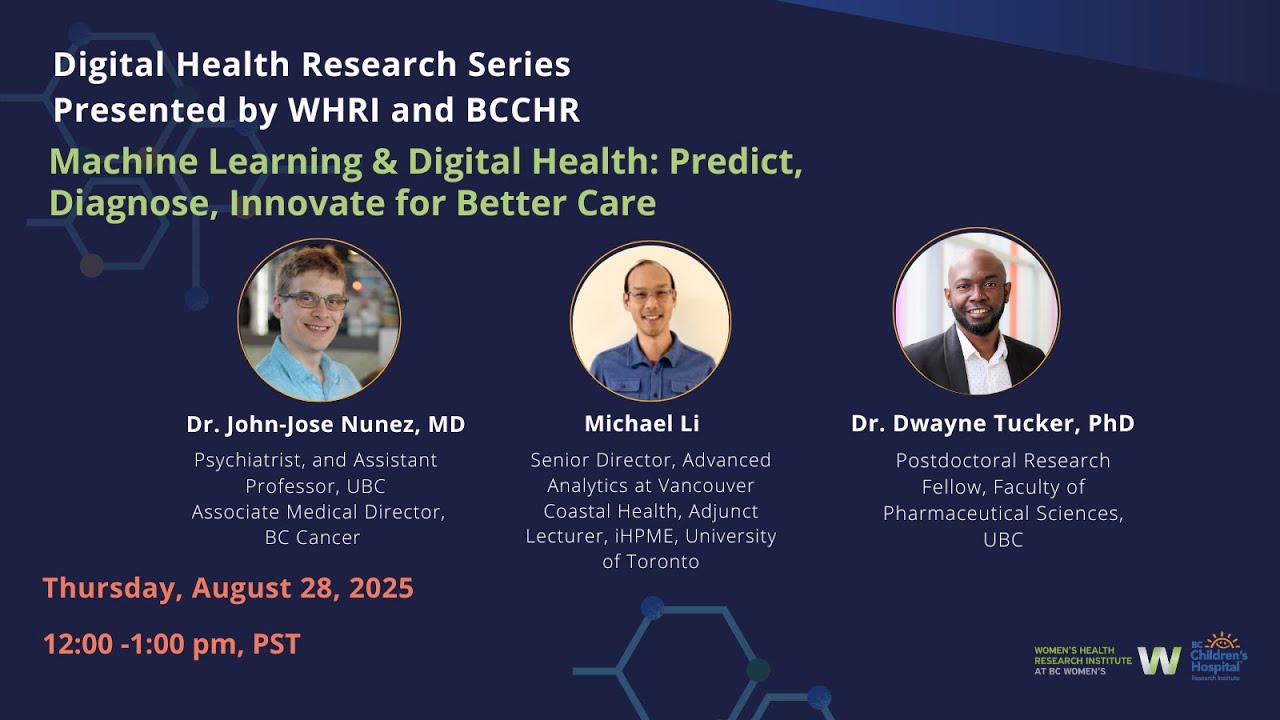
Machine Learning & Health: Predict, Diagnose, Innovate for Better Care
Keywords
Summary
156 words
Critical Evaluation
Value of the Information & Strength of the Argument
The value of the information is high for a general audience, as it provides a clear framework for understanding AI in healthcare. The speakers use relatable analogies (electricity, self-driving cars) and real-world examples from their own work, making the content accessible. The argumentation is solid, with a logical progression from foundational concepts to specific applications. However, the discussion is largely anecdotal, with limited reference to peer-reviewed studies or quantitative evidence. The speakers acknowledge the limitations and ethical considerations, such as privacy and hallucination, which adds credibility. The collaborative format allows for diverse perspectives, enriching the overall value.
Scientific Rigor, Source Quality, Title Accuracy
The scientific rigor is moderate. The speakers are credible experts, but the seminar is an expert opinion rather than a systematic review. Sources cited are minimal, with only a few references mentioned (e.g., Nvidia’s predictions, Vector Institute’s concept). The title accurately reflects the content, which is a broad overview of ML in healthcare. The lack of detailed citations and the informal tone reduce the scientific rigor, but the practical insights and real-world examples compensate to some extent.
189 words
Title / Content Match
The title accurately reflects the content, which covers machine learning applications in healthcare including prediction, diagnosis, and innovation.
Quality & Reliability
7/10
The seminar features three experts in healthcare AI, providing practical insights and real-world examples. However, the discussion is largely anecdotal and lacks rigorous citations or peer-reviewed evidence, limiting its scientific depth.
Key Moments
Markers derived by PSI from the transcript: the creator did not define chapters.
- Introduction of speakers and seminar objectives.
- Dr. Nunez discusses AI as a long-standing tool in healthcare, citing examples like ECG interpretation.
- Explanation of extractive AI and its use in extracting data from clinical documents.
- Predictive AI examples, including predicting cancer survival and psychiatric referrals.
- Generative AI applications, including AI scribes and chatbots, with emphasis on privacy concerns.
- Michael Li discusses agentic AI and the concept of scaffolded cognition.
Cited Sources
- Nvidia's predictions on AI — Mentioned by Michael Li as having predicted the evolution of AI.
- Vector Institute's concept of scaffolded cognition — Referenced by Michael Li as a framework for AI-human collaboration.
Concurring Sources
- Machine learning in healthcare — General overview of ML applications in healthcare, consistent with the seminar's themes.
Contribution & Novelties
The seminar provides a practical, clinician-oriented perspective on AI adoption in healthcare, emphasizing the gradual integration and the importance of human oversight. It offers a useful taxonomy (extractive, predictive, generative) and highlights emerging trends like agentic AI and scaffolded cognition. The discussion is grounded in real-world examples from the speakers’ experiences, making it relatable for healthcare professionals.
Pour aller plus loin :
- Machine learning in healthcare — Overview of applications and challenges.
- Explainable artificial intelligence — Relevant to the black-box nature of some models.
- Clinical decision support system — Context for predictive AI in clinical workflows.
96 words
Radar Profile
The radar profile shows balanced scores across information quantity, quality, technical level, and reliability, indicating a well-rounded but not deeply technical seminar. The high reliability score reflects the credibility of the speakers, while the moderate technical level suggests accessibility for a broad audience.
💬 No comments were provided for analysis.