Genomics of Rare Disease 2026 | Keynote lecture by Wendy Chung, Harvard Medical School, USA
Keywords
Summary
179 words
Critical Evaluation
Value of the Information & Strength of the Argument
The lecture provides high-value information from an ongoing large-scale study, offering real-world data on genomic newborn screening. The argumentation is strong, grounded in personal experience and empirical results. Chung systematically builds the case for genomic screening, addressing potential criticisms and limitations, such as false positives and the need for confirmatory testing. She presents data on uptake rates, diversity, and outcomes, and discusses the ethical and practical considerations of returning results. The narrative is compelling and evidence-based, making a persuasive argument for the potential of genomic screening to improve population health.
99 words
Title / Content Match
The title accurately reflects the content: a keynote lecture on genomics of rare diseases, focusing on the GUARDIAN study.
Quality & Reliability
9/10
Presentation of original research data from the GUARDIAN study, with transparent methodology, acknowledgment of limitations, and peer-reviewed context (e.g., NEJM publication referenced).
Key Moments
Markers derived by PSI from the transcript: the creator did not define chapters.
- Introduction and personal history with rare diseases and the conference.
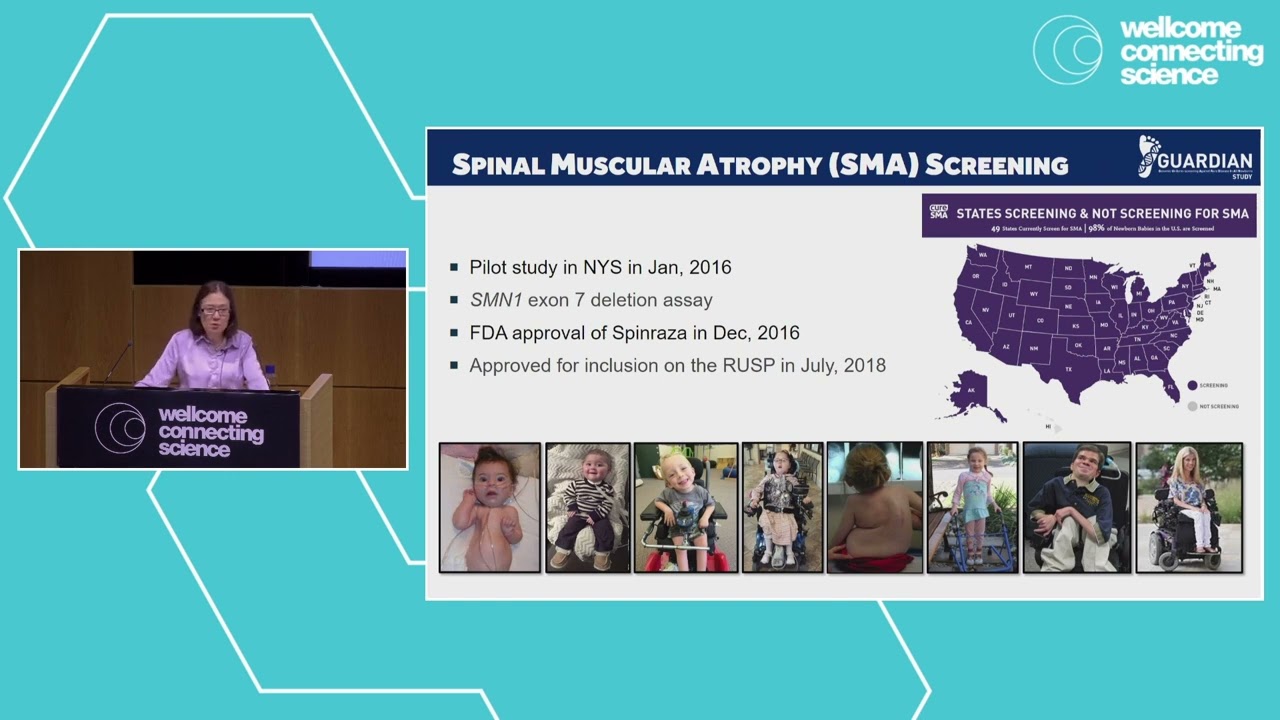
- Discussion of spinal muscular atrophy and the need for pre-symptomatic screening.
- Description of the SMA newborn screening pilot and its success.
- Introduction of the GUARDIAN study concept and design.
- Details on the conditions included and the decision-making process.
- Results from the first 15,000 newborns, including screen-positive rates and common conditions.
- Discussion of G6PD deficiency and its implications for screening.
- Examples of false positives and learnings from the study.
- Integration with existing newborn screening and potential for genomic screening.
- Future directions and considerations for implementation.
Cited Sources
- Nusinersen versus Sham Control in Infantile-Onset Spinal Muscular Atrophy — Referenced as the NEJM paper showing outcomes for SMA patients identified via newborn screening.
Concurring Sources
- Newborn Screening for Spinal Muscular Atrophy — Supports the feasibility and benefits of SMA newborn screening.
Contribution & Novelties
The lecture provides an update on the GUARDIAN study, one of the largest genomic newborn screening initiatives, with data on over 25,000 newborns. It offers insights into the practical challenges and successes of implementing genomic screening in a diverse population, including the handling of variants of uncertain significance and the integration with existing public health programs. The talk also highlights the potential for genomic screening to complement traditional newborn screening and to identify conditions not currently screened.
Pour aller plus loin :
- Newborn Screening — Provides background on traditional newborn screening programs.
- Whole Genome Sequencing — Explains the technology used in the GUARDIAN study.
- Spinal Muscular Atrophy — Context for the earlier SMA screening work.
- G6PD Deficiency — Details on the most common condition identified in the study.
128 words
Radar Profile
The radar profile shows high scores across all dimensions, indicating a well-rounded and reliable presentation. The lecture excels in information quantity and quality, with a strong technical level and high reliability, reflecting the speaker's expertise and the study's robust design.
💬 No comments were provided for analysis.