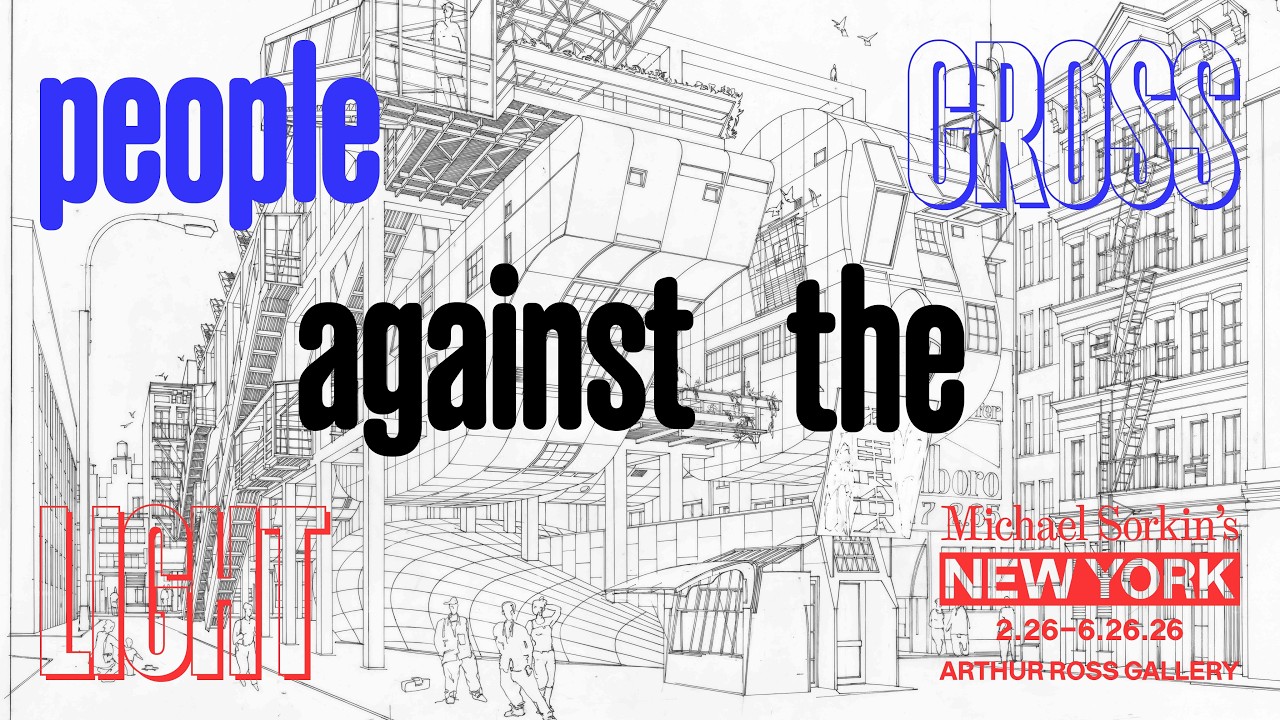
Columbia GSAPP: Coalition 5 - The Michael Sorkin Symposium - Panel 3
Keywords
Summary
112 words
Critical Evaluation
Value of the Information & Strength of the Argument
The value of the information lies in the firsthand accounts and professional reflections on Michael Sorkin’s work and influence. The speakers provide concrete examples of Sorkin’s projects and methodologies, such as Terreform’s unsolicited research and UR Books’ publications. The argumentation is persuasive, grounded in personal experience and professional expertise, though it is primarily anecdotal and lacks formal evidence. The discussion effectively conveys Sorkin’s principles and the significance of his contributions to urbanism.
Scientific Rigor, Source Quality, Title Accuracy
The scientific rigor is moderate; the content is based on personal testimony and professional knowledge rather than formal research. The sources cited are primarily Sorkin’s own publications and projects, which are credible within the field. The title accurately reflects the content, as it is a panel discussion from a symposium on Sorkin’s work. No external sources are referenced, and the discussion is more reflective than analytical.
153 words
Title / Content Match
The title accurately describes the content: a panel discussion from a symposium on Michael Sorkin's work.
Quality & Reliability
7/10
The panel consists of experts in architecture and urbanism discussing the work of Michael Sorkin, providing personal insights and professional perspectives. The content is opinion-based and anecdotal, with no formal citations, but the speakers are credible and the discussion is coherent.
Key Moments
Markers derived by PSI from the transcript: the creator did not define chapters.
- Introduction by Bart-Jan Polman, welcoming speakers and audience.
- Vyjayanthi Rao begins her talk on Michael Sorkin and Terreform.
- Rao discusses Sorkin's approach to urban research and the UR Books imprint.
- Rao shares anecdotes about Sorkin's mentorship and the Southside Stories project.
- Deen Sharp starts his presentation on Terreform and Sorkin's legacy.
- Sharp discusses the Open Gaza project and Sorkin's coalition-building.
- Sharp reflects on Sorkin's impact on his own work, including water-responsive urbanism.
- Discussion on the range of UR Books publications and their influence.
- Closing remarks and thanks to the audience.
Cited Sources
- Open Gaza: Architectures of Hope — Mentioned by Deen Sharp as a Terreform project and book.
- Zoned Out — Mentioned as a book published by UR Books, used by anti-gentrification groups.
- Southside Stories — Mentioned by Vyjayanthi Rao as an unfinished project by Sorkin.
Concurring Sources
- Michael Sorkin's official website — Provides information on Sorkin's projects and writings, consistent with the panel's discussion.
Contribution & Novelties
The video provides unique personal insights into Michael Sorkin’s work and character, particularly through the lens of Terreform and UR Books. It highlights Sorkin’s collaborative approach and his commitment to social justice in urbanism. The discussion offers a nuanced view of his legacy, which is valuable for those interested in urban studies and architecture.
Pour aller plus loin :
- Right to the city — Concept central to Sorkin’s work, as discussed in the panel.
- Terreform — The research organization founded by Sorkin, mentioned extensively.
- Sponge city — Concept referenced by Deen Sharp in relation to his current work.
98 words
Radar Profile
The radar profile shows high scores in quantity and quality of information, reflecting the rich personal and professional insights shared. The technical level is moderate, as the discussion is accessible but assumes some familiarity with urbanism. Overall, the video is a valuable resource for understanding Sorkin's impact.
💬 No comments were provided for analysis.