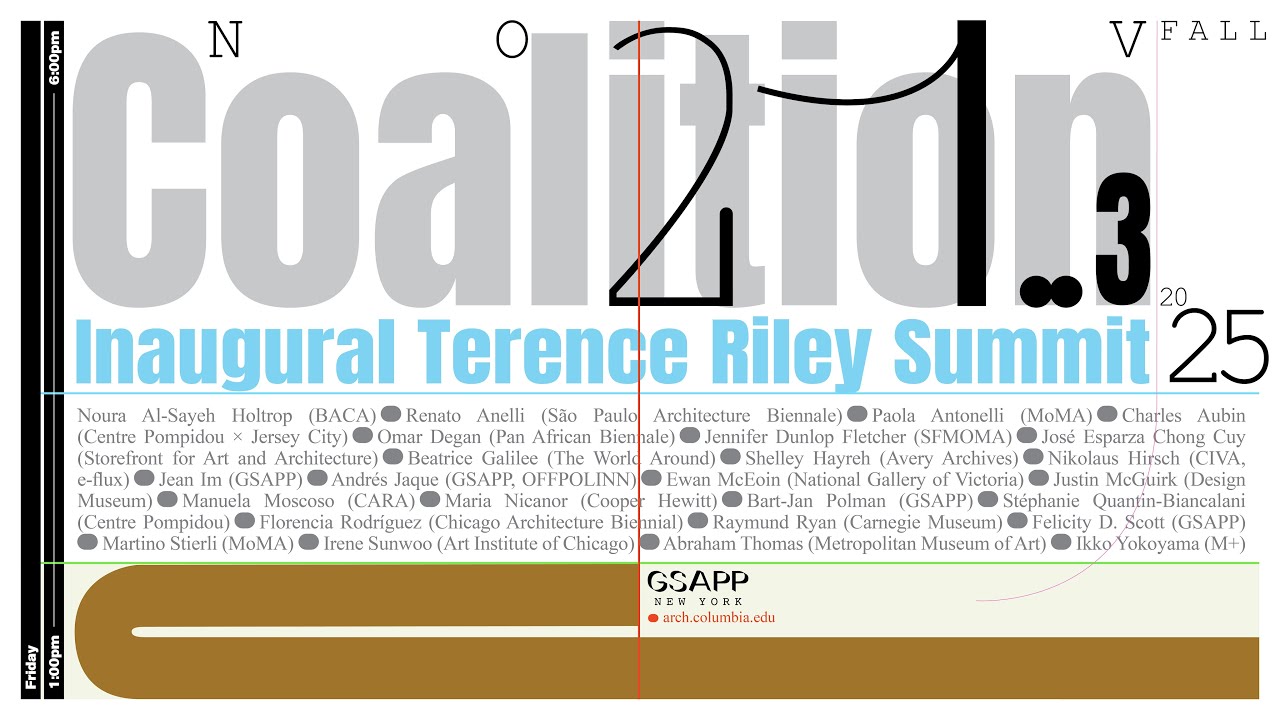
Coalition 3: Coalition of Curators. The Inaugural Terence Riley Summit. Panel 4
Keywords
Summary
182 words
Critical Evaluation
Value of the Information & Strength of the Argument
The panel provides valuable insights into the curatorial practices of major institutions, offering concrete examples of how they address the built environment. Maria Nicanor’s historical overview of Cooper Hewitt illustrates the evolution of a design museum and the challenges of balancing tradition with innovation. Martino Stierli’s presentation on West African modernism is particularly valuable, as it addresses a neglected area of architectural history and demonstrates the use of contemporary media to engage with the subject. Abraham Thomas’s discussion of the architectural fragment offers a thoughtful framework for understanding how museums display architecture. The arguments are well-structured and grounded in professional experience, though the format limits the depth of analysis.
Scientific Rigor, Source Quality, Title Accuracy
The panel is rigorous in its use of institutional knowledge and specific examples, but it does not cite external sources or academic references. The speakers draw on their own curatorial projects and institutional histories, which lends credibility but limits the verifiability of claims. The title accurately reflects the content, as the panel directly addresses the positioning of the built environment within larger frameworks. The discussion is well-organized and stays on topic, with each speaker contributing relevant perspectives.
201 words
Title / Content Match
The title accurately reflects the content: a panel discussion on positioning the built environment within larger institutional and curatorial frameworks.
Quality & Reliability
8/10
The panel features established curators from major institutions (MoMA, Met, Cooper Hewitt) discussing their institutional frameworks and curatorial practices. The content is grounded in professional experience and institutional knowledge, with references to specific exhibitions and projects. However, it is a discussion format without formal citations or peer review, so the score is high but not maximal.
Key Moments
Markers derived by PSI from the transcript: the creator did not define chapters.
- Introduction by moderator Bart-Jan Polman and start of panel.
- Maria Nicanor begins her presentation on Cooper Hewitt's history and mission.
- Nicanor discusses the museum's collection and the challenge of displaying design.
- Martino Stierli presents his research on modern architecture in West Africa.
- Stierli discusses the use of contemporary photography and film in exhibitions.
- Abraham Thomas talks about the architectural fragment at the Met.
- Thomas describes the new entrance project and the installation of fragments.
- Ikko Yokoyama and Ewan McEoin contribute additional perspectives.
- Closing remarks and thanks.
Cited Sources
- Cooper Hewitt, Smithsonian Design Museum — Maria Nicanor discusses the history and mission of the museum.
- The Metropolitan Museum of Art — Abraham Thomas discusses the architectural fragment and the new entrance project.
- Museum of Modern Art (MoMA) — Martino Stierli presents his research on West African modernism and MoMA's exhibitions.
- M+ Museum — Ikko Yokoyama is a curator at M+ and contributes to the discussion.
- National Gallery of Victoria (NGV) — Ewan McEoin is a curator at NGV and contributes to the discussion.
Concurring Sources
- Cooper Hewitt, Smithsonian Design Museum — Maria Nicanor's presentation aligns with the museum's official mission and history.
- The Metropolitan Museum of Art — Abraham Thomas's discussion of the new entrance project is consistent with the museum's announced plans.
Contribution & Novelties
The panel offers a unique comparative perspective on how different institutions position the built environment within their curatorial frameworks. It highlights the diversity of approaches, from Cooper Hewitt’s focus on design objects to MoMA’s geopolitical research and the Met’s use of architectural fragments. The discussion also underscores the challenges of representing architecture in museums and the importance of contemporary media.
Pour aller plus loin :
- Architectural fragment — Provides background on the concept of architectural fragments.
- Modern architecture in Africa — Offers an overview of the subject discussed by Stierli.
- Curatorial practice — Explains the role of curators in museums.
100 words
Radar Profile
The radar profile shows high scores in quality of information and reliability, reflecting the expertise of the speakers. The quantity of information is moderate, as the panel format limits depth. The technical level is moderate, accessible to a general audience interested in architecture and museums.
💬 No comments were provided for analysis.